


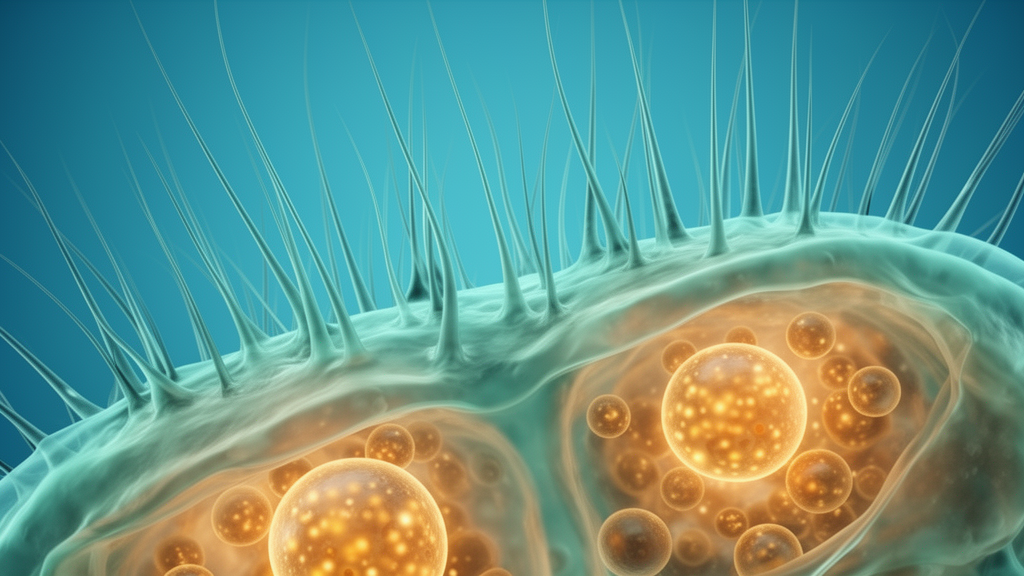
Deep inside the brain, a tiny antenna on each neuron may determine how gracefully the body ages. A new study reports that nicotinamide adenine dinucleotide, or NAD+, the celebrated metabolic cofactor whose levels fall steadily with age, acts as a master regulator of primary cilia in hypothalamic neurons. When NAD+ dwindles, these antenna-like structures shorten, lysosomes lose their degradative power, and the hypothalamus, the brain’s central command post for energy balance, slides into a state of cellular disrepair. The findings, published in Aging Cell, connect three of biology’s hottest topics, NAD+ metabolism, cilia signaling, and lysosomal homeostasis, into a single mechanistic axis that appears to drive metabolic aging in mice.
The research team began by examining the mediobasal hypothalamus, a region proposed to coordinate systemic aging, in young three-month-old and aged 24-month-old mice. Immunostaining for adenylyl cyclase 3, a neuronal ciliary marker, revealed that young animals carried relatively long primary cilia on their hypothalamic neurons, averaging roughly 7.4 micrometers. In aged mice, these cilia were significantly shortened, while the percentage of ciliated cells remained unchanged, indicating that the problem was not cilia loss but cilia shrinkage. Hypothalamic NAD+ measurements confirmed what the aging literature predicted: the aged brains had markedly reduced NAD+ content. The correlation set the stage for a causal question, namely whether the NAD+ decline was driving the ciliary collapse.
To answer it, the investigators turned to cultured N1 hypothalamic neuronal cells, inducing ciliogenesis through serum deprivation and then chemically depleting NAD+ with FK866, a potent inhibitor of NAMPT, the rate-limiting enzyme of the NAD+ salvage pathway. FK866 treatment significantly shortened primary cilia without altering the proportion of ciliated cells, and critically, the effect occurred without measurable cell death or stress markers such as cleaved caspase-3 or CHOP, ruling out nonspecific toxicity. Restoring NAD+ with the precursors nicotinamide mononucleotide and nicotinamide riboside reversed the shortening. Conversely, elevating NAD+ through precursor supplementation, a NAMPT peptide, the PARP inhibitor olaparib, or the CD38 inhibitor apigenin, all of which raise intracellular NAD+ by boosting synthesis or curbing consumption, elongated cilia even in serum-starved cells. Similar responses in human retinal pigment epithelial cells suggested that NAD+ is a conserved regulator of cilium length across cell types.
In vivo, the story held. Five days of intracerebroventricular FK866 administration into young adult mice depleted hypothalamic NAD+ and shortened cilia in the mediobasal hypothalamus, again without changing the fraction of ciliated cells. Co-administration of NMN prevented both the NAD+ depletion and the ciliary shortening. The reversibility is a key technical point, because it demonstrates that ciliary architecture in the adult hypothalamus is dynamically maintained by metabolic state rather than fixed at development, opening the possibility that age-related ciliary dysgenesis could be corrected therapeutically.
The mechanism runs through SIRT1, the NAD+-dependent deacetylase famous for its roles in stress resistance and longevity. In hypothalamic neurons, the SIRT1 activator resveratrol elongated cilia, and overexpression of wild-type SIRT1 did the same, while the catalytically inactive H363Y mutant had no effect. The selective SIRT1 inhibitor EX-527 abolished nicotinamide riboside-induced ciliary growth, and siRNA knockdown of Sirt1 blunted NMN’s effect. SIRT1’s influence operates at the level of gene expression: its overexpression increased the mRNA of a battery of cilia-related genes, including Ift20, Ift27, Ift54, Ift88, Ift140, Ift144, Kif3a, Kif3b, and several Rfx family transcription factors. The team showed that SIRT1 physically binds and deacetylates RFX1, enhancing RFX1-driven transcriptional activation of the Ift88 promoter, a gene essential for building the ciliary axoneme. Notably, this role contrasts with findings in cholangiocarcinoma cells, where SIRT1 promotes ciliary protein degradation, underscoring that SIRT1’s effect on cilia depends on cellular context.
Why should cilia length matter for cellular housekeeping? The study’s most striking discovery concerns lysosomes, the acidic organelles that digest damaged proteins, lipids, and organelles delivered by autophagy. Using LysoSensor dyes, the researchers found that raising NAD+ with NAD+, NMN, or NR enhanced lysosomal acidification in serum-deprived hypothalamic neurons, while depleting NAD+ through FK866 or Nampt knockdown reduced it. SIRT1 overexpression increased lysosomal acidity in a deacetylase-dependent manner. The decisive experiment came when the team disrupted ciliogenesis by knocking down Ift88 or Ift20. In cilia-deficient cells, NMN could no longer restore lysosomal acidification or cathepsin B activity, proving that intact primary cilia are required for NAD+-dependent regulation of lysosomal function. The cilium, long viewed as a signaling antenna, is now implicated as a structural hub for organelle quality control.
The molecular bridge between cilia and lysosomes turned out to be CHMP4B, a core component of the ESCRT-III complex that repairs damaged lysosomal membranes. Under basal conditions, CHMP4B is enriched around the ciliary basal body and at PCM1-positive periciliary satellites. When NAD+ was depleted, CHMP4B vanished from these periciliary sites and accumulated abnormally on lysosomes, suggesting chronic lysosomal stress even before acute injury. Time-lapse imaging with mCherry-tagged CHMP4B showed that upon LLOMe-induced lysosomal membrane damage, CHMP4B normally recruits to lysosomal membranes within one minute, but in NAD+-depleted cells this recruitment pattern was deranged, and NMN co-treatment normalized it only in cells with intact cilia. Galectin-3 colocalization with LAMP1, a well-established marker of lysosomal membrane permeabilization, confirmed that NAD+ depletion damages lysosomal membranes and that this damage is cilia-dependent.
Downstream, the cilia-CHMP4B axis governs lysosomal calcium signaling through TRPML1, the lysosomal Ca2+ channel. Using a lysosome-targeted GCaMP sensor, the researchers found that NMN enhanced TRPML1-mediated calcium release stimulated by the agonist ML-SA1, but this response was blunted in cilia-deficient cells and in CHMP4B knockdown cells, and NMN could not rescue it. Co-immunoprecipitation revealed a physical association between CHMP4B and TRPML1, hinting that CHMP4B stabilizes or organizes the channel at the lysosomal membrane. TRPML1 signaling feeds into AMPK, the cellular energy sensor: NMN-induced AMPK phosphorylation was nearly abolished by Ift88 or Chmp4b depletion or by the TRPML1 antagonist ML-SI3. Autophagic flux, measured by LC3B puncta accumulation with bafilomycin A1, followed the same pattern, establishing a complete signaling chain from NAD+ through cilia, CHMP4B, TRPML1, and AMPK to autophagy.
The physiological payoff emerged in aged mice subjected to a stepwise calorie restriction regimen, in which caloric intake was gradually reduced to 80 percent of normal over six weeks. Calorie restriction restored hypothalamic NAD+ levels to those of young mice, rescued ciliary length, alleviated lysosomal stress markers including lysosomal enlargement, elevated lysosomal CHMP4B, and galectin-3 accumulation, and reduced p62, indicating improved autophagic flux. When the team bilaterally injected adeno-associated viruses carrying Ift88 shRNA into the mediobasal hypothalamus of aged mice, these benefits were markedly attenuated. Calorie restriction’s improvements in body weight, glucose tolerance, grip strength, adipocyte hypertrophy in white adipose tissue, lipid accumulation in brown adipose tissue and liver, skeletal muscle fiber atrophy, and dermal thinning all depended, at least in part, on hypothalamic primary cilia.
The authors are careful about scope. Calorie restriction is a pleiotropic intervention engaging insulin/IGF-1 signaling, mTOR, AMPK, sirtuins, inflammatory pathways, and neuroendocrine regulation, and the data do not establish hypothalamic NAD+ restoration as the primary mediator of its systemic effects. The aging cohort experiments were limited by the availability of aged animals, and the precise mechanism by which cilia-dependent CHMP4B trafficking regulates TRPML1 remains unresolved. Even so, the study positions the hypothalamic NAD+-cilia-lysosome axis as one concrete, CR-responsive mechanism contributing to metabolic aging, and it raises an intriguing question for future work: in the hippocampus, where aging-related cilia elongation is associated with memory decline, would NAD+ elevation through calorie restriction correct ciliary defects and improve cognition? For now, the message is that the brain’s metabolic antennas, kept long by NAD+ and SIRT1, quietly guard the lysosomal machinery that keeps hypothalamic neurons, and the bodies they command, functioning with age.
Subject of Research: NAD+ signaling through hypothalamic primary cilia regulates lysosomal homeostasis and metabolic aging in mice
Article Title: A Cilia–Centered Nicotinamide Adenine Dinucleotide (NAD+) Signaling Network Regulates Hypothalamic Lysosomal Homeostasis and Metabolic Aging
Article References: Park, S. E., Roh, E., Park, J. W., Kim, S. J., Jeong, S. Y., Park, C. B., Lim, H. S., Kim, J. S., Kim, M. G., Kim, M. J., Cho, Y. I., Jeong, W., Kang, G. M., Kim, S.-Y., Min, S. H., & Kim, M.-S. (2026). A Cilia–Centered Nicotinamide Adenine Dinucleotide ( NAD + ) Signaling Network Regulates Hypothalamic Lysosomal Homeostasis and Metabolic Aging. Aging Cell, 25(11), Article e70745. https://doi.org/10.1111/acel.70745
Image Credits: AI Generated
DOI: 10.1111/acel.70745
Keywords: NAD+, primary cilia, lysosomes, SIRT1, hypothalamus, aging, calorie restriction, metabolism, autophagy, TRPML1, Cilia, Centered
Cite Scienmag News
Cassandra Pierce. (October 25, 2026). NAD+ Keeps Brain Cilia Long and Lysosomes Young, Mouse Study Finds. Scienmag. https://scienmag.com/nad-keeps-brain-cilia-long-and-lysosomes-young-mouse-study-finds/
Cassandra Pierce. "NAD+ Keeps Brain Cilia Long and Lysosomes Young, Mouse Study Finds." Scienmag, 25 October 2026, https://scienmag.com/nad-keeps-brain-cilia-long-and-lysosomes-young-mouse-study-finds/. Accessed 25 October 2026.
Cassandra Pierce. "NAD+ Keeps Brain Cilia Long and Lysosomes Young, Mouse Study Finds." Scienmag. October 25, 2026. https://scienmag.com/nad-keeps-brain-cilia-long-and-lysosomes-young-mouse-study-finds/


