Wednesday, October 28, 2026
Science
No Result
View All Result
  • Login
  • HOME
  • SCIENCE NEWS
  • CONTACT US
  • HOME
  • SCIENCE NEWS
  • CONTACT US
No Result
View All Result
Scienmag
No Result
View All Result
Home Science News Biology

Mutant STAT3 protein traps its normal counterpart to drive inherited immunodeficiency

October 27, 2026
in Biology
Juliet Wilcox
By Juliet Wilcox Scienmag Editorial Profile - Human Genetics
Reading Time: 3 mins read
0
Mutant STAT3 protein traps its normal counterpart to drive inherited immunodeficiency

Mutant STAT3 protein traps its normal counterpart to drive inherited immunodeficiency

65
SHARES
587
VIEWS
Share on FacebookShare on Twitter
ADVERTISEMENT

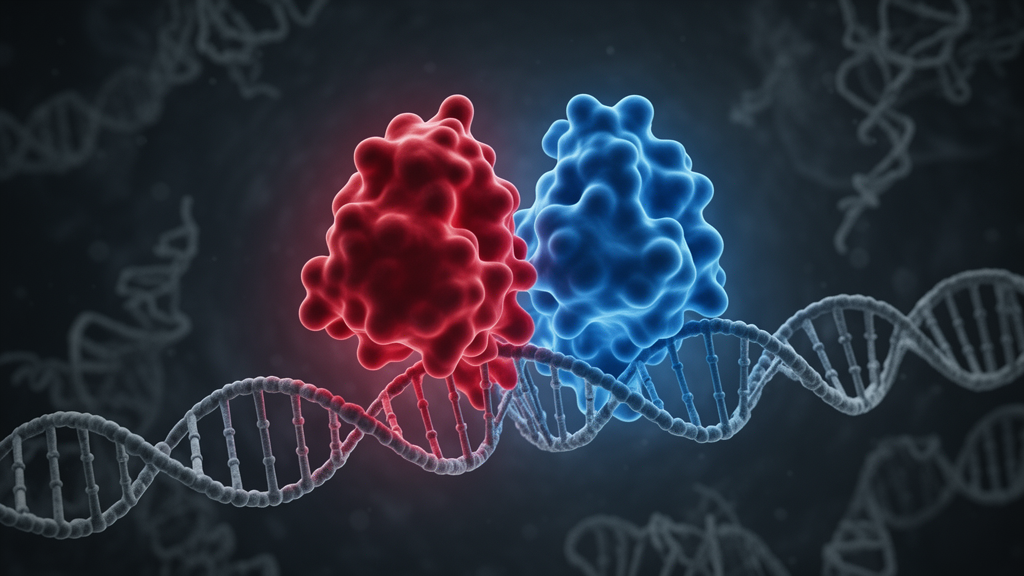
A single defective copy of the STAT3 gene is enough to cause the autosomal dominant form of hyper-IgE syndrome, a rare inherited immunodeficiency, and new research explains why. According to a study published in Science Signaling, a mutant STAT3 protein does not simply fail to work on its own; it actively interferes with the protein produced by the healthy copy of the gene, dragging it into a nonfunctional complex that never reaches the cell’s nucleus.

STAT3 is a transcription factor central to immunity. When immune cells are stimulated by cytokines, the signaling molecules that coordinate how immune cells behave, STAT3 is activated and pairs up with other STAT3 molecules to form dimers. These dimers move into the nucleus, where they switch on the expression of target genes needed for a proper immune response. In autosomal dominant hyper-IgE syndrome, patients carry one disease-causing variant of STAT3 alongside one normal copy, yet the variant’s effects persist despite the presence of the intact gene.

Joseph Mackie and colleagues identified a patient carrying a previously undocumented STAT3 variant, called STAT3R31Q, in which a change disrupts the protein’s N-terminal domain. When the researchers stimulated immune cells carrying the mutant protein with cytokines, STAT3R31Q was less able to drive the expression of target genes compared with the normal form of the protein. The mutation therefore weakens the transcriptional response that healthy STAT3 would normally deliver after cytokine signaling.

The more striking finding concerns what the mutant protein does to its normal counterpart. Rather than pairing preferentially with other mutant molecules, STAT3R31Q preferentially formed dimers with normal STAT3. These mixed STAT3:STAT3R31Q heterodimers remained trapped in the cytoplasm instead of moving into the nucleus. Because gene regulation happens in the nucleus, heterodimers stranded in the cytoplasm cannot perform their transcriptional duties, effectively removing functional STAT3 from circulation inside the cell.

This combination of two defects, impaired regulation of gene expression and the sequestration of normal STAT3 in the cytoplasm, explains why a single copy of the STAT3R31Q allele is sufficient to cause hyper-IgE syndrome. The mutant protein acts in a dominant-negative fashion: its harmful effect arises precisely because it interacts with the product of the healthy gene copy, neutralizing protein that would otherwise support immunity. The study’s title describes the mechanism directly: disruption of the N-terminal domain in this STAT3 hyper-IgE syndrome variant causes disease by sequestering STAT3 in the cytoplasm.

The work offers what the authors describe as vital insight into a signaling pathway essential in human biology. By showing at the molecular level how one faulty allele can undermine a functioning one, the study clarifies the mechanism behind the autosomal dominant inheritance pattern seen in this form of hyper-IgE syndrome, in which immunodeficiency develops even though patients retain one normal copy of the STAT3 gene. The findings were published in Science Signaling on 27 October 2026 under the DOI 10.1126/scisignal.aeg5302.

Subject of Research: Mechanism by which a mutant STAT3 variant causes autosomal dominant hyper-IgE syndrome by sequestering normal STAT3 in the cytoplasm

Article Title: A mutant form of STAT3 traps the normal form to drive an inherited immune disorder

Article References: A mutant form of STAT3 traps the normal form to drive an inherited immune disorder. Original publication (Bibliographic details unavailable.)

Image Credits: AI Generated

DOI: Not provided

Keywords: STAT3, hyper-IgE syndrome, immunodeficiency, transcription factor, cytokine signaling, autosomal dominant, heterodimers, cytoplasm, gene expression, Science Signaling, genetics, N-terminal domain

Cite Scienmag News

Juliet Wilcox. (October 27, 2026). Mutant STAT3 protein traps its normal counterpart to drive inherited immunodeficiency. Scienmag. https://scienmag.com/mutant-stat3-protein-traps-its-normal-counterpart-to-drive-inherited-immunodeficiency/

Juliet Wilcox. "Mutant STAT3 protein traps its normal counterpart to drive inherited immunodeficiency." Scienmag, 27 October 2026, https://scienmag.com/mutant-stat3-protein-traps-its-normal-counterpart-to-drive-inherited-immunodeficiency/. Accessed 28 October 2026.

Juliet Wilcox. "Mutant STAT3 protein traps its normal counterpart to drive inherited immunodeficiency." Scienmag. October 27, 2026. https://scienmag.com/mutant-stat3-protein-traps-its-normal-counterpart-to-drive-inherited-immunodeficiency/
Tags: autosomal dominantautosomal dominant immunodeficiency caused by STAT3 mutationcytokine signalingcytokine signaling disruption due to mutant STAT3cytoplasmdefective STAT3 protein trapping functional STAT3gene expressiongeneticsheterodimershyper-IgE syndromehyper-IgE syndrome genetic mechanismimmuneimmunodeficiencymolecular basis of inherited hyper-IgE syndromeMutant STAT3 protein interference in inherited immunodeficiencyN-terminal domainN-terminal domain mutation in STAT3 affecting immune signalingScience SignalingSTAT3STAT3 gene mutation effects on immune responseSTAT3 protein dimerization and nuclear translocationtranscription factortranscription factor dysfunction in immune regulation
Share26Tweet16
Previous Post

Rare Flesh-Eating Infection With Gas Rising to the Chest After Hemorrhoid Surgery

Next Post

Gene behind male mosquitoes’ attraction to female wingbeats identified

Related Posts

BMP7: The Kidney’s Declining Repair Signal Draws New Therapeutic Attention
Biology

BMP7: The Kidney’s Declining Repair Signal Draws New Therapeutic Attention

October 28, 2026
Host Genomics Could Reshape How Doctors Diagnose Immune Disorders and Treat Infections
Biology

Host Genomics Could Reshape How Doctors Diagnose Immune Disorders and Treat Infections

October 28, 2026
Bladder Cancer Gene Signature Holds Up Across Two Large Cohorts
Biology

Bladder Cancer Gene Signature Holds Up Across Two Large Cohorts

October 28, 2026
Seed germination thresholds mapped for a semiarid rangeland plant
Biology

Seed germination thresholds mapped for a semiarid rangeland plant

October 28, 2026
ADP-ribose, an NAD+ catabolite, drives neuronal ferroptosis through ENT2 inhibition
Chemistry

ADP-ribose, an NAD+ catabolite, drives neuronal ferroptosis through ENT2 inhibition

October 28, 2026
Microtubule Acetylation Softens the Nucleus to Speed DNA Break Repair
Biology

Microtubule Acetylation Softens the Nucleus to Speed DNA Break Repair

October 28, 2026
Next Post
Gene behind male mosquitoes’ attraction to female wingbeats identified

Gene behind male mosquitoes' attraction to female wingbeats identified

  • Mothers who receive childcare support from maternal grandparents show more optimized

    Mothers who receive childcare support from maternal grandparents show more parental warmth, finds NTU Singapore study

    27656 shares
    Share 11059 Tweet 6912
  • University of Seville Breaks 120-Year-Old Mystery, Revises a Key Einstein Concept

    1061 shares
    Share 424 Tweet 265
  • Bee body mass, pathogens and local climate influence heat tolerance

    682 shares
    Share 273 Tweet 171
  • Researchers record first-ever images and data of a shark experiencing a boat strike

    546 shares
    Share 218 Tweet 137
  • Groundbreaking Clinical Trial Reveals Lubiprostone Enhances Kidney Function

    531 shares
    Share 212 Tweet 133
Science

Embark on a thrilling journey of discovery with Scienmag.com—your ultimate source for cutting-edge breakthroughs. Immerse yourself in a world where curiosity knows no limits and tomorrow’s possibilities become today’s reality!

RECENT NEWS

  • Scientists propose oxytocin as a keystone linking social connection to wellbeing
  • Prediction Models for Dialysis Peritonitis Fall Short of Clinical Use, Review Finds
  • BMP7: The Kidney’s Declining Repair Signal Draws New Therapeutic Attention
  • TikTok viewers judge green influencers on attention and trust separately, study finds

Categories

  • Agriculture
  • Anthropology
  • Archaeology
  • Athmospheric
  • Biology
  • Biotechnology
  • Blog
  • Bussines
  • Cancer
  • Chemistry
  • Climate
  • Earth Science
  • Editorial Policy
  • Marine
  • Mathematics
  • Medicine
  • Pediatry
  • Policy
  • Psychology & Psychiatry
  • Science Education
  • Science News
  • Social Science
  • Space
  • Technology and Engineering

Subscribe to Blog via Email

Enter your email address to subscribe to this blog and receive notifications of new posts by email.

Join 5,151 other subscribers

© 2025 Scienmag - Science Magazine

Welcome Back!

Login to your account below

Forgotten Password?

Retrieve your password

Please enter your username or email address to reset your password.

Log In
No Result
View All Result
  • HOME
  • SCIENCE NEWS
  • CONTACT US

© 2025 Scienmag - Science Magazine

Discover more from Science

Subscribe now to keep reading and get access to the full archive.

Continue reading