


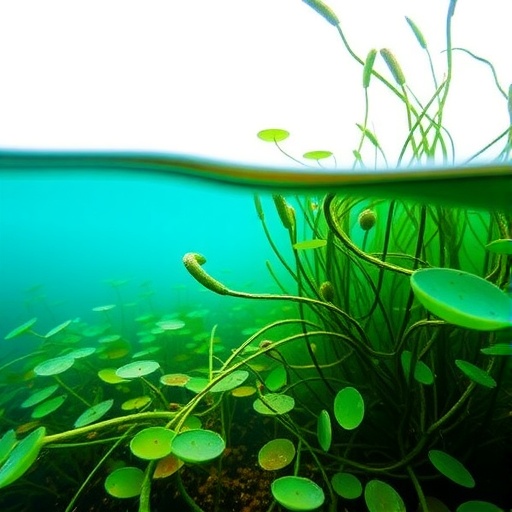
Freshwater ecosystems worldwide grapple with the increasing challenge of cyanobacterial blooms—proliferations of toxic, photosynthesizing bacteria that threaten aquatic life, human health, and water quality. Despite decades of intense scientific scrutiny, forecasting when and where these blooms will emerge, as well as managing the potent toxins they produce, has proven elusive. A newly published comprehensive review in Nature Water delves into the multiscale forces regulating the production, persistence, and degradation of microcystins (MCs)—a class of potent cyanotoxins—unraveling the complex ecological and physiological drivers behind bloom dynamics and offering new avenues for mitigation.
Cyanobacteria, also known as blue-green algae, thrive in eutrophic waters rich in nutrients, a condition worsened by anthropogenic activities and climate change. While nutrient loading and warming are known to enhance cyanobacterial biomass, the link between biomass and MC concentration is surprisingly inconsistent. This puzzling disconnect stems not only from MC synthesis rates but also from degradation processes that modulate toxin persistence in aquatic systems, creating a dynamic balance that scientists have struggled to decipher.
At the core of this balance lies a multifaceted network of interactions: physiological traits governing toxin biosynthesis within cyanobacteria, microbial communities capable of degrading MCs, and ecological feedbacks encompassing predator-prey dynamics and biogeochemical cycling. These interactions operate across scales—from cellular metabolism to ecosystem-level nutrient fluxes—making it difficult to predict bloom toxicity based solely on bulk cyanobacterial abundance or environmental parameters.
The authors highlight that MC production is tightly linked to cyanobacterial physiology, influenced by environmental stressors such as light intensity, temperature fluctuations, and nutrient availability. Under certain conditions, producing MCs may confer protection from grazers or oxidative stress, effectively expanding cyanobacterial niche space. This evolutionary advantage offers a survival edge amid competitive microbial assemblages and fluctuating environmental pressures.
MC degradation, on the other hand, is predominantly mediated by specialized bacterial taxa adept at metabolizing these cyclic peptides. The spatial and temporal heterogeneity of microbial communities and their enzymatic capacities add a critical layer of complexity. Identifying key MC-degrading microbes and understanding their regulation is pivotal for predicting toxin dissipation rates post-bloom, a factor often overlooked in current risk assessments.
The review further emphasizes ecological feedbacks where MCs can influence predator-prey interactions, potentially deterring grazers that would otherwise limit bloom intensities. Conversely, some grazer species evolve resistance or tolerance, setting off co-evolutionary dynamics that shape community composition and bloom persistence. These feedback loops underscore MCs’ role not simply as toxins but as active ecological agents molding freshwater ecosystems.
Beyond biological drivers, the cycling of nutrients such as nitrogen and phosphorus interplays intimately with MC dynamics. Cyanobacteria can modulate nutrient availability through processes like nitrogen fixation or phosphorous uptake, thereby indirectly regulating their own growth and toxicity. The feedback between biogeochemical cycles and cyanobacterial physiology creates nonlinear responses that complicate predictive modeling efforts.
From a management perspective, the authors critique current MC removal strategies. Advanced water treatment technologies—such as ozonation, activated carbon adsorption, and advanced oxidation processes—offer effective degradation and removal of MCs. Yet, these solutions are energy-intensive, costly, and unlikely to be applied at the ecosystem scale where blooms develop, primarily serving drinking water treatment facilities.
The review shines a spotlight on constructed wetlands as scalable remediation tools. These engineered ecosystems leverage natural biotic and abiotic processes—such as microbial degradation, sedimentation, and nutrient assimilation—to reduce MCs and cyanobacterial biomass. However, substantial knowledge gaps remain regarding wetland design optimization, the microbial ecology underpinning toxin breakdown, and how external variables influence their effectiveness.
Addressing these gaps necessitates multidisciplinary research integrating molecular biology, microbial ecology, hydrology, and ecosystem modeling. Advancing molecular tools to track toxin-producing genes and MC-degrading pathways can improve real-time monitoring of bloom toxicity potential. Simultaneously, expanding understanding of environmental controls over microbial consortia will inform ecosystem-based management interventions.
The authors also advocate for incorporating MC dynamics into predictive modeling frameworks at various scales—from lakes to watersheds. Current models either neglect toxin fate or use overly simplistic assumptions, limiting their utility for risk management. Including microbial degradation kinetics, feedback mechanisms, and climate-driven stress responses will enhance forecast accuracy, facilitating timely mitigation responses.
In a rapidly changing world, where nutrient pollution continues unabated and climate extremes intensify bloom occurrences, unraveling the multiscale control of microcystins is imperative. This review not only synthesizes state-of-the-art knowledge but also sets a clear research agenda to steer future investigations, emphasizing the urgency to harmonize ecological understanding with practical solutions to safeguard freshwater resources.
Ultimately, the multifactorial regulation of MCs underscores the importance of adopting system-level perspectives rather than isolated factor considerations. A nuanced grasp of how physiological, microbial, and ecological components intertwine will be essential for developing sustainable, effective approaches to forecasting and mitigating harmful cyanobacterial blooms in inland waters globally.
As our aquatic ecosystems face mounting threats, this comprehensive synthesis reinvigorates efforts to decode the complex biology of cyanotoxin dynamics and translates these insights into real-world applications. Understanding and harnessing the biological and ecological levers controlling microcystins opens promising pathways toward protecting drinking water supplies, biodiversity, and public health against the shadow of toxic blooms.
Cite Scienmag News
Violet Maxwell. (April 13, 2026). Multiscale Control of Microcystin in Inland Waters. Scienmag. https://scienmag.com/multiscale-control-of-microcystin-in-inland-waters/
Violet Maxwell. "Multiscale Control of Microcystin in Inland Waters." Scienmag, 13 April 2026, https://scienmag.com/multiscale-control-of-microcystin-in-inland-waters/. Accessed 4 September 2026.
Violet Maxwell. "Multiscale Control of Microcystin in Inland Waters." Scienmag. April 13, 2026. https://scienmag.com/multiscale-control-of-microcystin-in-inland-waters/


