


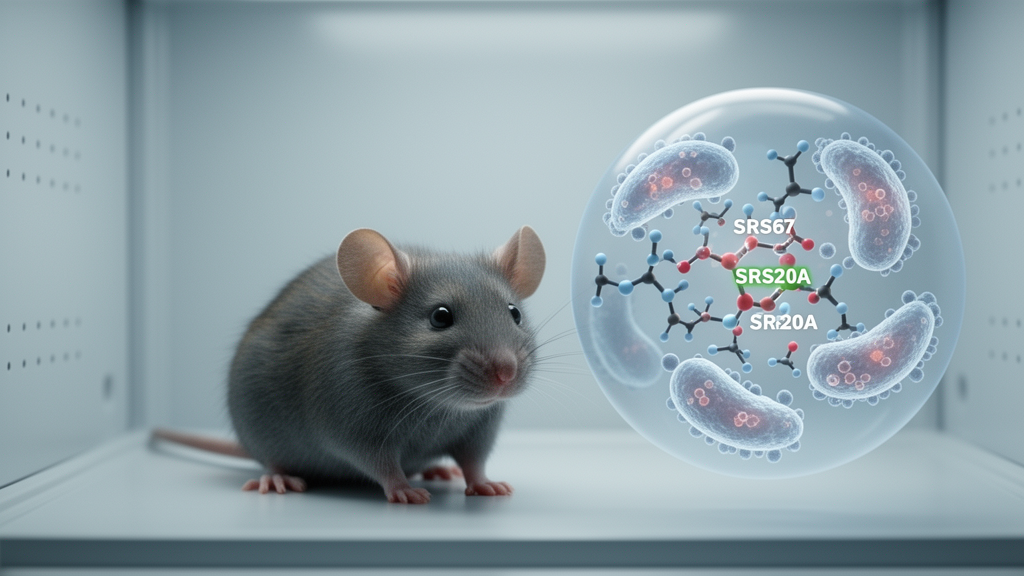
A preliminary experimental study found that polyclonal antibodies raised against the Toxoplasma gondii surface proteins SRS67 and SRS20A inhibited parasite invasion of host cells and intracellular proliferation. In infected mice, antibody treatment reduced pathological injuries, improved survival in an acute infection model, and lowered brain cyst burden in a chronic model. The findings concern laboratory and animal experiments and do not demonstrate clinical efficacy in humans.
Researchers prepared recombinant SRS67 and SRS20A proteins and generated corresponding polyclonal antibodies to investigate the two poorly characterized proteins. Immunofluorescence analysis detected punctate signals surrounding the parasite membrane for both proteins, supporting their localization at the parasite surface and their involvement in surface-associated biological processes. In vitro phenotypic assays then showed that the prepared antibodies significantly inhibited T. gondii invasion of host cells and its proliferation inside those cells.
The study assessed antibody effects and protein immunization in two mouse infection models. In the acute RH infection model, immunization with SRS67, SRS20A or both proteins together increased mouse survival by approximately 60%. Combined immunization also delayed mortality by one to two days. In the chronic PRU infection model, antibody intervention reduced brain cyst burden by more than 85% and markedly attenuated meningeal thickening and neuronal necrosis. These results describe experimental outcomes in mice; the supplied findings do not establish effectiveness in people, the durability of protection or how broadly the results extend beyond these models.
The reported mechanisms involved both parasite-associated effects and changes in host responses. During acute infection, SRS67 upregulated the expression of the cytokines TNF-α and IL-18, while both SRS67 and SRS20A downregulated IFN-γ. The investigators associated this pattern with limiting excessive immune-mediated tissue damage. An elevated glutathione level suggested participation of the proteins in antioxidant regulation. During chronic infection, combined immunization synergistically increased superoxide dismutase activity, which the study linked with resistance to oxidative stress, while decreased IFN-γ expression was associated with maintenance of immune homeostasis. Together, the observations identify SRS67 and SRS20A as potential antibody targets for anti-Toxoplasma strategies, while the study’s preliminary scope limits the conclusions to the reported cell assays and mouse models.
Subject of Research: Experimental assessment of SRS67 and SRS20A as antibody targets against Toxoplasma gondii infection in cells and mice.
Article Title: Preliminary study on expression and functions of Toxoplasma gondii SRS67 and SRS20A proteins
Article References: Chen, X., Yi, T., Ma, W., Liang, X., Niu, S., Du, M., Zhou, S., Li, Q., & Yin, D. (2026). Preliminary study on expression and functions of Toxoplasma gondii SRS67 and SRS20A proteins. Parasites & Vectors. https://doi.org/10.1186/s13071-026-07629-1
Image Credits: AI Generated
DOI: 10.1186/s13071-026-07629-1
Keywords: Toxoplasma gondii, SRS67, SRS20A, surface proteins, polyclonal antibodies, host cell invasion, mouse infection models, brain cyst burden, immune regulation, oxidative stress, Preliminary, expression
Cite Scienmag News
Drew Townsend. (October 20, 2026). Mouse study finds SRS67 and SRS20A antibodies inhibit Toxoplasma gondii. Scienmag. https://scienmag.com/mouse-study-finds-srs67-and-srs20a-antibodies-inhibit-toxoplasma-gondii/
Drew Townsend. "Mouse study finds SRS67 and SRS20A antibodies inhibit Toxoplasma gondii." Scienmag, 20 October 2026, https://scienmag.com/mouse-study-finds-srs67-and-srs20a-antibodies-inhibit-toxoplasma-gondii/. Accessed 20 October 2026.
Drew Townsend. "Mouse study finds SRS67 and SRS20A antibodies inhibit Toxoplasma gondii." Scienmag. October 20, 2026. https://scienmag.com/mouse-study-finds-srs67-and-srs20a-antibodies-inhibit-toxoplasma-gondii/


