


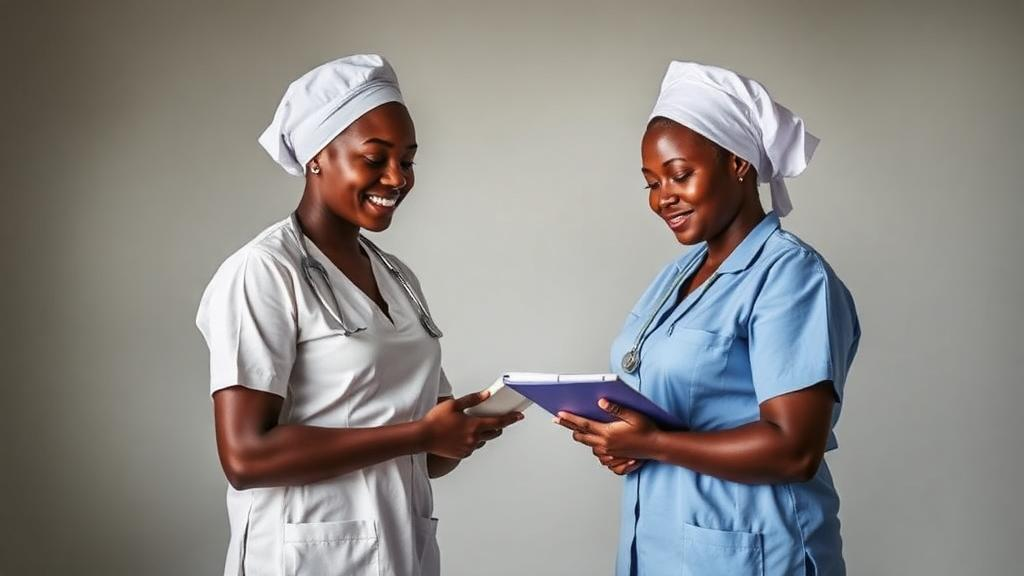
Across South Africa, millions of patients move between two parallel health systems: the biomedical clinics and hospitals staffed by trained nurses, and a dense network of traditional healers whose knowledge has been passed down through generations. Yet a new national survey of 408 nurse educators suggests that the country’s undergraduate nursing programmes are largely failing to prepare graduates for this reality. The study, published in BMC Nursing by Mabitja Moeta of the University of Johannesburg and Fhumulani Mavis Mulaudzi of the University of Pretoria, found that African traditional health knowledge and practices, often abbreviated as ATHKPs, are minimally and inconsistently integrated into the curricula that shape the nation’s future nurses.
The scale of the omission is striking. More than half of the surveyed educators reported that traditional health content is not taught at any level of their undergraduate programme, and only a small minority indicated that their institutions offer dedicated curriculum components on the subject. Foundational concepts, the values and belief systems underpinning traditional practice, the regulatory framework governing traditional health practitioners, and the professional roles nurses may play in relation to these systems were all reported as largely absent from teaching. In a country where traditional healing remains a first point of contact for many communities, the finding points to a deep structural disconnect between what nursing students learn and what their future patients believe and practise.
The research team approached the question with a quantitative, cross-sectional descriptive survey, representing the second phase of an exploratory sequential mixed-methods design. In the first phase, qualitative work informed the development of the questionnaire, ensuring that the survey instrument reflected the lived realities of educators rather than imposing externally derived categories. For the national phase, the researchers stratified public nursing education institutions by type, covering universities, universities of technology, and public nursing colleges, and collected responses from 408 nurse educators across the country. The questionnaire probed curriculum structure, the presence and depth of ATHKP-related content, teaching and assessment methods, and educators’ own perceptions of how important such teaching is.
The methodological rigour of the survey was supported by standard psychometric checks, including an assessment of sampling adequacy using the Kaiser-Meyer-Olkin measure, and the data were analysed with descriptive statistics. This design choice matters: rather than relying on anecdote or single-institution case studies, the study offers the first national-level evidence base on how, or whether, Indigenous health knowledge is woven into South African nursing education. Ethics approval was granted by the Faculty of Health Sciences Research Ethics Committee at the University of Pretoria, and participation was voluntary with informed consent obtained from all respondents.
What the numbers revealed was a curriculum gap with several distinct layers. Content was not merely thin; it was unevenly distributed and largely theoretical. Where traditional health topics did appear, educators described predominantly lecture-based, classroom-bound delivery, with little use of experiential learning approaches such as community engagement, clinical exposure, or dialogue with traditional practitioners. Formal assessment of ATHKP content was uncommon, meaning that even where material was taught, students faced little incentive to master it. In curriculum design terms, unassessed content is functionally optional, and the survey suggests that traditional health knowledge has been relegated to precisely that status.
The paradox at the heart of the findings is that nurse educators themselves do not dismiss the subject. Most respondents perceived the teaching of African traditional health knowledge as important and explicitly identified the need for educator development, clearer regulatory guidance, and structured curriculum support. In other words, the barrier appears to be institutional and systemic rather than attitudinal. Educators lack the training, the policy clarity, and the curricular scaffolding to translate their own recognition of the subject’s importance into classroom practice. This distinction is crucial for policymakers, because it reframes the problem from one of persuading sceptical faculty to one of equipping willing ones.
The clinical stakes of this gap are considerable. Nurses routinely care for patients whose health beliefs and practices are informed by Indigenous knowledge systems, including the use of herbal remedies, consultation with traditional health practitioners, and explanatory models of illness that differ from biomedical frameworks. Without formal preparation, graduates may respond to these practices with ignorance at best and cultural insensitivity or outright dismissal at worst. That carries risks in both directions: patients may conceal traditional treatments that interact pharmacologically with prescribed drugs, or may disengage from care entirely when their beliefs are met with hostility. Culturally responsive care, long championed by the World Health Organization’s emphasis on integrating traditional medicine into national health systems, requires practitioners who can navigate pluralistic health landscapes safely and ethically.
South Africa’s regulatory environment adds another layer of urgency. Traditional health practitioners in the country operate within a formal regulatory framework, and the survey found that content relating to this regulation, and to the professional roles nurses might occupy in relation to traditional practitioners, was largely missing from teaching. This means newly qualified nurses may enter the workforce without understanding the legal status of the healers their patients consult, the boundaries of their own professional responsibilities, or the referral pathways that could link the two systems. The educators surveyed flagged the absence of clearer regulatory guidance as a specific obstacle, suggesting that curriculum reform cannot proceed without parallel policy development from bodies such as the South African Nursing Council.
The study’s authors argue that strengthening curriculum content, pedagogical approaches, educator preparedness, and assessment practices related to ATHKPs could enhance culturally responsive nursing education and better prepare graduates to provide care within pluralistic healthcare systems. The recommendations are deliberately structural: educator development programmes to build faculty confidence and competence, clearer regulatory guidance to define what should be taught, and structured curriculum support to embed the material at multiple levels of the programme rather than leaving it to individual initiative. The finding that assessment practices lag behind even limited teaching suggests that any reform must address evaluation as well as delivery, since what is examined shapes what students take seriously.
For a country whose constitution recognises cultural diversity and whose health system serves a population that frequently combines biomedical and traditional care, the study reads as a wake-up call delivered with statistical precision. The gap it documents is not between nurses and their patients’ beliefs in the abstract, but between what 408 educators across the nation’s accredited public nursing institutions say matters and what their curricula actually contain. Closing that gap, the evidence suggests, will require more than goodwill; it will demand deliberate investment in teaching capacity, regulatory clarity, and curriculum design that treats African traditional health knowledge not as folklore at the margins of medicine, but as an essential competency for safe, ethical, and effective nursing practice in one of the world’s most pluralistic healthcare environments.
Subject of Research: Integration of African traditional health knowledge and practices into undergraduate nursing education in South Africa
Article Title: Teaching African traditional health knowledge and practices in undergraduate nursing education: a national survey of South African nurse educators
Article References: Moeta, M., & Mavis, M. F. (2026). Teaching African traditional health knowledge and practices in undergraduate nursing education: a national survey of South African nurse educators. BMC Nursing. https://doi.org/10.1186/s12912-026-05431-z
Image Credits: AI Generated
DOI: 10.1186/s12912-026-05431-z
Keywords: African traditional health knowledge, nursing education, South Africa, nurse educators, curriculum integration, Indigenous knowledge systems, traditional health practitioners, culturally responsive care, cross-sectional survey, BMC Nursing, health policy, undergraduate nursing
Cite Scienmag News
Ophelia Keating. (October 2, 2026). Most South African Nursing Schools Leave Traditional Healing Out of the Classroom, National Survey Finds. Scienmag. https://scienmag.com/most-south-african-nursing-schools-leave-traditional-healing-out-of-the-classroom-national-survey-finds/
Ophelia Keating. "Most South African Nursing Schools Leave Traditional Healing Out of the Classroom, National Survey Finds." Scienmag, 2 October 2026, https://scienmag.com/most-south-african-nursing-schools-leave-traditional-healing-out-of-the-classroom-national-survey-finds/. Accessed 17 October 2026.
Ophelia Keating. "Most South African Nursing Schools Leave Traditional Healing Out of the Classroom, National Survey Finds." Scienmag. October 2, 2026. https://scienmag.com/most-south-african-nursing-schools-leave-traditional-healing-out-of-the-classroom-national-survey-finds/


