


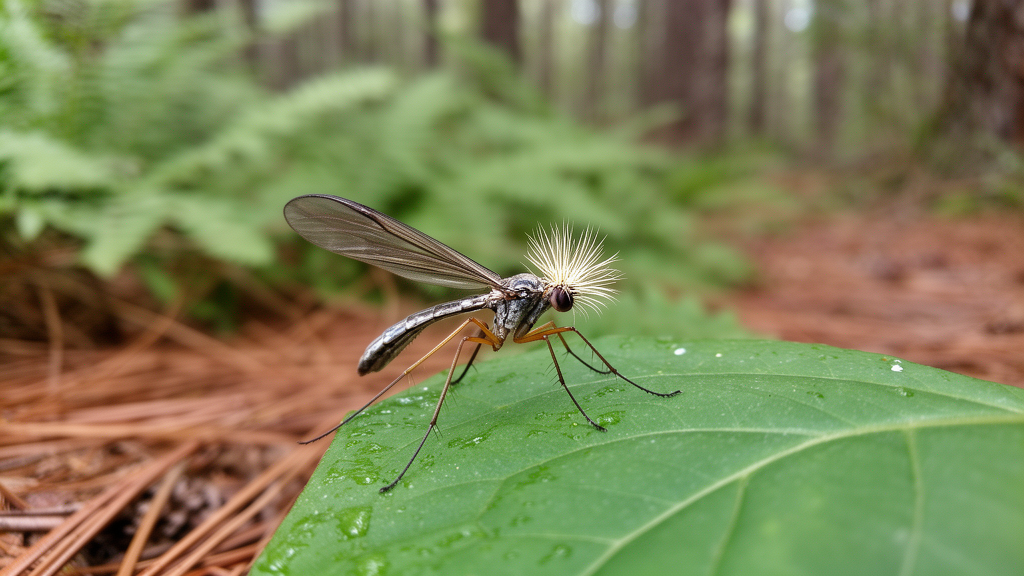
A field collection and specimen-identification study by Georgian and German researchers documents the first known records in Georgia of the parasitoid wasp families Stephanidae and Mymarommatidae, representing the superfamilies Stephanoidea and Mymarommatoidea. The records comprise one female Stephanus serrator collected in 2022 and five female Mymaromma anomalum collected in 2018. All six specimens were examined morphologically and subjected to DNA barcoding.
The Stephanus serrator specimen was swept from vegetation in Lagodekhi Protected Area, Kakheti, on 30 May 2022 at an elevation of 500 metres above sea level. It was stored in 96% ethanol and later examined under stereomicroscopes. The species has a distinctive morphology, including a spherical head with five crown-like teeth encircling the median ocellus, an elongated pronotum, a long ovipositor and a swollen metafemur bearing ventral teeth.
DNA extraction and amplification of the COI barcode region followed a published protocol in the LIB, or ZFMK, molecular laboratory, and Sanger sequencing was conducted by BGI BIO Solutions Co., Ltd. in Hong Kong. The resulting S. serrator sequence was 658 base pairs long and was generated with the primers LCO 1490-JJ and HCO 2198-JJ. A comparison with BOLD records produced four published matches with 100% sequence identity to S. serrator.
Stephanidae is described as a species-poor family with around 360 described extant species worldwide. Approximately 95% of all identified species are represented by single specimens in available records, reflecting how rarely these wasps are collected. Species with documented life histories are solitary idiobiont ectoparasitoids, principally of wood-boring beetle larvae, including Cerambycidae and Buprestidae, with additional host records from Siricidae and Apoidea.
The recorded S. serrator is known as a parasitoid of several cerambycid beetles, including Clytus arietis, Pogonocherus eugeniae, two Rhopalopus species, Saperda similis, and two Xylotrechus species. It has previously been reported from several European countries, as well as Azerbaijan, Türkiye and Russia. The Georgia specimen establishes a new country record for both the species and its family and superfamily; the study does not investigate its population size or local abundance.
The five Mymaromma anomalum specimens were collected with malaise traps in Kintrishi National Park, Ajara, during August 2018. One came from 404 metres above sea level, between 27 July and 10 August, and four from the same elevation between 10 and 24 August. A fifth specimen was collected at 1,020 metres above sea level between 10 and 24 August. The trap material was stored in 96% ethanol before the wasps were sorted, examined morphologically and barcoded.
Mymarommatidae contains 19 described extant species and has a worldwide distribution, although members of the family are rarely collected. The wasps are small, measuring 0.3–0.8 millimetres, and possess exodont mandibles, a pleated membrane connecting the frontal and occipital plates of the head, pedunculate forewings with a mesh-like pattern and long fringe setae, stalk-like hindwings and a two-segmented petiole. The M. anomalum habitus image was captured with a Zeiss Axiocam 208.
Morphological work used a Leica M205C stereomicroscope with a Leica Planapo 1.0x objective and Leica PI 10x/23 oculars, together with a Zeiss Stemi 508 stereomicroscope. A 338-base-pair COI barcode fragment was generated for M. anomalum using the primers Heloridae-CV-F and HCO 2198-JJ. Unlike the S. serrator barcode, the sequence did not yield an unambiguous species identity when compared with BOLD records on 18 March 2024.
Four of the M. anomalum specimens were deposited in the Entomology Collection of the Agricultural University of Georgia, and one in the Museum Koenig Bonn under LIB and ZFMK. The species is widespread across the Palaearctic, Nearctic and Indomalayan regions, but its host association is not established in the study. A different family member, Mymaromma menehune, is a confirmed solitary endoparasitoid of the eggs of a lepidopsocid insect. The Georgian records therefore document occurrence, morphology and barcode data rather than host use, life history or population trends.
Together, the six specimens provide the first Georgian records of Mymarommatidae and Stephanidae, adding both species and higher taxonomic groups to the country’s known wasp fauna. The authors state that these records complement knowledge of Georgia’s wasp fauna at a high taxonomic level and hope they will encourage the collection of additional distribution data for these rarely encountered parasitoid wasps in Georgia and other countries.
Subject of Research: First Georgian occurrence records of the parasitoid wasp families Stephanidae and Mymarommatidae
Article Title: First records of the Hymenoptera superfamilies and families Mymarommatoidea : Mymarommatidae and Stephanoidea : Stephanidae in Georgia
Article References: Salden, T., Müller, B., Japoshvili, G., Hein, N., Ugrelidze, A., & Peters, R. S. (2024). First records of the Hymenoptera superfamilies and families Mymarommatoidea: Mymarommatidae and Stephanoidea: Stephanidae in Georgia. Caucasiana, 3, 145-150. https://doi.org/10.3897/caucasiana.3.e124925
Image Credits: AI Generated
DOI: 10.3897/caucasiana.3.e124925
Keywords: Stephanidae, Mymarommatidae, Georgia, parasitoid wasps, DNA barcoding, COI, Caucasus Barcode of Life, taxonomic records, Kintrishi National Park, Lagodekhi Protected Area, First, records
Cite Scienmag News
Margaret Porter. (October 20, 2026). Morphological and DNA-barcode study records two parasitoid wasp families new to Georgia. Scienmag. https://scienmag.com/morphological-and-dna-barcode-study-records-two-parasitoid-wasp-families-new-to-georgia/
Margaret Porter. "Morphological and DNA-barcode study records two parasitoid wasp families new to Georgia." Scienmag, 20 October 2026, https://scienmag.com/morphological-and-dna-barcode-study-records-two-parasitoid-wasp-families-new-to-georgia/. Accessed 20 October 2026.
Margaret Porter. "Morphological and DNA-barcode study records two parasitoid wasp families new to Georgia." Scienmag. October 20, 2026. https://scienmag.com/morphological-and-dna-barcode-study-records-two-parasitoid-wasp-families-new-to-georgia/


