

Tuesday, October 20, 2026
Science
No Result
View All Result
  • Login
  • HOME
  • SCIENCE NEWS
  • CONTACT US
  • HOME
  • SCIENCE NEWS
  • CONTACT US
No Result
View All Result
Scienmag
No Result
View All Result
Home Science News Earth Science

Model maps severe oxygen depletion across one-quarter of Indian river sites

October 20, 2026
in Earth Science
Violet Maxwell
By Violet Maxwell Scienmag Editorial Profile - Natural Hazards
Reading Time: 2 mins read
0
Model maps severe oxygen depletion across one-quarter of Indian river sites

Model maps severe oxygen depletion across one-quarter of Indian river sites

65
SHARES
587
VIEWS
Share on FacebookShare on Twitter
ADVERTISEMENT

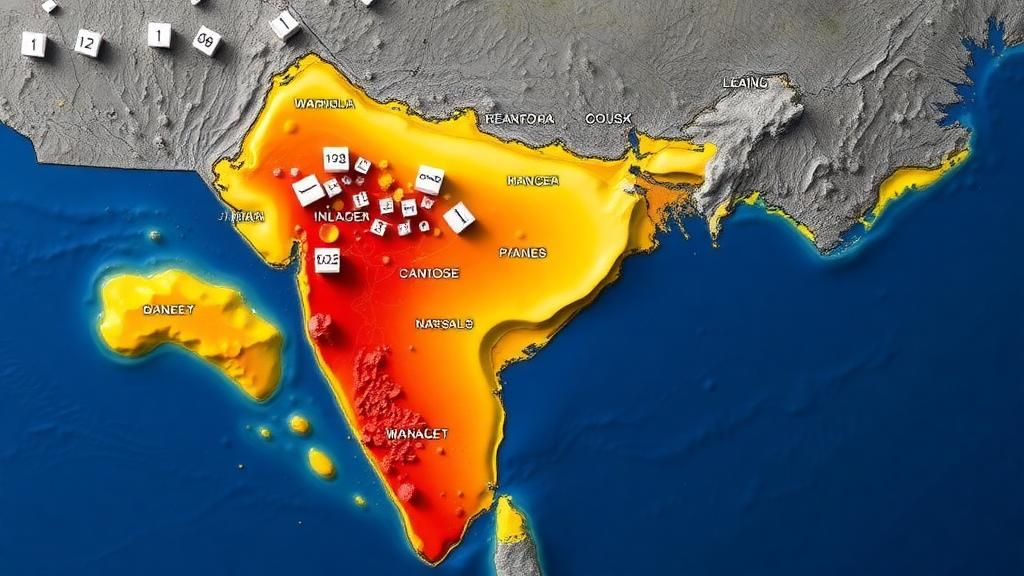
A spatiotemporal analysis of Indian river systems found that at least one severe hypoxic event occurred at approximately 25% of monitored sites, compared with a global average of 12.6% reported by the researchers. The study used 18,976 site-year summary records from 87 sub-basins over 17 years to estimate how likely annual dissolved-oxygen statistics were to fall below a critical threshold of 4.0 mg L⁻¹. It also detected pronounced geographic variation, with modeled hypoxic risk ranging from 0% to 50% among sub-basins.

The research, published in Environmental Monitoring and Assessment, treats hypoxic risk as a probability rather than relying only on counts of low-oxygen observations. The authors defined “contextual hypoxic risk” as the probability that a summary statistic would fall below 4.0 mg L⁻¹ and used that measure to distinguish emerging, intermittent and perennial hypoxic conditions. Emerging conditions accounted for 8,914 observations, or 47% of the dataset; intermittent conditions accounted for 1,328 observations, or 7%; and perennial conditions accounted for 190 observations, or 1%.

To calculate risk, the team applied an empirical Bayes Poisson–Gamma hierarchical model, which was selected to address overdispersion and stabilize standard errors. Results were then aggregated from individual sites to sub-basins, producing hydrologically meaningful units and reducing sensitivity to site selection. The researchers combined the probabilistic estimates with spatial smoothing and trajectory-steepness diagnostics to examine both differences among locations and changes through time. The supplied study abstract does not provide detailed uncertainty intervals for individual estimates or assess the causes of the observed oxygen patterns.

Spatial analysis identified particularly high hypoxic risk and faster intensification in northwestern and Gangetic sub-basins. Space–time interaction analysis found statistically significant accelerating risk trajectories, especially for intermittent and perennial conditions, in six key sub-basins. At the national scale, observed hypoxic occurrences followed an upward trend, whereas modeled risk displayed more transient patterns. The contrast shows why occurrence counts and model-based risk can convey different aspects of the same monitoring record: one describes recorded events, while the other estimates the probability that summary measurements fall below the study’s critical threshold.

The findings support closer sub-basin-scale assessment of river hypoxia in India, where the combination of high modeled risk and rapid intensification identifies areas for priority attention. The framework is also designed to work with annual minimum, mean and maximum oxygen summaries, making it potentially applicable to other regions with similarly structured monitoring data. Its scope is observational and modeling-based: it identifies where low-oxygen risk is concentrated and how it changes, but it does not establish the mechanisms responsible, demonstrate intervention effectiveness or provide a direct forecast that one-quarter of India’s river habitat will become hypoxic.

Subject of Research: Spatiotemporal modeling of riverine hypoxic risk across 87 Indian sub-basins

Article Title: A spatiotemporal framework for assessing hypoxic risk to riverine aquatic life: from summary data to actionable insight in India

Article References: Sahu, S. K., Das Sarkar, S., Jana, C., & Naskar, M. (2026). A spatiotemporal framework for assessing hypoxic risk to riverine aquatic life: from summary data to actionable insight in India. Environmental Monitoring and Assessment, 198(11), Article 1225. https://doi.org/10.1007/s10661-026-16010-9

Image Credits: AI Generated

DOI: 10.1007/s10661-026-16010-9

Keywords: river hypoxia, dissolved oxygen, India, sub-basins, empirical Bayes, environmental monitoring, spatial analysis, temporal trends, aquatic ecosystems, spatiotemporal, framework, assessing

Cite Scienmag News

Violet Maxwell. (October 20, 2026). Model maps severe oxygen depletion across one-quarter of Indian river sites. Scienmag. https://scienmag.com/model-maps-severe-oxygen-depletion-across-one-quarter-of-indian-river-sites/


Violet Maxwell. "Model maps severe oxygen depletion across one-quarter of Indian river sites." Scienmag, 20 October 2026, https://scienmag.com/model-maps-severe-oxygen-depletion-across-one-quarter-of-indian-river-sites/. Accessed 20 October 2026.

Violet Maxwell. "Model maps severe oxygen depletion across one-quarter of Indian river sites." Scienmag. October 20, 2026. https://scienmag.com/model-maps-severe-oxygen-depletion-across-one-quarter-of-indian-river-sites/

Tags: Aquatic ecosystemsassessingdissolved oxygendissolved oxygen riskemerging and perennial hypoxia conditionsempirical Bayesempirical Bayes Poisson–Gamma modelEnvironmental Monitoringenvironmental monitoring of river healthframeworkgeographic variation in hypoxic riskglobal comparison of river hypoxiahierarchical modeling of hypoxiahypoxic events in river systemsimpact of hypoxia on aquatic ecosystemsIndiaIndian river hypoxiariver hypoxiariver sub-basin oxygen levelsspatial analysisspatiotemporalspatiotemporal analysis of oxygen depletionsub-basinstemporal trends
Share26Tweet16
Previous Post

Research report: Karyotype characteristics and gene COI sequences of Chironomus bonus Shilova et Dzhvarsheishvili, 1974 ( Diptera , Chironomidae ) from the South Caucasus (Republic of Georgia, Paravani river)

Next Post

Grand Canal study finds visible heritage can lack cultural meaning

Related Posts

Green finance softens foreign investment’s negative association with Southeast Asian green growth
Earth Science

Green finance softens foreign investment’s negative association with Southeast Asian green growth

October 20, 2026
Plastic size and shape relationships measured in the Meuse and Rhine
Earth Science

Plastic size and shape relationships measured in the Meuse and Rhine

October 20, 2026
Malawi households face unequal, clustered water-energy-food deprivation
Earth Science

Malawi households face unequal, clustered water-energy-food deprivation

October 20, 2026
Preprint links anthropogenic warming to 15–30 extra hot days yearly
Earth Science

Preprint links anthropogenic warming to 15–30 extra hot days yearly

October 19, 2026
Survey of 383 Ethiopian households links integrated adaptation to better food security
Earth Science

Survey of 383 Ethiopian households links integrated adaptation to better food security

October 19, 2026
Two Lizard Species, Diverging Fates: Climate, Habitat and Egret Predation Split Mediterranean Range-Edge Reptiles
Earth Science

Two Lizard Species, Diverging Fates: Climate, Habitat and Egret Predation Split Mediterranean Range-Edge Reptiles

October 19, 2026
Next Post
Grand Canal study finds visible heritage can lack cultural meaning

Grand Canal study finds visible heritage can lack cultural meaning

  • Mothers who receive childcare support from maternal grandparents show more optimized

    Mothers who receive childcare support from maternal grandparents show more parental warmth, finds NTU Singapore study

    27656 shares
    Share 11059 Tweet 6912
  • University of Seville Breaks 120-Year-Old Mystery, Revises a Key Einstein Concept

    1061 shares
    Share 424 Tweet 265
  • Bee body mass, pathogens and local climate influence heat tolerance

    682 shares
    Share 273 Tweet 171
  • Researchers record first-ever images and data of a shark experiencing a boat strike

    546 shares
    Share 218 Tweet 137
  • Groundbreaking Clinical Trial Reveals Lubiprostone Enhances Kidney Function

    531 shares
    Share 212 Tweet 133
Science

Embark on a thrilling journey of discovery with Scienmag.com—your ultimate source for cutting-edge breakthroughs. Immerse yourself in a world where curiosity knows no limits and tomorrow’s possibilities become today’s reality!

RECENT NEWS

  • Engineered exosomes preserve trabecular bone in mouse osteoporosis model
  • Grand Canal study finds visible heritage can lack cultural meaning
  • Model maps severe oxygen depletion across one-quarter of Indian river sites
  • Research report: Karyotype characteristics and gene COI sequences of Chironomus bonus Shilova et Dzhvarsheishvili, 1974 ( Diptera , Chironomidae ) from the South Caucasus (Republic of Georgia, Paravani river)

Categories

  • Agriculture
  • Anthropology
  • Archaeology
  • Athmospheric
  • Biology
  • Biotechnology
  • Blog
  • Bussines
  • Cancer
  • Chemistry
  • Climate
  • Earth Science
  • Editorial Policy
  • Marine
  • Mathematics
  • Medicine
  • Pediatry
  • Policy
  • Psychology & Psychiatry
  • Science Education
  • Science News
  • Social Science
  • Space
  • Technology and Engineering

Subscribe to Blog via Email

Enter your email address to subscribe to this blog and receive notifications of new posts by email.

Join 5,149 other subscribers

© 2025 Scienmag - Science Magazine

Welcome Back!

Login to your account below

Forgotten Password?

Retrieve your password

Please enter your username or email address to reset your password.

Log In
No Result
View All Result
  • HOME
  • SCIENCE NEWS
  • CONTACT US

© 2025 Scienmag - Science Magazine

Discover more from Science

Subscribe now to keep reading and get access to the full archive.

Continue reading