

Tuesday, October 20, 2026
Science
No Result
View All Result
  • Login
  • HOME
  • SCIENCE NEWS
  • CONTACT US
  • HOME
  • SCIENCE NEWS
  • CONTACT US
No Result
View All Result
Scienmag
No Result
View All Result
Home Science News Earth Science

Malawi households face unequal, clustered water-energy-food deprivation

October 20, 2026
in Earth Science
Violet Maxwell
By Violet Maxwell Scienmag Editorial Profile - Natural Hazards
Reading Time: 2 mins read
0
Malawi households face unequal, clustered water-energy-food deprivation

Malawi households face unequal, clustered water-energy-food deprivation

65
SHARES
587
VIEWS
Share on FacebookShare on Twitter
ADVERTISEMENT

Malawian households face sharply unequal access to drinking water, modern cooking energy and adequate food, with overlapping deprivation concentrated among poorer families and geographically clustered across the country. An analysis of nationally representative data from 11,434 households in the 2019–2020 Malawi Integrated Household Survey found that only 1.1% of households had simultaneous access to all three resources. In addition, 54.0% experienced deprivation in at least two dimensions, while 7.0% were deprived in all three.

The researchers constructed a Household WEF Access Index from three indicators: access to improved drinking water, use of modern cooking energy and adequate food consumption. The results showed a pronounced imbalance among the dimensions. Overall, 88.7% of households had access to improved drinking water, compared with only 1.2% using modern cooking energy. Energy deprivation was therefore the dominant constraint within the household water–energy–food nexus, despite the relatively high level of improved drinking-water access.

Socioeconomic inequality was assessed with the Erreygers Concentration Index. The resulting value of −0.548 indicated that multidimensional WEF deprivation was concentrated among poorer households. The observed gradient was steep: deprivation affected 86.9% of households in the poorest group, compared with 20.2% in the richest group. This association does not by itself establish that poverty caused the unequal access pattern, but it identifies household economic position as a strong marker of vulnerability across interconnected basic services.

The study also examined whether deprivation in one area was related to deprivation in neighboring areas by using Enumeration Area-level spatial econometric models. Deprivation showed significant positive spatial clustering, with a Moran’s I of 0.445 and p < 0.001. Hotspots were concentrated across much of Malawi’s Central Region and parts of the Southern Region, indicating that limited access to water, energy and food was not distributed randomly across the country.

A spatial lag model provided the best fit among the models examined. In this specification, local concentrations of poverty remained the strongest predictor of area-level WEF deprivation after accounting for spatial spillovers. The result supports treating neighboring conditions and localized poverty as relevant features of the deprivation landscape rather than assuming that each household’s circumstances are independent of its surroundings. Taken together, the findings portray household WEF deprivation in Malawi as a multidimensional, socially unequal and geographically patterned condition, with modern cooking energy particularly scarce and hotspots identified in parts of the Central and Southern regions.

Subject of Research: Socioeconomic inequality and spatial clustering in household water, energy and food deprivation in Malawi

Article Title: Socioeconomic inequalities and spatial dependence in multidimensional household water–energy–food nexus deprivation in Malawi

Article References: Mkwandah, C., Banda, F. M., Msukuma, M., Kathewera, M., Chamdimba, H., & Chivunga, J. N. (2026). Socioeconomic inequalities and spatial dependence in multidimensional household water–energy–food nexus deprivation in Malawi. Discover Sustainability. https://doi.org/10.1007/s43621-026-04729-x

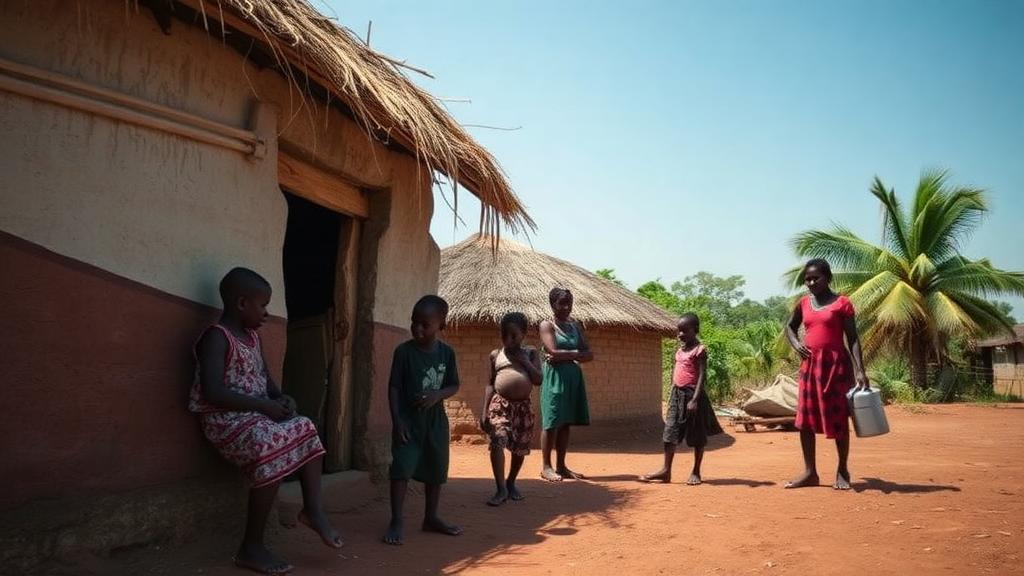
Image Credits: AI Generated

DOI: 10.1007/s43621-026-04729-x

Keywords: Malawi, household deprivation, water access, modern cooking energy, food consumption, socioeconomic inequality, spatial dependence, household survey, spatial econometrics, Socioeconomic, inequalities, spatial

Cite Scienmag News

Violet Maxwell. (October 20, 2026). Malawi households face unequal, clustered water-energy-food deprivation. Scienmag. https://scienmag.com/malawi-households-face-unequal-clustered-water-energy-food-deprivation/

Violet Maxwell. "Malawi households face unequal, clustered water-energy-food deprivation." Scienmag, 20 October 2026, https://scienmag.com/malawi-households-face-unequal-clustered-water-energy-food-deprivation/. Accessed 20 October 2026.

Violet Maxwell. "Malawi households face unequal, clustered water-energy-food deprivation." Scienmag. October 20, 2026. https://scienmag.com/malawi-households-face-unequal-clustered-water-energy-food-deprivation/


Tags: energy access disparityenergy poverty in Malawifood consumptionfood insecurity in Malawigeographic clustering of deprivationhousehold deprivationhousehold surveyhousehold WEF access indexInequalitiesinequality measurement in developing countriesMalawiMalawi household water accessMalawi Integrated Household Surveymodern cooking energymultidimensional deprivationpoverty and resource deprivationsocioeconomic inequalitysocioeconomic inequality in Malawisocioeconomic)Spatialspatial dependencespatial econometricswater accesswater-energy-food nexus
Share26Tweet16
Previous Post

Tiny PICA Aneurysm Hid Behind Isolated Brain Bleeding

Next Post

Fish-based index reveals seasonal and spatial differences in Hainan’s coastal health

Related Posts

Preprint links anthropogenic warming to 15–30 extra hot days yearly
Earth Science

Preprint links anthropogenic warming to 15–30 extra hot days yearly

October 19, 2026
Survey of 383 Ethiopian households links integrated adaptation to better food security
Earth Science

Survey of 383 Ethiopian households links integrated adaptation to better food security

October 19, 2026
Two Lizard Species, Diverging Fates: Climate, Habitat and Egret Predation Split Mediterranean Range-Edge Reptiles
Earth Science

Two Lizard Species, Diverging Fates: Climate, Habitat and Egret Predation Split Mediterranean Range-Edge Reptiles

October 19, 2026
River Fish Show Metal Stress and Higher Human Health Risks
Earth Science

River Fish Show Metal Stress and Higher Human Health Risks

October 19, 2026
One Forest, Three Tree Species, Three Very Different Growth Equations
Earth Science

One Forest, Three Tree Species, Three Very Different Growth Equations

October 19, 2026
Northern Peatlands Are Greening Unevenly as Warming Reshapes Their Canopies
Biology

Northern Peatlands Are Greening Unevenly as Warming Reshapes Their Canopies

October 19, 2026
Next Post
Fish-based index reveals seasonal and spatial differences in Hainan’s coastal health

Fish-based index reveals seasonal and spatial differences in Hainan’s coastal health

  • Mothers who receive childcare support from maternal grandparents show more optimized

    Mothers who receive childcare support from maternal grandparents show more parental warmth, finds NTU Singapore study

    27656 shares
    Share 11059 Tweet 6912
  • University of Seville Breaks 120-Year-Old Mystery, Revises a Key Einstein Concept

    1061 shares
    Share 424 Tweet 265
  • Bee body mass, pathogens and local climate influence heat tolerance

    682 shares
    Share 273 Tweet 171
  • Researchers record first-ever images and data of a shark experiencing a boat strike

    546 shares
    Share 218 Tweet 137
  • Groundbreaking Clinical Trial Reveals Lubiprostone Enhances Kidney Function

    531 shares
    Share 212 Tweet 133
Science

Embark on a thrilling journey of discovery with Scienmag.com—your ultimate source for cutting-edge breakthroughs. Immerse yourself in a world where curiosity knows no limits and tomorrow’s possibilities become today’s reality!

RECENT NEWS

  • Fish-based index reveals seasonal and spatial differences in Hainan’s coastal health
  • Malawi households face unequal, clustered water-energy-food deprivation
  • Tiny PICA Aneurysm Hid Behind Isolated Brain Bleeding
  • Dated phylogeny reshapes Ethiopian trechine beetle evolution

Categories

  • Agriculture
  • Anthropology
  • Archaeology
  • Athmospheric
  • Biology
  • Biotechnology
  • Blog
  • Bussines
  • Cancer
  • Chemistry
  • Climate
  • Earth Science
  • Editorial Policy
  • Marine
  • Mathematics
  • Medicine
  • Pediatry
  • Policy
  • Psychology & Psychiatry
  • Science Education
  • Science News
  • Social Science
  • Space
  • Technology and Engineering

Subscribe to Blog via Email

Enter your email address to subscribe to this blog and receive notifications of new posts by email.

Join 5,149 other subscribers

© 2025 Scienmag - Science Magazine

Welcome Back!

Login to your account below

Forgotten Password?

Retrieve your password

Please enter your username or email address to reset your password.

Log In
No Result
View All Result
  • HOME
  • SCIENCE NEWS
  • CONTACT US

© 2025 Scienmag - Science Magazine

Discover more from Science

Subscribe now to keep reading and get access to the full archive.

Continue reading