


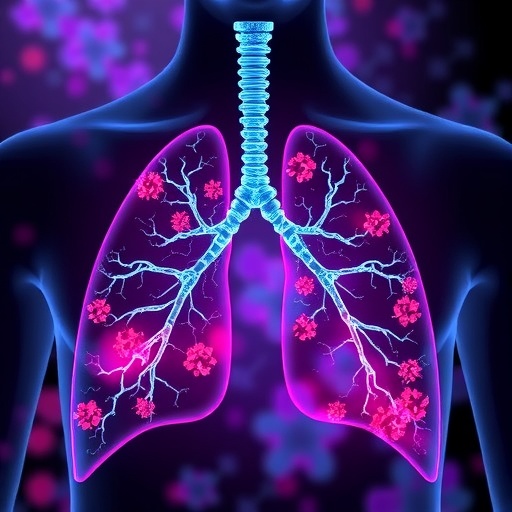
In a groundbreaking study published in Nature Communications, researchers have uncovered a vital cellular mechanism that could redefine treatments for lung injury and disease. The team led by Wu, Chen, and Liu has demonstrated that mitophagy—the selective degradation of damaged mitochondria—plays an essential role in lung repair and regeneration by maintaining the metabolic health of epithelial cells. This discovery opens new horizons for understanding how cellular quality control contributes to tissue healing and offers promising therapeutic avenues for respiratory illnesses.
The lungs are constantly exposed to environmental insults such as pollutants, pathogens, and toxins, which can lead to epithelial damage and impaired lung function. Epithelial cells lining the airways serve as a critical barrier and are responsible for gas exchange. Critical to their function is their metabolic fitness—a complex balance of energy production and maintenance of cellular homeostasis. However, under stress conditions, mitochondrial dysfunction can compromise cellular metabolism, leading to tissue injury and delayed repair. The study systematically elucidates how mitophagy orchestrates the clearance of defective mitochondria to preserve the energetic needs of these cells, driving efficient lung regeneration.
Central to the investigation is the process of mitophagy, a specialized form of autophagy that identifies and disposes of mitochondria that are damaged or no longer functional. Mitochondria are often referred to as the “powerhouses” of the cell, generating adenosine triphosphate (ATP) through oxidative phosphorylation. However, when mitochondria are compromised, they can produce excessive reactive oxygen species (ROS), triggering inflammation and cellular stress. By activating mitophagy, cells can selectively dismantle dysfunctional mitochondria, thus preventing oxidative damage and sustaining mitochondrial quality, which is particularly crucial in metabolically demanding tissues such as the lung epithelium.
The researchers employed sophisticated in vivo models of lung injury combined with advanced molecular and metabolic profiling techniques to dissect the role of mitophagy during epithelial repair. Their data revealed that enhanced mitophagy is tightly linked with restoration of metabolic homeostasis in epithelial cells following lung injury. Loss-of-function experiments inhibiting key mitophagic pathways resulted in impaired lung regeneration, demonstrating that mitophagy is not merely a bystander process but an active driver of tissue recovery. Conversely, pharmacological or genetic interventions boosting mitophagy accelerated epithelial regeneration and improved lung function metrics.
A particularly innovative aspect of the study was the integration of state-of-the-art single-cell RNA sequencing and metabolic flux analyses to define cellular heterogeneity in the lung epithelium after injury. This allowed the authors to identify subpopulations of epithelial cells with heightened mitophagic activity correlating strongly with metabolic resilience and proliferative capacity. These cellular insights highlight mitophagy as a crucial adaptive response facilitating recovery by fine-tuning mitochondrial function in a cell type-specific manner.
At the molecular level, the study delved into the regulatory circuits governing mitophagy activation during lung repair. Key molecules such as PINK1 and Parkin, well-established initiators of mitophagy, were found to be upregulated in epithelial cells after injury and necessary for efficient mitochondrial turnover. Moreover, the interplay between mitophagy and metabolic signaling pathways involving AMPK and mTOR was elucidated, underscoring a complex network that balances energy sensing, mitochondrial quality, and cell proliferation.
In addition to mechanistic insights, the authors translated their findings to human lung disease contexts, analyzing tissue samples from patients with acute lung injury and chronic respiratory conditions. Consistent with their experimental models, diminished mitophagic flux was detected in diseased epithelia, suggesting that impaired mitochondrial quality control contributes to defective lung repair in pathologies such as acute respiratory distress syndrome (ARDS) and chronic obstructive pulmonary disease (COPD). This translational relevance strengthens the potential clinical impact of targeting mitophagy pathways.
Therapeutically, the study identified several candidate compounds capable of modulating mitophagy. Agents that stimulate mitochondrial quality control showed enhanced epithelial recovery in preclinical models, framing mitophagy modulation as a viable strategy for respiratory medicine. Importantly, these interventions not only improved tissue regeneration but also reduced inflammation and oxidative damage, emphasizing the multifaceted benefits of restoring mitochondrial fitness.
This research also sheds light on the broader implications of mitochondrial health in tissue regeneration beyond the lung. Mitochondria are increasingly recognized as central hubs coordinating cell fate, differentiation, and response to injury. By detailing how mitophagy interlinks cellular metabolism with repair processes, the study adds a critical piece to the puzzle of how organs recover from damage and maintain functional integrity. Future explorations into mitophagy could revolutionize regenerative medicine across multiple organ systems.
Despite the excitement, the authors acknowledge challenges that remain. Targeting mitophagy therapeutically in humans will require precise modulation to avoid adverse effects, as excessive mitochondrial degradation could impair cellular energy supply. Additionally, the identification of specific biomarkers to monitor mitophagic activity in patients is necessary for effective translation. Nonetheless, this seminal work lays a robust foundation for the development of mitophagy-based interventions in lung disease and beyond.
Moreover, the intricate relationship between metabolism, mitophagy, and immunity unveiled by the study opens avenues for integrative approaches addressing inflammation and repair concurrently. Since respiratory diseases often involve chronic inflammation and mitochondrial dysfunction, a dual focus on restoring metabolic fitness and controlling immune responses could maximize therapeutic efficacy.
The multidisciplinary nature of the study—combining cell biology, metabolic assays, animal models, and human tissue analysis—exemplifies the power of integrated research to unravel complex biological phenomena. By bridging fundamental mitochondrial biology with clinical pathology, the authors provide a comprehensive narrative that will resonate with scientists and clinicians alike.
In essence, the findings from Wu, Chen, Liu, and colleagues propel mitophagy to the forefront of lung biology, highlighting it as a dynamic and indispensable process for epithelial cell viability and tissue regeneration. This refined understanding of mitochondrial quality control mechanisms may soon translate into innovative therapies that not only repair damaged lungs but also enhance resilience against future injuries.
As the global burden of lung diseases continues to rise, especially under the shadow of pandemics and increasing air pollution, strategies that can enhance lung repair at the cellular level are urgently needed. Mitophagy modulation emerges from this study as a powerful candidate, bearing the promise of revitalizing lungs by harnessing the cell’s own quality control systems.
In conclusion, the revelation that mitophagy promotes lung repair and regeneration by restoring epithelial metabolic fitness reshapes our comprehension of lung biology and presents an actionable target for clinical innovation. Moving forward, this work invites the scientific community to further explore mitochondrial maintenance in tissue repair and explore therapeutic strategies that leverage this essential cellular process.
Cite Scienmag News
Ophelia Keating. (April 14, 2026). Mitophagy Boosts Lung Repair via Metabolic Restoration. Scienmag. https://scienmag.com/mitophagy-boosts-lung-repair-via-metabolic-restoration/
Ophelia Keating. "Mitophagy Boosts Lung Repair via Metabolic Restoration." Scienmag, 14 April 2026, https://scienmag.com/mitophagy-boosts-lung-repair-via-metabolic-restoration/. Accessed 3 September 2026.
Ophelia Keating. "Mitophagy Boosts Lung Repair via Metabolic Restoration." Scienmag. April 14, 2026. https://scienmag.com/mitophagy-boosts-lung-repair-via-metabolic-restoration/


