


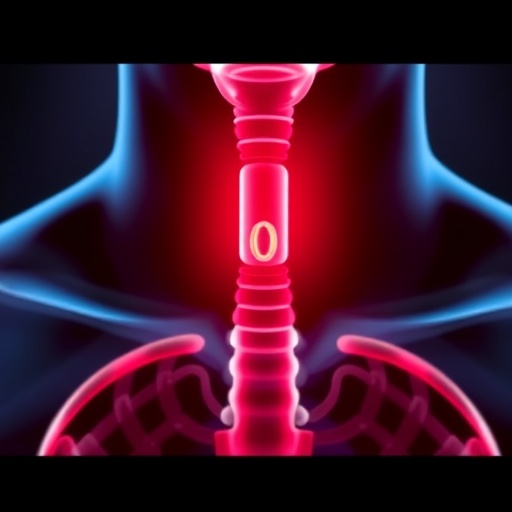
In a groundbreaking advancement that may revolutionize the treatment of esophageal disorders, engineers at MIT have developed an innovative gel-like oral drug formulation capable of adhering to the mucosal lining of the esophagus, enabling targeted drug delivery with enhanced tissue penetration. This novel approach holds the potential to transform care for patients afflicted by inflammatory conditions of the esophagus, such as eosinophilic esophagitis and Crohn’s disease, where effective localized therapies have been scarce due to anatomical and physiological barriers.
Current treatments for esophageal disorders often rely on systemic medications, which expose the entire body to the drug and come with heightened risks of undesirable side effects. Administering drugs locally to the esophageal tissue has posed a formidable challenge because substances swallowed transit rapidly through the esophagus, offering minimal time for absorption, and because the esophageal epithelium comprises a multilayered, stratified squamous barrier highly resistant to drug permeability. Injecting drugs directly into the esophagus is feasible but impractical in routine care, given patient discomfort and the necessity of clinical settings.
Addressing these limitations, the MIT research team, led by associate professor Giovanni Traverso, devised a uniquely engineered formulation that integrates a polysaccharide-derived hydrogel and a dual cocktail of bile salts—sodium chenodeoxycholate and sodium cholate. The hydrogel confers desirable viscous properties that allow the composition to coat and linger on the esophageal surface, while the bile salts function as permeation enhancers that transiently relax the junctions between epithelial cells. This synergy facilitates the penetration of drug molecules through the normally tight cellular barrier without causing permanent tissue disruption.
To optimize the formulation, the researchers crafted an intricate experimental setup simulating the esophageal environment by sandwiching ex vivo esophageal tissue between vertical plates, enabling precise quantification of drug permeation from a top reservoir mimicking oral ingestion. Through systematic screening of approximately one hundred inert excipients, they identified the potent permeability-enhancing effects of the bile salt pair. Molecular analyses suggest that these bile salts act by chelating calcium ions essential for the maintenance of cell-cell adhesion, thereby temporarily loosening tight junction integrity and creating paracellular pathways for drug translocation.
In preclinical animal models, the formulation demonstrated robust delivery of infliximab—an anti-TNF-alpha monoclonal antibody widely used to combat autoimmune inflammation—directly to the esophageal mucosa. Importantly, the permeability modulation induced by the bile salts reversed within three days post-application, indicating a reversible and safe mechanism that preserves tissue integrity. This advancement could allow localized treatment of autoimmune esophageal diseases while minimizing the systemic exposure and immunosuppressive risks associated with current therapies.
The translational implications of this research are profound. Site-specific administration of biologics and small molecules could herald a new era where devastating conditions like eosinophilic esophagitis and esophageal Crohn’s inflammation are managed more safely, efficaciously, and comfortably. By reducing systemic drug levels, adverse events such as infections linked to immunosuppression could potentially be mitigated, improving patients’ quality of life and adherence to therapy.
Further work is underway to refine the balance between adequate mucosal residence time and patient comfort, ensuring that the gel formulation adheres sufficiently to facilitate drug absorption without causing sensations of discomfort or obstruction. The team envisions expanding this platform beyond infliximab to encompass a variety of therapeutic agents, including other antibodies and small-molecule drugs, thereby broadening the clinical applicability.
This research marks a pivotal step in overcoming the physiological hurdles that have long thwarted effective esophageal drug delivery. By ingeniously combining material science, pharmacology, and gastroenterology insights, the MIT team has unlocked a new frontier for localized therapy in a notoriously challenging anatomical site. Their work lays a foundation for future drug development tailored to target the esophagus with precision and minimal collateral effects.
Going forward, the researchers aim to initiate clinical trials to assess safety, efficacy, and patient acceptance in humans. The use of a hydrogel matrix combined with permeation enhancers represents a versatile platform technology that could also be adapted for other mucosal surfaces where drug penetration is limited by tight epithelial barriers.
In an era where personalized and localized medicine is rapidly advancing, this innovation exemplifies how multidisciplinary collaboration can yield solutions to unsolved clinical challenges. The capacity to deliver immunomodulatory agents directly to the site of pathology with controlled permeability modulation might redefine standards of care for esophageal inflammatory diseases and potentially inspire analogous strategies across other organ systems.
Ultimately, this work spotlights how breakthroughs in drug delivery technologies can profoundly affect therapeutic landscapes by reconciling the often conflicting demands for efficacy, safety, and patient convenience. The promising results showcased in this study, published in Nature Biomedical Engineering, underscore the potential impact on millions of patients worldwide who suffer from debilitating esophageal conditions that have historically defied effective local pharmacotherapy.
Cite Scienmag News
Louis Brooks. (June 12, 2026). MIT Engineers Develop Targeted Drug Delivery System for the Esophagus. Scienmag. https://scienmag.com/mit-engineers-develop-targeted-drug-delivery-system-for-the-esophagus/
Louis Brooks. "MIT Engineers Develop Targeted Drug Delivery System for the Esophagus." Scienmag, 12 June 2026, https://scienmag.com/mit-engineers-develop-targeted-drug-delivery-system-for-the-esophagus/. Accessed 5 September 2026.
Louis Brooks. "MIT Engineers Develop Targeted Drug Delivery System for the Esophagus." Scienmag. June 12, 2026. https://scienmag.com/mit-engineers-develop-targeted-drug-delivery-system-for-the-esophagus/


