


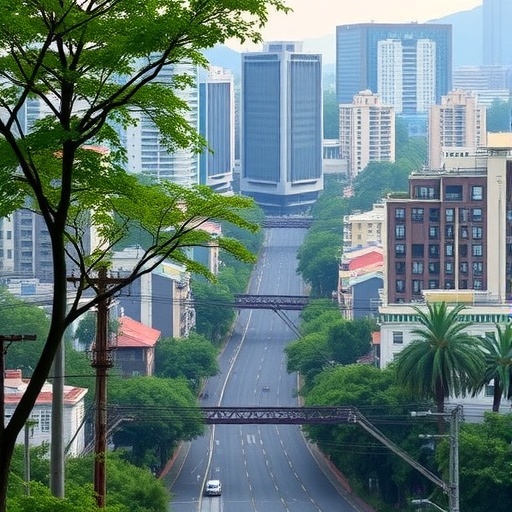
Urban environments are complex, dynamic systems where human activity and natural processes intersect in unprecedented ways. Recent scientific advances have revealed that urban stressors—ranging from artificial lighting and noise pollution to increased temperatures—profoundly interfere with the phenological rhythms of organisms. Phenology, the study of biological timing in relation to environmental cues, is crucial for the synchronization of ecosystem functions. A groundbreaking study by H. Doi, soon to be published in npj Urban Sustainability, sheds new light on how urban stressors disrupt the phenological clock, unraveling the intricate balance of urban ecosystems and their vital services.
Phenological events such as flowering, breeding, migration, and hibernation depend on precise environmental stimuli, including photoperiod, temperature, and resource availability. In cities, these cues are often altered or obscured by anthropogenic factors. For instance, artificial night lighting extends the perceived length of days, while urban heat islands—localized warming in metropolitan areas—cause temporal shifts in temperature-dependent processes. The cumulative effect is a desynchronization of phenological events, impacting interspecies interactions and ecosystem functioning in ways that are only beginning to be understood.
One of the most compelling aspects of Doi’s research involves the mechanistic underpinnings of how urban stimuli alter endogenous circadian and circannual rhythms. The study integrates field observations and experimental manipulations across multiple taxa, including plants, birds, and insects. It reveals that altered light cycles disrupt melatonin production and other hormonal pathways critical for timing physiological and behavioral activities. This disruption cascades through trophic levels, affecting pollination, predation, and reproductive success—key processes that uphold urban biodiversity.
One particularly striking finding highlights the mismatch between pollinators and flowering plants under urban conditions. Pollinators such as bees and butterflies rely on synchronized blooming to forage and reproduce successfully. However, when plants bloom earlier or later due to temperature anomalies or artificial light, pollinators may emerge or become active at suboptimal times. This temporal misalignment reduces pollination efficiency and threatens urban food webs and plant reproductive cycles, potentially leading to population declines of key urban species.
Moreover, urban noise pollution introduces additional complexity to phenological disruption. Acoustic masking impairs communication among wildlife, especially songbirds whose mating behaviors depend on precise timing and vocal signals. Noise-induced delays or advances in breeding seasons can decrease reproductive output and alter community dynamics. Doi’s analysis suggests that multiple stressors interact synergistically, causing cumulative phenological disturbances that can have nonlinear ecological consequences.
The urban heat island effect presents another formidable challenge to phenological stability. Elevated nighttime temperatures in cities reduce the typical thermal drop that many species use as a critical seasonal cue. This thermal inertia leads to earlier onset of spring behaviors and prolonged activity periods. While some species may temporarily benefit from extended growing seasons, others experience mismatches with food availability or increased predation risk. The subsequent ripple effects threaten ecosystem resilience and diminish the quality of urban ecosystem services such as air purification, temperature regulation, and recreation.
Understanding these intertwined phenomena is crucial for urban planning and biodiversity conservation. Doi advocates for the integration of phenology-based indicators into urban sustainability frameworks. By incorporating phenological data into urban green space management, planners can design mitigation strategies tailored to the biological timing of resident species. This could include adjusting lighting designs to minimize circadian disruption, planting native species with bloom times that align with pollinator activity, and establishing thermal refuges to buffer heat extremes.
The implications of phenological clock disruption extend beyond ecology; they directly affect human well-being as well. Urban ecosystems provide critical services like air and water purification, carbon sequestration, and mental health benefits through green space exposure. As phenological disruptions jeopardize the health and diversity of urban flora and fauna, they simultaneously reduce the capacity of these ecosystems to support human populations. This perspective calls for urgent interdisciplinary collaboration to safeguard not only nature but also urban society.
Beyond data collection, the study emphasizes adaptive management strategies rooted in ecological theory. Recognizing that phenological plasticity and evolutionary responses may partially buffer urban organisms against changing cues, Doi explores the potential for assisted gene flow and habitat connectivity to enhance adaptability. This proactive stance goes beyond conservation to envision urban ecosystems as dynamic, evolving entities capable of supporting biodiversity despite anthropogenic pressures.
The urgency of addressing urban phenological disruption intersects with the broader challenges of global environmental change. Climate change compounds urban heat island effects, while expanding urban footprints augment artificial lighting and noise pollution. The compounded impacts threaten to unleash unprecedented destabilization of biological clocks. Doi’s research serves as a clarion call for integrated action blending urban ecology, landscape architecture, policy innovation, and community engagement to foster phenological resilience.
As cities continue to expand and intensify, they redefine the relationship between humans and nature. The phenological clock, a fundamental organizer of life’s timing, stands as a sensitive indicator of urban ecosystem health. The disruptions documented by Doi may foreshadow a deeper unraveling of urban ecological networks if left unchecked. This research galvanizes not only scientific inquiry but also activism aimed at restoring temporal integrity within urban nature, ensuring that cities remain vibrant habitats for diverse life forms.
In conclusion, H. Doi’s pioneering work elucidates the pervasive influence of urban stressors on the phenological clock, revealing new dimensions of how cities disrupt natural rhythms. Through comprehensive, multidisciplinary analysis, this research deciphers the complex biological, ecological, and social ramifications of phenological shifts. It highlights the need for urgent, systemic interventions to protect and revitalize urban ecosystems in an era of rapid anthropogenic change. Urban sustainability will depend on our ability to harmonize technological advancement with the timeless cycles that govern life itself.
Cite Scienmag News
Gavin Prescott. (June 12, 2026). Urban Stressors Disrupt Ecosystem Timings and Services. Scienmag. https://scienmag.com/urban-stressors-disrupt-ecosystem-timings-and-services/
Gavin Prescott. "Urban Stressors Disrupt Ecosystem Timings and Services." Scienmag, 12 June 2026, https://scienmag.com/urban-stressors-disrupt-ecosystem-timings-and-services/. Accessed 4 September 2026.
Gavin Prescott. "Urban Stressors Disrupt Ecosystem Timings and Services." Scienmag. June 12, 2026. https://scienmag.com/urban-stressors-disrupt-ecosystem-timings-and-services/


