


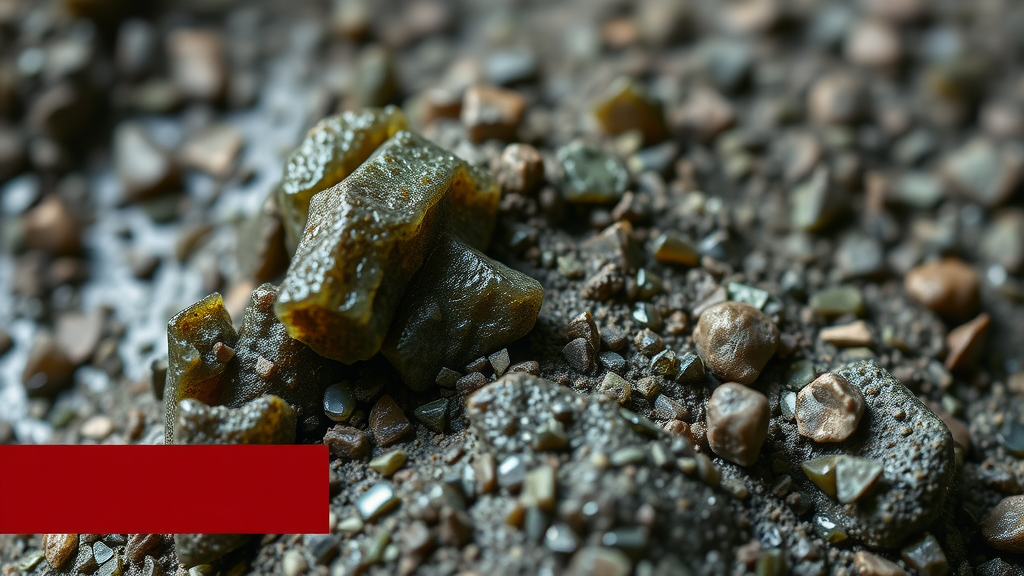
A humble green rock that sits in enormous piles at mines around the world is quietly becoming one of the most intriguing materials in water science. Serpentinite, the magnesium-rich rock formed when oceanic mantle reacts with water, has long been treated as a low-value by-product of mining and quarrying. A comprehensive new review published in Environmental Earth Sciences argues that this abundant mineral platform could be engineered into high-performance adsorbents and photocatalytic supports capable of stripping heavy metals, dyes, arsenic, phosphate and other contaminants from polluted water at a fraction of the cost of conventional materials. The review, led by Mostafa R. Abukhadra and colleagues, brings together decades of scattered research into a single coherent framework linking the crystal structure of serpentine minerals to their environmental performance.
The secret to serpentinite’s promise lies in its atomic architecture. Serpentine minerals are 1:1 phyllosilicates built from alternating tetrahedral silicon-oxygen sheets and octahedral magnesium-hydroxide sheets, an arrangement that produces surfaces densely covered in hydroxyl groups. These amphoteric hydroxyls can be protonated or deprotonated depending on pH, giving the mineral a tunable surface charge that governs how it attracts cationic metals, anionic dyes and oxyanions. The serpentine family includes three principal polymorphs, lizardite, chrysotile and antigorite, which differ in layer curvature and stacking geometry, and natural serpentinite often contains mixtures of these phases along with accessory minerals. That heterogeneity matters, the review stresses, because it influences surface reactivity, dissolution behavior and the pathways by which pollutants are captured.
Perhaps the most striking recent discovery highlighted in the review is that the two faces of a serpentine layer behave entirely differently. When researchers exfoliated serpentinite into ultrathin Janus nanosheets only 0.6 to 0.8 nanometers thick, they found that the magnesium-hydroxide face binds cadmium and lead far more strongly than the silicon-oxygen face, through inner-sphere monodentate complexation confirmed by density functional theory calculations. The nanosheets showed adsorption capacities roughly four times higher than bulk serpentine powders simply because thinning the layers exposed more of the reactive magnesium-hydroxyl planes. This facet-dependent behavior transforms how scientists think about the mineral: rather than a uniform sorbent, serpentinite is a crystallographically anisotropic platform whose most reactive surfaces can be deliberately exposed.
Raw serpentinite, however, is only a moderate performer. Untreated samples typically show limited pore volume, modest specific surface area and a finite density of active sites. Studies cited in the review found that pristine serpentine adsorbed cadmium at capacities far below those of activated forms, and untreated calcium-rich serpentinite tailings removed arsenite at a mere 0.23 milligrams per gram. The review is candid about this limitation: natural serpentinite should be regarded as a credible but performance-limited parent material whose real value lies in serving as the starting point for a battery of activation strategies that can multiply its uptake capacity many times over.
Those activation strategies form the technical heart of the review. Thermal treatment between roughly 600 and 750 degrees Celsius drives off structural hydroxyls, disrupts the layered framework and generates defect-rich, mesoporous, forsterite-bearing materials with dramatically improved cadmium, arsenic and lead removal; one thermally activated sample achieved removal efficiencies of 99.94 percent for cadmium and 99.26 percent for lead. Acid leaching preferentially dissolves magnesium from the octahedral sheet, leaving silica-rich porous residues ideal for anchoring semiconductor nanoparticles. Mechanochemical ball milling shatters the crystal structure, creating vacancies and broken magnesium-oxygen-silicon linkages that release magnesium and hydroxide into solution, enabling not just adsorption but precipitation-assisted removal of copper and even simultaneous cadmium immobilization with carbon dioxide mineralization. Intercalation and exfoliation with agents such as potassium acetate delaminate the layers into nanosheets, while surfactant functionalization with CTAB produced a serpentinite-derived magnesium silicate nano-adsorbent with Langmuir capacities reaching 491.9 milligrams of cadmium per gram, among the highest reported for any mineral-derived sorbent.
The review also documents an emerging photocatalytic dimension. Because serpentinite is cheap, hydroxyl-rich and thermally transformable, it serves as an excellent support matrix and silica precursor for semiconductor photocatalysts. Titanium dioxide loaded onto acid-leached serpentinite tailings achieved nearly 95 percent photoreduction of toxic hexavalent chromium within two hours under ultraviolet light, outperforming pure TiO2 because the porous mineral scaffold preconcentrated the pollutant and prevented nanoparticle aggregation. More remarkably, researchers transformed serpentinite tailings into a silica support for copper-copper oxide photocatalysts, combining them with copper recovered from waste printed circuit boards; the resulting visible-light-active composite reduced chromium(VI) more effectively than any of its individual components and lost only about five percent of its activity after five reuse cycles, thanks to suppressed electron-hole recombination at the copper-semiconductor-support interfaces.
Hybrid systems that couple adsorption with photocatalysis represent the most exciting frontier. In these architectures, the mineral support concentrates contaminants near photoactive sites, shortening diffusion paths and increasing reaction probability, while the semiconductor destroys or transforms the adsorbed pollutant and partially regenerates the surface. The review emphasizes that this synergy is not merely additive: the best serpentinite-based hybrids outperform both standalone adsorbents and standalone photocatalysts because the support simultaneously provides pollutant affinity, catalyst dispersion, easier recovery and charge-mediating interfaces. The authors caution, however, that balancing adsorption capacity against light penetration and active-site accessibility remains a genuine design challenge, and direct demonstrations for pharmaceuticals and diverse organic pollutants are still scarce, with most photocatalytic evidence concentrated on chromium photoreduction.
Practical relevance is already emerging beyond the laboratory. Natural serpentinite mining tailings removed aluminum, iron and manganese from contaminated surface water with efficiencies exceeding 80 percent and retained performance over five regeneration cycles. Activated serpentine has been used to recover more than 98 percent of phosphorus from black water as struvite, a valuable magnesium ammonium phosphate fertilizer, by releasing magnesium and alkalinity that drive crystallization. Serpentinite-containing mineral mixtures have treated acidic mine water in continuous-flow devices, and magnetic serpentinite composites have removed chromium from real tannery wastewater. These demonstrations position serpentinite-based materials as candidates for decentralized and low-resource treatment systems, particularly in mining districts where the raw material is literally available at the site of contamination.
The review is equally clear about the obstacles standing between laboratory promise and widespread deployment. Serpentinite is mineralogically variable, and some feedstocks may contain fibrous, asbestos-like chrysotile that requires careful screening before grinding or activation, since processing can alter fiber morphology and release hazards. Trace nickel and chromium inherent to the rock can leach during aggressive acid treatment or repeated use, demanding routine monitoring of treated water and spent adsorbents. Regeneration costs, the fate of exhausted sorbents loaded with concentrated contaminants, and the absence of standardized protocols linking mineralogy and pretreatment history to performance all remain unresolved. The authors call for composition-resolved databases, pilot-scale validation in real effluents, life-cycle and techno-economic analyses, and systematic integration of spent-material disposal and valorization into material design from the outset.
What emerges from this synthesis is a compelling vision of circular resource use: turning geological waste into environmental technology. Serpentinite is abundant, often free for the taking at mine sites, and can be upgraded with nothing more exotic than heat, acid, grinding or soap-like surfactants. The same mineral that once clogged tailings ponds can become a cadmium sponge, an arsenic scavenger, a phosphorus recovery medium or the scaffold for a sunlight-driven catalyst. As the review concludes, serpentinite is best understood not as a static rock but as a designable mineral platform whose structure-property-function relationships, once fully mapped, could underpin a new generation of affordable, scalable and genuinely sustainable water remediation technologies for a world facing ever-growing pressures on its freshwater supplies.
Subject of Research: Engineering serpentinite-derived materials for sustainable water remediation through activation pathways, surface engineering, and adsorption and photocatalytic applications
Article Title: Engineering serpentinite-derived materials for sustainable water remediation: activation pathways, surface engineering, and adsorption–photocatalytic applications—a review
Article References: Abukhadra, M. R., Hamed, S. M., Diab, A. S., Allam, A. A., Zoubi, W. A., & Rudayni, H. A. (2026). Engineering serpentinite-derived materials for sustainable water remediation: activation pathways, surface engineering, and adsorption–photocatalytic applications—a review. Environmental Earth Sciences, 85(15), Article 393. https://doi.org/10.1007/s12665-026-13073-2
Image Credits: AI Generated
DOI: 10.1007/s12665-026-13073-2
Keywords: serpentinite, water remediation, adsorption, photocatalysis, heavy metal removal, mining tailings, thermal activation, nanosheets, surface functionalization, dye removal, phosphate recovery, sustainable materials
Cite Scienmag News
Violet Maxwell. (September 13, 2026). Mining Waste Turned Water Purifier: Serpentinite Emerges as a Powerful, Low-Cost Cleanup Material. Scienmag. https://scienmag.com/mining-waste-turned-water-purifier-serpentinite-emerges-as-a-powerful-low-cost-cleanup-material/
Violet Maxwell. "Mining Waste Turned Water Purifier: Serpentinite Emerges as a Powerful, Low-Cost Cleanup Material." Scienmag, 13 September 2026, https://scienmag.com/mining-waste-turned-water-purifier-serpentinite-emerges-as-a-powerful-low-cost-cleanup-material/. Accessed 4 October 2026.
Violet Maxwell. "Mining Waste Turned Water Purifier: Serpentinite Emerges as a Powerful, Low-Cost Cleanup Material." Scienmag. September 13, 2026. https://scienmag.com/mining-waste-turned-water-purifier-serpentinite-emerges-as-a-powerful-low-cost-cleanup-material/


