


Review maps how lignocellulosic waste can be turned into nanocellulose
A new review details how agricultural and forestry waste can be converted into high-value nanocellulose, while warning that energy demand, ...
A new review details how agricultural and forestry waste can be converted into high-value nanocellulose, while warning that energy demand, ...
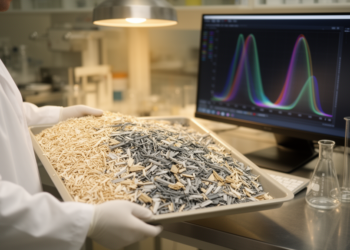
An explainable Kolmogorov-Arnold Network optimised by the Marine Predators Algorithm predicted six mechanical and durability properties of PET- and rice-husk-ash-blended ...
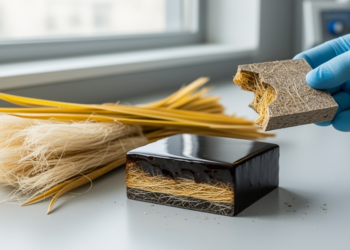
Surface-treated Bhimal and pineapple leaf fibers with marble dust raised an epoxy composite's impact strength by 305 percent and its ...

Researchers have developed a robotic fabrication method that sprays living bacteria, cementation solution and sand onto surfaces to grow biocemented ...
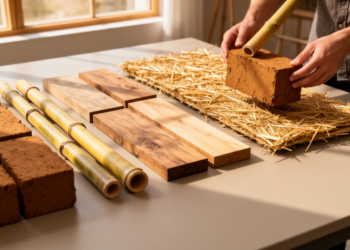
A comparative synthesis of 29 retained sources finds that sustainable low-cost housing materials show context-dependent benefits rather than a universal ...

Brazilian researchers show that mild hydrogen peroxide bleaching at 40 degrees Celsius preserves the nanofiber structure of kombucha-derived bacterial cellulose ...
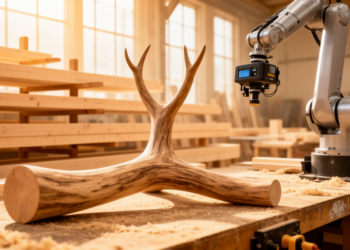
Researchers built a parametric workflow that scans tree forks, matches their fork-angle statistics to digitally optimized structures, and fabricated three ...

A new review details how cellulose and paper substrates have become active, tunable platforms for electrochemical, gas, optical, and wearable ...
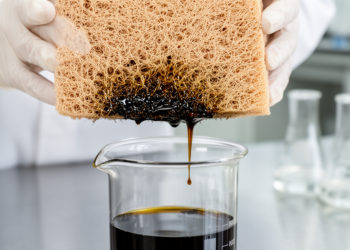
Researchers report a hydrophobic sodium alginate and coconut coir fiber aerogel that achieved 288.10 percent oil absorption capacity at an ...
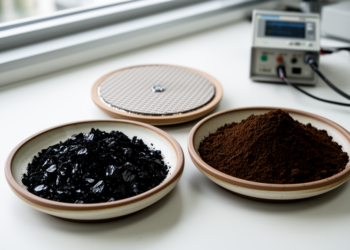
A new study finds coconut shell-derived carbon electrodes achieve far higher capacitance and conductivity than kluwak shell-derived counterparts for electrical ...


Embark on a thrilling journey of discovery with Scienmag.com—your ultimate source for cutting-edge breakthroughs. Immerse yourself in a world where curiosity knows no limits and tomorrow’s possibilities become today’s reality!