

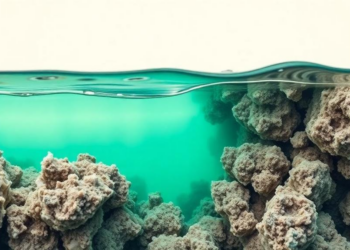
Industrial Waste Transformed Into Porous Sponge That Scrubs Toxic Dye From Water
Researchers have created a porous geopolymer adsorbent from metakaolin and silica fume, using hydrogen peroxide foaming and oil templating, that ...
Researchers have created a porous geopolymer adsorbent from metakaolin and silica fume, using hydrogen peroxide foaming and oil templating, that ...

Researchers at Hacettepe University have created molecularly imprinted, silica-coated magnetic nanoparticles that selectively capture methylene blue from real water samples ...
A new study shows graphene oxide and reduced graphene oxide can remove nearly all Rhodamine B dye from water within ...
Thai researchers have turned invasive water hyacinth into pelletized diatomite-based geopolymer adsorbents that remove up to 77 percent of methylene ...
Researchers in Iran have created electrospun nanofibers of polyvinyl alcohol, gum arabic, and green carbon dots that efficiently and repeatedly ...
Researchers in India have created a pH-responsive hydrogel from pullulan, carboxymethyl cellulose, and montmorillonite clay that removes over 96 percent ...
Researchers have synthesized a zinc oxide-graphene oxide nanocomposite that removes up to 97 percent of methylene blue and 94 percent ...
Tunisian researchers converted Mediterranean seagrass waste into an activated carbon and combined it with polyaniline to create a composite adsorbent ...
A comparative study finds iron electrodes outperform aluminum in electrocoagulation, removing over 97 percent of the textile dye neutral red ...
Researchers have built a dual-modified PVDF ultrafiltration membrane that combines a semi-interpenetrating polymer network with a surface-anchored polyaniline layer, achieving ...

Embark on a thrilling journey of discovery with Scienmag.com—your ultimate source for cutting-edge breakthroughs. Immerse yourself in a world where curiosity knows no limits and tomorrow’s possibilities become today’s reality!