


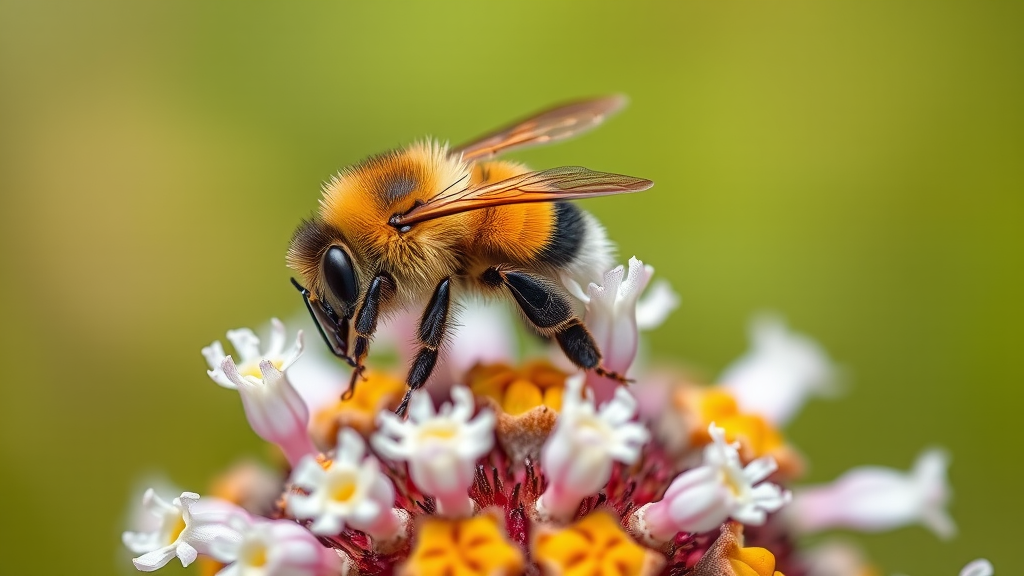
Bumblebees are among the most important pollinators in temperate ecosystems, sustaining wildflowers and crops alike through their tireless foraging. But a new study suggests that the modern environment is becoming a gauntlet of overlapping hazards for these insects. Researchers at the University of Bayreuth, together with colleagues at LMU Munich, the University of Cologne and Forschungszentrum Jülich, have shown that low-density polyethylene microplastics do not merely add one more burden to the lives of bumblebees—they dramatically amplify the damage caused by two other hallmarks of global change: elevated ground-level ozone and heat stress. The findings, published open access in the journal Microplastics and Nanoplastics, offer one of the most detailed multi-stressor pictures yet of how pollutants interact inside the bodies of pollinating insects.
The research team, led by Gwen Kühn and Heike Feldhaar of the University of Bayreuth’s Bayreuth Center of Ecology and Environmental Research, designed a fully crossed factorial experiment on buff-tailed bumblebees, Bombus terrestris. In such a design, every possible combination of the three stressors—ozone, heat, and microplastics—is tested, including each stressor alone, every pairwise pairing, and all three together. This rigorous architecture allowed the scientists to disentangle the individual effect of each hazard from the effects that emerge only when hazards collide, a distinction that is critical because wild insects never experience stressors in isolation. In the field, a foraging bumblebee on a hot summer afternoon may simultaneously breathe ozone-laden air and carry microplastic particles on its body and in its gut.
The ozone levels used were environmentally relevant concentrations rather than extreme laboratory doses. Ground-level ozone is a secondary pollutant formed when nitrogen oxides and volatile organic compounds react in sunlight, and its concentrations are expected to rise in many regions as temperatures climb. Heat exposure likewise reflected realistic warming scenarios. The microplastics were low-density polyethylene particles, one of the most common plastics in the environment, generously provided and characterized by Daniel Wagner under the supervision of Professor Seema Agarwal within the Collaborative Research Centre 1357 Microplastics, a flagship German research program dedicated to understanding this pervasive pollutant.
To probe what the stressors were doing inside the bees, the team turned to proteomics—large-scale analysis of the proteins expressed in the fat body, the insect organ that serves as a combined liver, fat store and immune hub. The protein signatures told a clear and mechanistically revealing story. Ozone exposure triggered an oxidative stress response, consistent with ozone’s chemistry as a powerful oxidant that damages tissues and consumes antioxidants. Heat stress reshaped the bees’ metabolism, reflecting the energetic cost of maintaining physiological balance at elevated temperatures. Microplastics, remarkably, induced signatures of tissue damage and detoxification, suggesting the particles were physically harming internal structures and mobilizing the bees’ cellular defense machinery.
When the researchers turned from proteins to survival, the pattern became even more striking. Among the single stressors, microplastics alone had the strongest effect on mortality—a sobering result given the quiet, continuous accumulation of plastic particles in terrestrial ecosystems. Yet ozone and heat, which on their own did not significantly increase mortality in this setup, became lethal partners when microplastics entered the equation. Only in combination with microplastics did ozone, heat, and both of them combined significantly raise death rates. In other words, plastic particles appeared to lower the bees’ resilience, opening the door for environmental conditions that would otherwise be survivable.
The most alarming result emerged when all three stressors acted together. For that triple combination, the observed effect on mortality exceeded what would be predicted from simply adding up the individual and pairwise effects, indicating true synergistic interaction. Synergy is the word toxicologists reserve for combinations that are more dangerous than the sum of their parts, and it is exactly the kind of nonlinearity that single-stressor studies miss. The authors propose one plausible mechanism: microplastic exposure may reduce heat resistance in bumblebees, so that temperatures a healthy bee could tolerate become deadly for a plastic-burdened one. If the particles damage gut or fat body tissues and drain detoxification resources, the physiological reserves needed to survive heat waves may simply no longer be there.
Why does this matter beyond the laboratory? Pollinators already face pesticide exposure, habitat loss, parasites and shifting flowering seasons. This study adds a troubling layer: the very pollutants generated by industrial society—plastics and photochemical smog—do not just coexist with climate warming, they chemically and physiologically collaborate with it. Rising temperatures do not only stress bees directly; they also drive the photochemical reactions that produce more ground-level ozone, while the global accumulation of microplastics continues essentially unchecked. The Bayreuth team’s conclusion is blunt: the progressive environmental buildup of microplastics, rising temperatures, and the ozone increases they bring could pose a serious health risk to pollinators in the near future.
The technical sophistication of the work deserves emphasis. By combining a fully crossed factorial mortality assay with fat body proteome analysis, the study links whole-organism outcomes to molecular mechanisms, moving the field beyond the simple observation that ‘pollution is bad for bees.’ The proteome data provide concrete, testable hypotheses—for instance, that oxidative damage from ozone compounds the tissue injury caused by plastic particles, or that metabolic reprogramming under heat leaves exposed bees with diminished capacity to repair microplastic-induced damage. Such mechanistic insight is essential for building realistic risk models that regulators and conservationists can actually use.
For conservation policy, the implications are uncomfortable but actionable. If microplastics sensitize pollinators to ozone and heat, then reducing plastic emissions into soils and airways, curbing the nitrogen oxide pollution that feeds ozone formation, and protecting bees from compound exposures during heat waves become intertwined goals rather than separate agendas. The study, funded by the German Research Foundation through CRC 1357 and published with open access support, arrived as an accepted manuscript that is fully citable and carries a permanent DOI. Its timing could hardly be more pointed: as summers grow hotter and plastic pollution spreads to every ecosystem on Earth, the humble bumblebee may be sounding an early alarm about the hidden arithmetic of combined environmental stressors—where one plus one plus one can equal far more than three.
Subject of Research: Combined effects of microplastics, ozone and heat stress on bumblebee health and mortality
Article Title: Negative effects of increased ozone concentrations and heat stress on bumblebees are exacerbated by microplastics
Article References: Kühn, G., Rupprecht, M. M., Mair, M. M., Stöckl, J. B., Kröger, F., Schieder, A., Nölscher, A. C., Fröhlich, T., & Feldhaar, H. (2026). Negative effects of increased ozone concentrations and heat stress on bumblebees are exacerbated by microplastics. Microplastics and Nanoplastics. https://doi.org/10.1186/s43591-026-00229-x
Image Credits: AI Generated
DOI: 10.1186/s43591-026-00229-x
Keywords: bumblebees, microplastics, ozone, heat stress, pollinators, LDPE, proteomics, fat body, synergistic effects, ecotoxicology, multiple stressors, Bombus terrestris
Cite Scienmag News
Gavin Prescott. (September 20, 2026). Microplastics Amplify the Deadly Toll of Ozone and Heat on Bumblebees. Scienmag. https://scienmag.com/microplastics-amplify-the-deadly-toll-of-ozone-and-heat-on-bumblebees/
Gavin Prescott. "Microplastics Amplify the Deadly Toll of Ozone and Heat on Bumblebees." Scienmag, 20 September 2026, https://scienmag.com/microplastics-amplify-the-deadly-toll-of-ozone-and-heat-on-bumblebees/. Accessed 5 October 2026.
Gavin Prescott. "Microplastics Amplify the Deadly Toll of Ozone and Heat on Bumblebees." Scienmag. September 20, 2026. https://scienmag.com/microplastics-amplify-the-deadly-toll-of-ozone-and-heat-on-bumblebees/


