


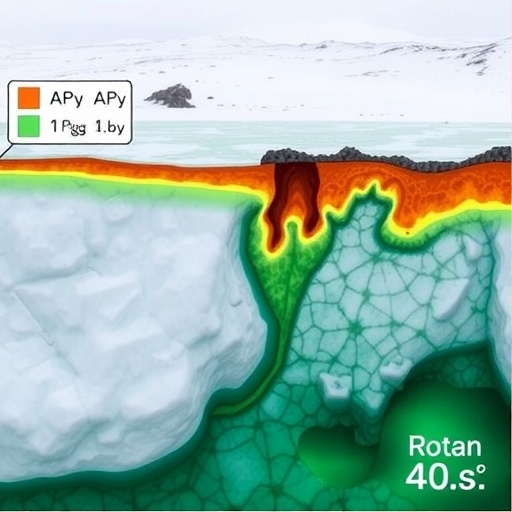
In a groundbreaking study, researchers led by Haitao Wang have uncovered significant insights into methane-cycling microbiomes found in the soils of the pan-Arctic region. This research highlights the critical role these microbial communities play in biogeochemical processes, especially in the context of permafrost degradation. With climate change accelerating, understanding these interactions becomes crucial in predicting future environmental dynamics.
The Arctic, often regarded as the canary in the coal mine of climate change, is experiencing rapid transformations due to rising temperatures. The permafrost, which has historically served as a carbon sink, is beginning to thaw, releasing stored methane — a potent greenhouse gas — into the atmosphere. Wang and his team classified these microbial communities, emphasizing their role in methane and carbon cycling within soil ecosystems. This research marks a significant advancement in our understanding of biogeochemical cycling in the face of climate change.
Methane-cycling bacteria and archaea, including methanogens and methanotrophs, were found to thrive in specific environmental conditions influenced by thawing permafrost. These microbial populations exhibit a remarkable adaptability under fluctuating climatic conditions, allowing them to maintain their methane-processing capacities even as their habitats undergo drastic changes. The team’s research provides a comprehensive analysis of the microbial diversity present in these soils, revealing a complex network of interactions that regulate methane emissions.
One of the pivotal findings of this study is the identification of key environmental factors that influence the composition and activity of methane-cycling microbiomes. Soil temperature, moisture content, and nutrient availability were found to play a significant role in shaping these communities. The researchers suggest that as the Arctic continues to warm, these factors will shift, potentially leading to enhanced methane emissions from Arctic soils and further complicating global climate feedback mechanisms.
Moreover, the study reveals how these microbial communities adjust to permafrost thawing. As the ice melts, organic matter becomes more available, fueling microbial metabolism. The intricate balance between methanogenesis and methane oxidation is critical, and this research has quantified how these processes are affected by the ongoing climatic shifts. The findings underscore the potential for positive feedback loops where increased methane emissions may contribute to further warming, exacerbating the climate crisis.
In addition to providing insights into microbial diversity, this research also highlights the importance of developing adaptive management strategies. By understanding the functional capabilities of methane-cycling microbiomes, policymakers can devise better strategies for carbon management in the Arctic. This work is vital not just for the Arctic region but for global climate stability as it can inform broader ecological and atmospheric models.
Wang outlines future research directions, emphasizing the necessity for long-term ecological monitoring of permafrost regions to gauge shifting microbial communities over time. Collecting data on how these microorganisms respond to continued warming is crucial for predicting their future roles in carbon cycling and greenhouse gas emissions. This longitudinal approach will help fill critical knowledge gaps in Arctic microbiology and climate science.
The research team utilized advanced techniques such as metagenomic sequencing to decipher the genetic material accessible from soil samples. This high-throughput approach offered a window into the hidden microbial diversity, allowing the researchers to identify specific genes responsible for methane cycling processes. Such genomic insights illuminate the mechanisms underlying microbial interactions and their contributions to carbon dynamics in a changing climate.
Interestingly, the study also found that interactions between different microbial species can enhance methane processing efficiency. This finding emphasizes the importance of microbial community dynamics, suggesting that biodiversity itself can play a critical role in maintaining ecosystem functions even as environmental conditions change. These interactions may buffer against the impacts of climate change, offering a glimmer of hope in an otherwise troubling narrative.
Despite the promising findings regarding microbial adaptability, Wang cautions against underestimating the potential impacts of rapid climatic shifts. The potential for critical thresholds to be exceeded within these ecosystems must be taken into consideration, as the feedback mechanisms involved could lead to irreversible changes. This underscores the urgency of addressing climate change to mitigate potentially harmful outcomes.
The implications of these findings transcend regional concerns, impacting global climate models and our understanding of carbon cycling. As methane is significantly more effective at trapping heat than carbon dioxide over shorter timeframes, the role of Arctic microbiomes in global warming cannot be overlooked. As Wang’s research illustrates, the interconnectedness of climate processes necessitates a holistic approach to environmental studies and carbon management.
As the Arctic continues to be a focal point for climate change research, studies like Wang’s serve as crucial building blocks for understanding ecosystem resilience. By providing clarity on the relationship between microbial communities and environmental variables, this research certainly paves the way for more informed climate policies and conservation strategies.
In conclusion, the study of methane-cycling microbiomes in the pan-Arctic illustrates dire implications for future climate scenarios. The interplay between these microbial communities and the changing environmental conditions highlights the need for continued investigation into the dynamics of Arctic ecosystems. As we confront the realities of climate change, the findings from this important research will be indispensable in shaping our responses to this global challenge.
Wang, H., Lindemann, E., Liebmann, P. et al. Methane-cycling microbiomes in soils of the pan-Arctic and their response to permafrost degradation.
Commun Earth Environ 6, 748 (2025). https://doi.org/10.1038/s43247-025-02765-5
Cite Scienmag News
Morgan Morrow. (September 16, 2025). Microbial Methane Dynamics in Degrading Arctic Permafrost. Scienmag. https://scienmag.com/microbial-methane-dynamics-in-degrading-arctic-permafrost/
Morgan Morrow. "Microbial Methane Dynamics in Degrading Arctic Permafrost." Scienmag, 16 September 2025, https://scienmag.com/microbial-methane-dynamics-in-degrading-arctic-permafrost/. Accessed 3 September 2026.
Morgan Morrow. "Microbial Methane Dynamics in Degrading Arctic Permafrost." Scienmag. September 16, 2025. https://scienmag.com/microbial-methane-dynamics-in-degrading-arctic-permafrost/


