Aquaculture is under mounting pressure to produce more protein with less water, less feed and fewer chemicals, and a comprehensive review published in Green Technology, Resilience, and Sustainability argues that a decades-old microbial technique may be one of the most practical answers. The paper, authored by Saima Jan, Farooz Ahmad Bhat, Shafiya Mushtaq, Gowhar Iqbal, Tasaduq Hussain Shah and Adnan Amin, examines biofloc technology (BFT), a farming method that cultivates dense communities of bacteria, algae and other microorganisms directly in fish and shrimp tanks. These microbial aggregates, or flocs, strip nitrogenous waste from the water and simultaneously serve as an in-tank food source, allowing farmers to slash water exchange and cut external feed use. The authors conclude that animals raised in biofloc systems generally outperform conventionally farmed controls in growth, survival and physiological health, positioning the technique as a competitive alternative for rearing major commercial aquatic species.
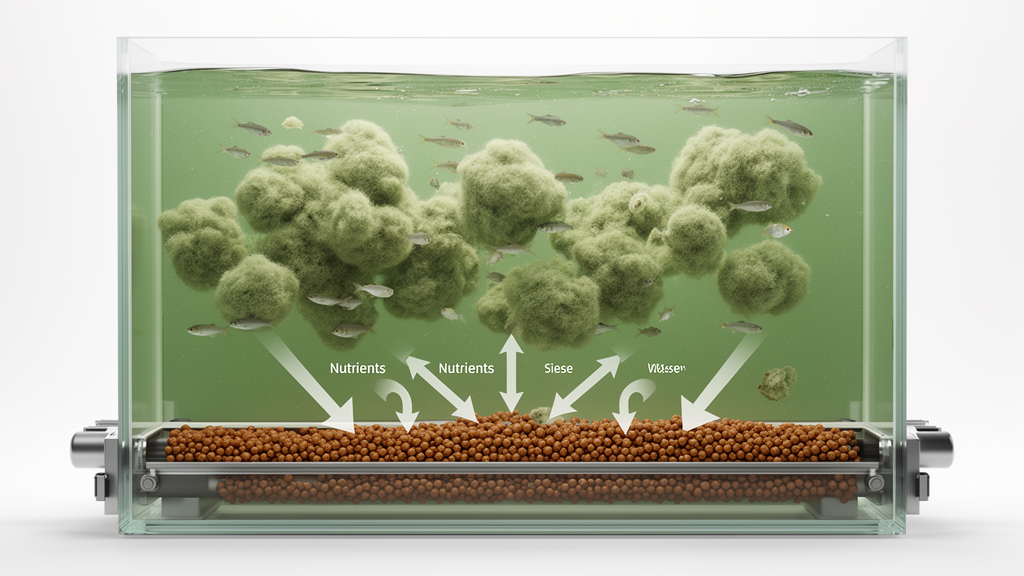
The core of the technology is deceptively simple: manipulate the carbon-to-nitrogen ratio in the culture water. BFT aims to keep this ratio at roughly 10 to 1, either by lowering the protein content of the diet or by adding carbon-rich supplements such as starch, wheat flour or molasses. Under these conditions, heterotrophic bacteria flourish and convert ammonia and other nitrogenous waste, the toxic by-products of fish metabolism and uneaten feed, into microbial biomass. According to the review, citing Hargreaves, heterotrophic bacteria produce roughly ten times more microbial biomass per unit of substrate than denitrifying bacteria and fix inorganic nitrogen far more quickly, meaning a well-carbon-supplemented biofloc system can convert ammonia within one to two days. The resulting flocs, which range from a few micrometres to several millimetres across, are held together by bacterially generated polysaccharide mucus and reinforced by filamentous bacteria and electrostatic attraction, making them available as food to fish of many different sizes.
The technique has a longer history than its current popularity might suggest. It was first developed in the 1970s, with the review crediting the Aquacop team at the French Research Institute for Exploitation of the Sea (IFREMER) with the initial development in 1975, later enhanced by the addition of carbohydrates. The original goal was to reduce disease in seawater prawn cultivation by preventing water exchange, thereby blocking the entry of parasitic, bacterial and viral pathogens while encouraging beneficial microbes. The method proved especially valuable for rearing species such as Penaeus vannamei, P. stylirostris, P. monodon and P. merguiensis. Despite these decades of existence, the authors note that international research on BFT is still in its early stages, and their review specifically addresses a gap: previous assessments focused on system development and sustainability but paid little attention to how biofloc concentration affects fish physiological health.
The ecological logic of the system is compelling. In conventional ponds, only 20 to 30 percent of the nitrogen added as feed is retained by the fish; the remainder ends up as a pollutant, raising levels of hazardous compounds such as nitrite and ammonia. Biofloc systems instead self-nitrify, using beneficial microorganisms to break down and absorb these toxic substances without requiring water exchange. The flocs themselves are a complex mixture of uneaten feed, faeces, dead microbial cells, extracellular polysaccharides, colloidal materials and organic polymers, and they supply minerals, fatty acids and other nutrients. Because feed accounts for at least half of aquaculture’s overall production costs, largely due to the high price of protein in prepared meals, converting waste into an additional protein source carries substantial economic weight. The review also highlights that BFT requires mainly sunlight, a carbon source and occasional aeration, giving it a lower initial cost than most conventional fish production techniques.
Running a successful biofloc system, however, demands careful setup and constant attention. Before starting, farmers prepare an inoculum solution; a common recipe combines 300 grams of molasses, 100 grams of probiotic bacteria and 10 kilograms of non-iodised sea salt in a 20-litre tank aerated for one to two days. Alternative protocols use one litre of molasses with one kilogram of commercial compound feed to reach a carbon-to-nitrogen ratio of 15:1, and carbon sources such as glucose, acetate, starch, wheat and glycerol can also be employed. Microscopic confirmation of microbial flocs is recommended before adding the starter solution. Aeration is critical because heterotrophic bacteria consume large amounts of oxygen while decomposing ammonia; one study cited found diffuse aerators outperformed other designs in Penaeus vannamei culture. The microbial community itself is diverse, spanning photoautotrophic algae, chemoautotrophic nitrifying bacteria such as Nitrosomonas europaea and Nitrobacter winogradskyi, and heterotrophs including Bacillus, Pseudomonas and Rhodopseudomonas species, with some estimates suggesting a single system may harbour up to 2000 bacterial species.
The health evidence assembled in the review is extensive. Nile tilapia (Oreochromis niloticus) grown in biofloc systems increased in size by 71.8 to 319.9 percent relative to controls, while olive flounder (Paralichthys olivaceus) grew 26.3 percent faster than controls in one study. When biofloc was combined with a recirculating aquaculture system for tilapia, the feed conversion ratio reached 1.20 plus or minus 0.03, about 18 percent more efficient than the 1.47 plus or minus 0.02 achieved with the recirculating system alone. Survival data reveal important nuances: African catfish (Clarias gariepinus) at a low stocking density of 4 fish per litre achieved 96 percent survival in biofloc versus 87 percent in controls, but at a high density of 8 fish per litre survival dropped to 78 percent, below the control. Carbon source matters too, with glycerol yielding 90.6 percent survival and sucrose 76.3 percent against a 60 percent control, while rice bran produced only 27 percent survival, likely due to insufficient carbon for effective floc synthesis.
Physiological measurements reinforce these production benefits. Red blood cell counts rose noticeably in tilapia when carbon sources such as glycerol, molasses and starch were added, and white blood cell counts increased in tilapia, Asian stinging catfish and African catfish, indicating immune activation. Total antioxidant capacity increased in common carp raised with table sugar, sugar beet molasses or maize starch as carbon sources, and in the gills, kidneys, brain, liver, stomach and serum of other species. Bioactive components in biofloc, including chlorophyll, polyphenols, carotene, taurine, polysaccharides, phytosterols and vitamins, appear to drive these effects. Tilapia in biofloc showed significantly higher plasma superoxide dismutase and catalase activity, and malondialdehyde, a marker of lipid peroxidation, was significantly lower in biofloc-raised tilapia and common carp, signalling reduced oxidative damage. Macrophage phagocytic capacity and total immunoglobulin levels also rose in biofloc-cultured tilapia, pointing to strengthened innate and adaptive immunity.
Disease resistance is perhaps the most striking claimed advantage. The beneficial microorganisms in biofloc compete with harmful bacteria for resources and space, and the review reports protection against dangerous pathogens including Vibrio harveyi, Aeromonas hydrophila, Edwardsiella tarda and Streptococcus iniae, along with reduced incidence of infections caused by Vibrio species and infectious myonecrosis virus in shrimp. Bacillus strains identified within biofloc systems, such as one showing antagonistic effects against the pathogenic Vibrio alginolyticus, act as natural probiotics. Because these microbial defences reduce disease pressure, biofloc systems can eliminate the need for antibiotics, which the authors note have been misused in the sector, fuelling drug-resistant bacteria. Consumer safety analyses add further reassurance: levels of twelve heavy metals in biofloc-cultured fish stayed under national and international safety guidelines, with minimal bioaccumulation factors and lower hazard index and cancer risk values than conventionally farmed fish.
The review is candid about limitations and open questions. Biofloc systems consume significant energy, carry high operational costs and require constant aeration, factors restricting widespread adoption, and effective management demands specific knowledge and regular adjustment of system settings. Excessive microbial activity can deplete dissolved oxygen and destabilise the system, and an overabundance of microbes can overwhelm the water’s purification capacity. There are also food safety caveats: a study on climbing perch (Anabas testudineus) in biofloc systems isolated twelve pathogenic bacterial strains, including species associated with human infections such as Enterobacter cloacae and Klebsiella aerogenes, some showing intrinsic antimicrobial resistance even without prior antibiotic use, underscoring the need for routine microbial evaluation and biosecurity. Current applications focus on herbivorous and detritivorous species such as tilapia and prawns, though the authors see room to extend the technique to carnivorous fish. With world fish production projected to reach 196 million metric tonnes by 2025 and aquaculture already supplying 47.9 percent of global fish output in 2019, the authors argue that refining biofloc density criteria, exploring microbial diversity and integrating real-time IoT monitoring could make this microbial ecosystem a cornerstone of climate-smart fish farming.
Subject of Research: Biofloc technology as a sustainable aquaculture production method
Article Title: Biofloc technology: an emerging tool for enhancing aquaculture production
Article References: Jan, S., Bhat, F. A., Mushtaq, S., Iqbal, G., Shah, T. H., & Amin, A. (2026). Biofloc technology: an emerging tool for enhancing aquaculture production. Green Technology, Resilience, and Sustainability, 6(1), Article 3. https://doi.org/10.1007/s44173-026-00028-w
Image Credits: AI Generated
DOI: 10.1007/s44173-026-00028-w
Keywords: biofloc technology, aquaculture, microbial protein, water quality, fish health, sustainability, nitrogen recycling, disease resistance, food safety, tilapia, probiotics, IoT monitoring
Cite Scienmag News
Morgan Morrow. (October 29, 2026). Microbial Flocks Turn Fish Waste Into Feed, Reshaping Sustainable Aquaculture. Scienmag. https://scienmag.com/microbial-flocks-turn-fish-waste-into-feed-reshaping-sustainable-aquaculture/
Morgan Morrow. "Microbial Flocks Turn Fish Waste Into Feed, Reshaping Sustainable Aquaculture." Scienmag, 29 October 2026, https://scienmag.com/microbial-flocks-turn-fish-waste-into-feed-reshaping-sustainable-aquaculture/. Accessed 29 October 2026.
Morgan Morrow. "Microbial Flocks Turn Fish Waste Into Feed, Reshaping Sustainable Aquaculture." Scienmag. October 29, 2026. https://scienmag.com/microbial-flocks-turn-fish-waste-into-feed-reshaping-sustainable-aquaculture/