


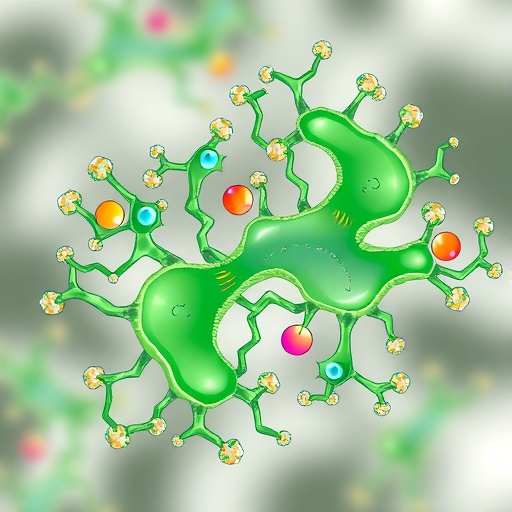
In a groundbreaking study that promises to reshape our understanding of bacterial antibiotic resistance, researchers have unveiled a novel mechanism by which metabolic control modulates porin permeability in Escherichia coli (E. coli). This discovery uncovers a critical layer of complexity in how bacteria regulate the influx of antibiotics, offering exciting new avenues for combating one of modern medicine’s most pressing challenges: antibiotic resistance.
Antibiotic resistance has long been acknowledged as a formidable hurdle in the treatment of bacterial infections worldwide. Central to this resistance is the bacterial outer membrane’s selective permeability, controlled largely by protein channels known as porins. These porins essentially act as gatekeepers, determining what molecules can pass into the bacterial cell. Until now, our understanding of porin regulation has been limited, and this new study shifts the paradigm by linking it directly to the cell’s metabolic state.
The research team, led by Caño Muñiz and colleagues, focused on the intricate interplay between metabolic signals and the dynamic modulation of porin channels in E. coli. Their findings demonstrate that metabolic cues directly influence porin conformation and consequently the permeability of the bacterial outer membrane. This metabolic control fine-tunes the bacteria’s vulnerability or resistance to antibiotics depending on its physiological status.
Technically, the team employed an integrated methodology combining advanced imaging, genetic manipulation, and biochemical assays to decode this regulatory mechanism. They found that metabolic intermediates and energy status within the bacterial cytoplasm act as molecular switches. These switches alter the gating behavior of porins such as OmpF and OmpC, pivotal in the passage of β-lactams and other antibiotics into the bacterial cell.
The implications of metabolically modulated porin permeability are profound. It suggests that antibiotic efficacy can vary not just due to genetic mutations but also transient metabolic states of bacteria, which were previously underappreciated. This insight offers a plausible explanation for the often observed variability in antibiotic susceptibility in bacterial populations that are genetically identical.
Perhaps most provocatively, the study reveals that under nutrient-rich conditions, E. coli can downregulate porin permeability to limit the uptake of harmful antibiotics, essentially entering a defensive metabolic mode. Conversely, in nutrient-poor environments, the porins tend to remain open, likely to maximize nutrient uptake, inadvertently increasing antibiotic susceptibility. This finding highlights the metabolic trade-offs bacteria navigate during antibiotic exposure.
Further, the research explores the potential feedback loops between antibiotic-induced stress response and metabolic adjustments, forming a complex regulatory circuit. This interplay suggests a dynamic bacterial adaptation strategy where metabolic states are tightly coupled to environmental cues, enhancing survival under selective pressures like antibiotic treatment.
One of the technological novelties of this research lies in the use of high-resolution cryo-electron microscopy combined with live-cell fluorescence resonance energy transfer (FRET) techniques. This enabled visualization of porin conformational changes in real-time, a feat that was previously unattainable. The coupling of these imaging modalities with metabolomic profiling represents a significant technical advancement in microbiological research.
Beyond fundamental science, this mechanistic insight potentially paves the way for new therapeutic strategies. By targeting the metabolic regulators or the signaling pathways that influence porin behavior, novel adjuvant drugs could be developed to sensitize bacteria to existing antibiotics. Such an approach could restore the efficacy of antibiotics against resistant bacteria without the need for entirely new drugs.
Moreover, the findings shed light on the heterogeneity of bacterial populations during infection. Bacteria in different metabolic states might display variable resistance profiles, influencing treatment outcomes. Recognizing and manipulating these metabolic states during clinical interventions might improve antibiotic therapy precision and reduce resistance emergence.
This study also opens avenues for exploring metabolic control of permeability in other clinically relevant bacteria beyond E. coli. Given the conserved nature of porins across Gram-negative bacteria, similar mechanisms might be at play in pathogens like Pseudomonas aeruginosa and Klebsiella pneumoniae, notoriously resistant to multiple drugs.
The research carries significant implications for diagnostic microbiology as well. Traditional susceptibility testing might benefit from integrating metabolic context to better predict in vivo antibiotic efficacy. This could lead to more accurate diagnostics and personalized treatment regimens that consider bacterial metabolic states alongside genetic resistance markers.
As antibiotic resistance accelerates globally, innovations such as this metabolically informed porin regulation model are invaluable. They not only deepen our biological understanding but also inspire novel approaches to outmaneuver bacterial defenses. The study by Caño Muñiz et al. reflects a shift towards embracing the complexity of microbial physiology in the fight against antibiotic resistance.
In conclusion, the metabolic control of porin permeability in E. coli establishes a dynamic barrier that bacterial cells can manipulate to influence their survival against antibiotic assaults. This discovery underscores the need for integrative approaches combining microbiology, metabolism, and biophysics to tackle antibiotic resistance. Future research building on these findings will undoubtedly accelerate the development of next-generation antibacterial therapies.
As we confront a post-antibiotic era, the insights derived from this work could rekindle hope by revealing hidden vulnerabilities in antibiotic-resistant bacteria. Targeting bacterial metabolism to modulate membrane permeability emerges as an enticing strategy to reinvigorate the use of our antibiotic arsenal. The scientific community and healthcare practitioners alike will be eager to follow subsequent developments stemming from this pivotal finding.
Cite Scienmag News
Drew Townsend. (November 24, 2025). Metabolic Control Shapes E. coli Antibiotic Resistance. Scienmag. https://scienmag.com/metabolic-control-shapes-e-coli-antibiotic-resistance/
Drew Townsend. "Metabolic Control Shapes E. coli Antibiotic Resistance." Scienmag, 24 November 2025, https://scienmag.com/metabolic-control-shapes-e-coli-antibiotic-resistance/. Accessed 7 September 2026.
Drew Townsend. "Metabolic Control Shapes E. coli Antibiotic Resistance." Scienmag. November 24, 2025. https://scienmag.com/metabolic-control-shapes-e-coli-antibiotic-resistance/


