


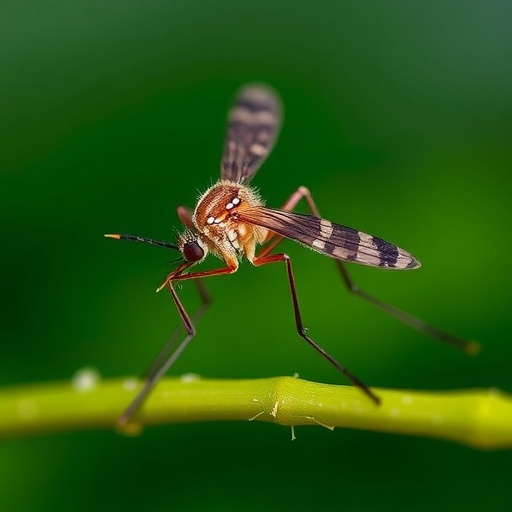
In the tropical lowlands and river valleys of Papua New Guinea, mosquitoes carry far more than the viruses that worry public health officials. Hidden within their cells is a vast, largely unexplored community of insect-specific viruses, pathogens that replicate only in insect hosts and never spill over into humans or other vertebrates. A new study has now delivered the first comprehensive portrait of this hidden viral world in Culex mosquitoes from the region, and the results are striking in both scale and diversity.
An international team led by researchers at CSIRO’s Australian Centre for Disease Preparedness, working with colleagues at Charles Sturt University, the Papua New Guinea Institute of Medical Research, James Cook University and La Trobe University, analyzed 13,871 female Culex mosquitoes collected across five provinces between 2019 and 2021. Using unbiased shotgun metagenomic sequencing across 86 pooled samples, the team generated approximately 1.6 billion paired-end sequencing reads, of which roughly 20 million could be assigned to viral sequences. In total, they detected 231 viral species representing 38 viral families. Of these, 120 were confirmed or probable insect-specific viruses spanning 25 viral families, and ISVs accounted for a remarkable 93.8 percent of all species-assigned viral reads.
The sheer volume of data allowed the researchers to reconstruct more than 150 complete viral genomes or genome segments, including sequences so divergent that they share less than 90 percent amino acid identity with any known reference. Approximately 40 percent of the viral reads corresponded to organisms that cannot currently be placed within any family recognized by the International Committee on Taxonomy of Viruses, underscoring how much of the mosquito virome remains formally unclassified. RNA viruses dominated the community, with the most abundant families including Partitiviridae, Birnaviridae, Rhabdoviridae and Iflaviridae.
The findings, published open access in Virology Journal, matter for reasons that go beyond cataloguing biodiversity. Insect-specific viruses are increasingly recognized as integral components of mosquito viromes that can shape virus evolution, alter vector competence and influence the ecology of arboviruses such as dengue, West Nile and Japanese encephalitis viruses. Understanding what naturally circulates in mosquito populations in a biodiversity hotspot like Papua New Guinea provides a baseline for predicting how these interactions might change, and potentially for exploiting ISVs as tools to block transmission of human pathogens.
Among the most technically significant results were the discoveries within the Partitiviridae, a family of segmented double-stranded RNA viruses better known from fungi and plants than from insects. The team identified previously unrecognized pairings between RNA-dependent RNA polymerase segments and capsid segments, an important structural insight because partitivirus genomes are split across two or more segments and reassortment between them is common. By resolving which polymerase traveled with which capsid, the researchers were able to reconstruct the complete genome architectures of Broome partiti-like virus 1 and Sonnbo virus for the first time, while also delineating additional divergent partitivirus lineages that had previously been represented only by fragments.
The birnaviruses told a biogeographic story. Sequences related to Cambodia Culex birnavirus were found in the Papua New Guinea mosquitoes, clustering within the known lineage but forming a distinct regional clade, a pattern consistent with local evolutionary divergence following geographic isolation. Such regional clustering suggests that mosquito viromes are not uniform across the Indo-Pacific, and that island geography and ecological boundaries leave detectable signatures in viral phylogenies.
Rhabdoviruses, a family that includes serious plant and vertebrate pathogens, revealed another layer of structure: host restriction. Culex tritaeniorhynchus rhabdovirus-like sequences were detected exclusively in Culex annulirostris, one of the five Culex species sampled, suggesting a tight association between particular viral lineages and particular mosquito hosts. Within the Iflaviridae, a family of positive-sense single-stranded RNA viruses related to pathogens of honeybees, several viruses were documented in Papua New Guinea for the first time. The single most abundant ISV in the entire dataset was Hubei virga-like virus 2, which formed a clade unique to Papua New Guinea, a pattern the authors interpret as evidence of local diversification.
One of the study’s more consequential observations concerns the stability of these viral communities. ISVs were detected in both blood-fed and unfed mosquitoes, indicating that they persist as permanent constituents of the mosquito virome rather than appearing transiently after blood meals. This stability is precisely what makes ISVs interesting from a biocontrol perspective: a virus that reliably colonizes mosquito populations and persists across generations could, in principle, be engineered or harnessed to interfere with the replication of human-pathogenic arboviruses, in a manner conceptually similar to the Wolbachia bacterial strategy currently deployed against dengue.
The sampling design also revealed evidence of complex infection patterns within individual insects. Multiple viral species from the same family were frequently detected within a single pooled sample, a finding consistent either with co-infection of individual mosquitoes by related viruses or with heterogeneous infections distributed among the individuals in each pool. Co-infection is particularly interesting because mixed infections create opportunities for viral recombination and reassortment, processes that can generate novel genetic combinations and potentially influence the evolutionary trajectory of entire viral lineages.
The work fills a significant geographic gap. Papua New Guinea sits within the Indo-Pacific biodiversity hotspot, a region where arbovirus transmission is a persistent public health concern and where the ancestral relatives of several major human pathogens are thought to circulate in enzootic cycles. Yet before this study, the ISV diversity of the country’s Culex populations had never been systematically surveyed. By expanding the known geographic range and genetic diversity of multiple viral groups, the research provides a reference point not only for future ecological and evolutionary studies in the region but also for global efforts to understand how mosquito-virus interactions are structured across landscapes.
Methodologically, the study demonstrates the power of unbiased metagenomic sequencing applied at scale. Rather than targeting known viruses with specific primers, the team sequenced everything in their samples and assigned reads through comparative analysis, an approach that captures divergent and entirely novel viruses that targeted methods would miss. The trade-off, as the large fraction of unclassifiable reads shows, is that such surveys routinely outpace formal taxonomy: the viruses are there, but the classification framework to describe them is still being built.
The authors, whose work was supported by the Australian Centre for International Agricultural Research with additional support from Charles Sturt University and CSIRO, emphasize that this catalog represents a baseline rather than an endpoint. With more than 150 complete genomes now available and several new lineages defined, the study lays the groundwork for investigating how these viruses are maintained in mosquito populations, how they move between vector species, and whether any of them hold promise as vehicles for suppressing the transmission of diseases that continue to burden communities across the Indo-Pacific and beyond.
For now, the mosquitoes of Papua New Guinea have revealed just a fraction of their microbial secrets, and what has emerged is a virome richer, stranger and more regionally distinctive than anyone had documented before.
Cite Scienmag News
Gavin Prescott. (September 7, 2026). Insect-specific viruses discovered in Papua New Guinea Culex mosquitoes. Scienmag. https://scienmag.com/insect-specific-viruses-discovered-in-papua-new-guinea-culex-mosquitoes/
Gavin Prescott. "Insect-specific viruses discovered in Papua New Guinea Culex mosquitoes." Scienmag, 7 September 2026, https://scienmag.com/insect-specific-viruses-discovered-in-papua-new-guinea-culex-mosquitoes/. Accessed 7 September 2026.
Gavin Prescott. "Insect-specific viruses discovered in Papua New Guinea Culex mosquitoes." Scienmag. September 7, 2026. https://scienmag.com/insect-specific-viruses-discovered-in-papua-new-guinea-culex-mosquitoes/


