Wednesday, October 28, 2026
Science
No Result
View All Result
  • Login
  • HOME
  • SCIENCE NEWS
  • CONTACT US
  • HOME
  • SCIENCE NEWS
  • CONTACT US
No Result
View All Result
Scienmag
No Result
View All Result
Home Science News Biology

Meta-analysis finds steppe bird home-range data skewed to male breeders in western Europe

October 28, 2026
in Biology, Technology and Engineering
Drew Townsend
By Drew Townsend Scienmag Editorial Profile - Cell Biology
Reading Time: 3 mins read
0
Meta-analysis finds steppe bird home-range data skewed to male breeders in western Europe

Meta-analysis finds steppe bird home-range data skewed to male breeders in western Europe

65
SHARES
587
VIEWS
Share on FacebookShare on Twitter
ADVERTISEMENT

A systematic review of home-range studies in seven Palaearctic steppe bird species has revealed that the published evidence base is heavily skewed geographically, demographically and technologically, leaving large parts of the species’ ranges and life cycles poorly documented. The meta-analysis, published in the journal Animal Biotelemetry, synthesised spatial data from 39 primary studies to assess how home-range size estimates vary across ecological contexts, tracking methods and seasons.

Home-range size is a fundamental metric in spatial ecology and conservation, but estimates often differ between studies because of variation in ecological context, demographic composition such as sex and age, annual cycle period, and the tracking technology used. The authors argue that synthesising dispersed information on spatial requirements is particularly urgent for steppe birds, which rank among the most threatened avian groups in Europe and globally.

The review found that geographic and ecological coverage was strongly biased. Most research was conducted in western Europe, while large parts of the species’ breeding ranges, including eastern Europe, western and central Asia and northern Africa, were poorly represented, as were wintering areas.

Habitat coverage showed a similar imbalance. Studies were mainly carried out in arable land, with little information available from other key habitats for the species, such as natural grasslands and shrublands. This concentration in farmland contexts limits the ability to generalise spatial requirements across the full range of environments these birds occupy.

Technology also shaped the evidence base in unexpected ways. Despite the widespread availability of GPS tracking, very high frequency (VHF) tracking dominated the published home-range estimates.

Adult males during the breeding season represented 75.6 percent of all monitored individuals, out of a total of 623 individuals across the retained studies. Information on females, subadults, juveniles and non-breeding periods was far less represented, meaning the spatial requirements of most of the population remain largely undocumented.

The authors conclude that home-range size is a context-dependent property shaped by individual behaviour, seasonal variation and local environmental conditions. Extrapolating estimates across sexes, ages, seasons or habitat contexts can misinform management, they warn, because estimates drawn from one segment of a population may not apply to others.

To address these gaps, the review recommends that studies using GPS technology report basic home-range metrics even when home-range estimation is not the primary focus of the research. The authors also call for broadening GPS-based research to include underrepresented demographic groups, regions and habitat contexts, which they argue would enhance ecological knowledge and improve the robustness of environmental assessments and conservation planning.

For a group of conservation concern whose spatial requirements directly inform environmental impact assessment, habitat management and spatial planning, the findings suggest that current evidence reflects only a narrow slice of the ecology of these species. Filling the identified gaps in geography, habitat, demography and season would be necessary before home-range estimates can be applied reliably across the Palaearctic steppe bird community.

Subject of Research: Home-range size estimates and knowledge gaps for seven Palaearctic steppe bird species based on a systematic review of tracking studies

Article Title: Home-range ecology of seven Palaearctic steppe bird species: a meta-analysis of spatial dimensions and ecological knowledge gaps

Article References: Solé-Bujalance, L., Morales, M. B., & Bota, G. (2026). Home-range ecology of seven Palaearctic steppe bird species: a meta-analysis of spatial dimensions and ecological knowledge gaps. Animal Biotelemetry. https://doi.org/10.1186/s40317-026-00498-6

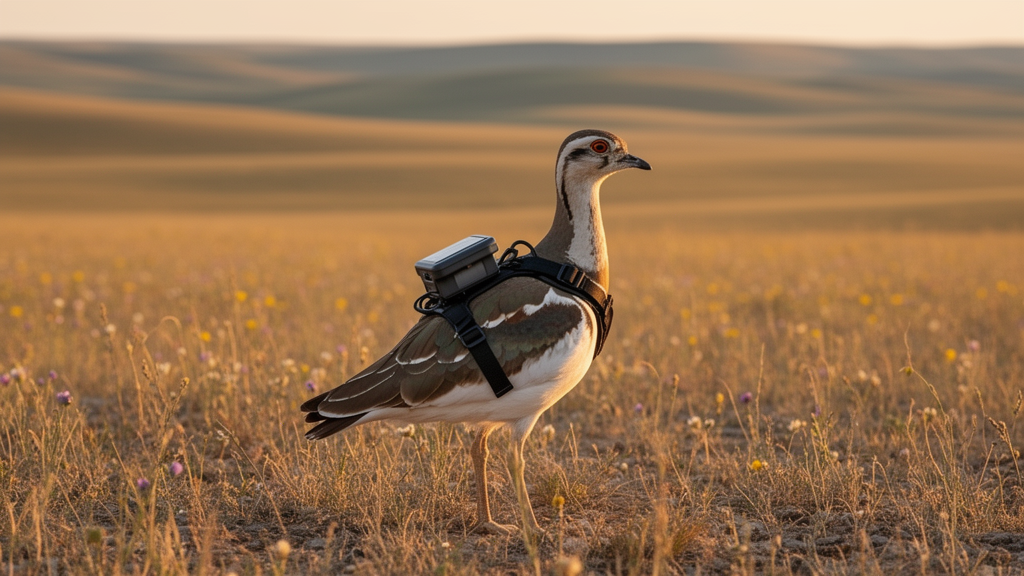
Image Credits: AI Generated

DOI: 10.1186/s40317-026-00498-6

Keywords: steppe birds, home range, meta-analysis, GPS tracking, VHF telemetry, spatial ecology, conservation planning, knowledge gaps, Palaearctic, adult males, breeding season, arable land

Cite Scienmag News

Drew Townsend. (October 28, 2026). Meta-analysis finds steppe bird home-range data skewed to male breeders in western Europe. Scienmag. https://scienmag.com/meta-analysis-finds-steppe-bird-home-range-data-skewed-to-male-breeders-in-western-europe/


Drew Townsend. "Meta-analysis finds steppe bird home-range data skewed to male breeders in western Europe." Scienmag, 28 October 2026, https://scienmag.com/meta-analysis-finds-steppe-bird-home-range-data-skewed-to-male-breeders-in-western-europe/. Accessed 28 October 2026.

Drew Townsend. "Meta-analysis finds steppe bird home-range data skewed to male breeders in western Europe." Scienmag. October 28, 2026. https://scienmag.com/meta-analysis-finds-steppe-bird-home-range-data-skewed-to-male-breeders-in-western-europe/

Tags: adult malesarable landbreeding and wintering habitat coverage gapsbreeding seasonconservation gaps in steppe bird dataconservation planningdemographic skew in bird tracking studiesgeographic coverage limitations in spatial ecologyGPS trackinghabitat representation in bird home-range studieshome rangeimpact of tracking technology on avian spatial dataimportance of comprehensive spatial data for bird conservationknowledge gapsmeta-analysismeta-analysis of spatial ecology in birdsPalaearcticseasonal variation in bird home-range estimatesspatial bias in avian researchspatial ecologySteppe bird home-range ecologysteppe birdsthreatened European steppe bird speciesVHF telemetry
Share26Tweet16
Previous Post

Biomaterials and smart drug delivery aim to heal stubborn diabetic foot ulcers

Next Post

APOE ε4 Carriers Face Higher Heart Attack Risk, Large Genetic Review Finds

Related Posts

Leather Waste Turned Into a Sunlight-Driven Catalyst That Breaks Down Drug Pollutants
Technology and Engineering

Leather Waste Turned Into a Sunlight-Driven Catalyst That Breaks Down Drug Pollutants

October 28, 2026
Spiral Phase Masks Turn a Simple Camera into a Five-Dimensional Optical Encoder, Study Shows
Technology and Engineering

Spiral Phase Masks Turn a Simple Camera into a Five-Dimensional Optical Encoder, Study Shows

October 28, 2026
Thermal-spring bacterium yields heat-stable amylase that thins porridge by 90%
Biology

Thermal-spring bacterium yields heat-stable amylase that thins porridge by 90%

October 28, 2026
Machine Learning Could Transform Disease Surveillance in Nigeria, Review Finds
Technology and Engineering

Machine Learning Could Transform Disease Surveillance in Nigeria, Review Finds

October 28, 2026
Deep Learning Model Reads Earthquake Orthophotos to Flag Damaged Roads and Bridges
Technology and Engineering

Deep Learning Model Reads Earthquake Orthophotos to Flag Damaged Roads and Bridges

October 28, 2026
Alx4 keeps its limb-building role even as its expression shifts across amniotes
Biology

Alx4 keeps its limb-building role even as its expression shifts across amniotes

October 28, 2026
Next Post
APOE ε4 Carriers Face Higher Heart Attack Risk, Large Genetic Review Finds

APOE ε4 Carriers Face Higher Heart Attack Risk, Large Genetic Review Finds

  • Mothers who receive childcare support from maternal grandparents show more optimized

    Mothers who receive childcare support from maternal grandparents show more parental warmth, finds NTU Singapore study

    27656 shares
    Share 11059 Tweet 6912
  • University of Seville Breaks 120-Year-Old Mystery, Revises a Key Einstein Concept

    1061 shares
    Share 424 Tweet 265
  • Bee body mass, pathogens and local climate influence heat tolerance

    682 shares
    Share 273 Tweet 171
  • Researchers record first-ever images and data of a shark experiencing a boat strike

    546 shares
    Share 218 Tweet 137
  • Groundbreaking Clinical Trial Reveals Lubiprostone Enhances Kidney Function

    531 shares
    Share 212 Tweet 133
Science

Embark on a thrilling journey of discovery with Scienmag.com—your ultimate source for cutting-edge breakthroughs. Immerse yourself in a world where curiosity knows no limits and tomorrow’s possibilities become today’s reality!

RECENT NEWS

  • Cardiovascular disease remains a major burden for people with type 1 diabetes
  • Gas outburst risk tamed in China’s Shuidaqiao hydraulic tunnel
  • Excitation Wavelength Steers Green and Red Upconversion Light in Tetra-Doped Y2O3 Phosphors
  • Leather Waste Turned Into a Sunlight-Driven Catalyst That Breaks Down Drug Pollutants

Categories

  • Agriculture
  • Anthropology
  • Archaeology
  • Athmospheric
  • Biology
  • Biotechnology
  • Blog
  • Bussines
  • Cancer
  • Chemistry
  • Climate
  • Earth Science
  • Editorial Policy
  • Marine
  • Mathematics
  • Medicine
  • Pediatry
  • Policy
  • Psychology & Psychiatry
  • Science Education
  • Science News
  • Social Science
  • Space
  • Technology and Engineering

Subscribe to Blog via Email

Enter your email address to subscribe to this blog and receive notifications of new posts by email.

Join 5,151 other subscribers

© 2025 Scienmag - Science Magazine

Welcome Back!

Login to your account below

Forgotten Password?

Retrieve your password

Please enter your username or email address to reset your password.

Log In
No Result
View All Result
  • HOME
  • SCIENCE NEWS
  • CONTACT US

© 2025 Scienmag - Science Magazine

Discover more from Science

Subscribe now to keep reading and get access to the full archive.

Continue reading