


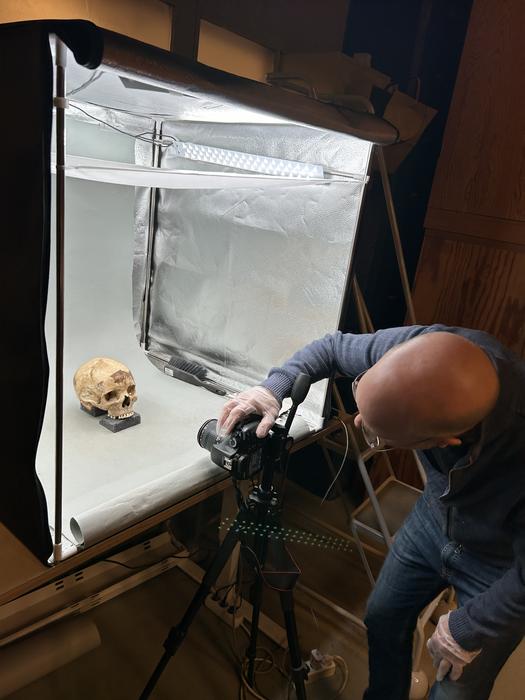
New genetic research from Stockholm University is rewriting our understanding of medieval burial practices and familial relationships. By analyzing ancient DNA from 142 individuals, including over 60 children and adolescents, the study reveals that biological kinship was surprisingly uncommon among people buried together in the same graves during the late Viking Age and Middle Ages.
Conventional archaeological assumptions have long held that adults and children interred side by side were closely related family members, such as parents and their offspring. However, the genomic data tell a different story. Even in cemeteries where high overall kinship levels were detected, multiple burial plots seldom contained immediate family members. This challenges prior interpretations of social organization and mortuary customs in early Christian Scandinavia.
Using advanced paleogenetic techniques, the researchers extracted and sequenced DNA from skeletal remains across three Scandinavian sites: Sigtuna near Stockholm, Västerhus in Jämtland, and Fjälkinge in Skåne. This allowed not only familial connections to be mapped with unprecedented accuracy but also biological sex to be determined for children too young for traditional osteological sexing. Their findings indicate that gender identity influenced burial arrangements from an early age. For instance, boys and girls were typically buried following the same gender-specific cemetery rules as adults, suggesting societal recognition of gender roles extended to children.
One of the study’s standout discoveries centers on a medieval woman dubbed Lady 56, excavated from Västerhus. Genomic analysis traced her genetic links to a number of relatives in the churchyard, including parents, a brother, and two daughters. Notably, Lady 56’s grave contained a scallop shell, an emblematic token of pilgrimage to Santiago de Compostela in northwestern Spain. This rare artifact implies she completed a long and arduous religious journey spanning much of medieval Europe—an extraordinary feat that broadens our perspective on mobility and spiritual life in that era.
This research exemplifies how cutting-edge archaeogenetic methods can illuminate complex social and cultural dimensions of past populations. Ancient DNA enables scholars to move beyond assumptions and reconstruct the intricate fabric of medieval communities, where burial placement reflected social or religious bonds rather than simple genetic ties.
The implications of these findings extend far beyond medieval Scandinavia. They urge a reevaluation of burial archaeology worldwide, highlighting the necessity to incorporate genomic data alongside archaeological context to accurately interpret kinship, identity, and social structure in ancient societies. By revealing the nuanced realities behind mortuary practices, this study offers a vital new lens through which to view the human past.
Cite Scienmag News
Juliet Wilcox. (July 10, 2026). Medieval Graves Rarely Shared by Close Relatives. Scienmag. https://scienmag.com/medieval-graves-rarely-shared-by-close-relatives/
Juliet Wilcox. "Medieval Graves Rarely Shared by Close Relatives." Scienmag, 10 July 2026, https://scienmag.com/medieval-graves-rarely-shared-by-close-relatives/. Accessed 5 September 2026.
Juliet Wilcox. "Medieval Graves Rarely Shared by Close Relatives." Scienmag. July 10, 2026. https://scienmag.com/medieval-graves-rarely-shared-by-close-relatives/


