


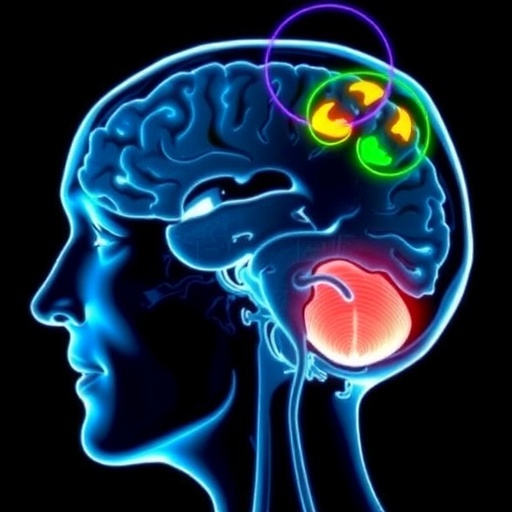
A missed target, a failed exam or an unexpectedly bad result can trigger a crucial question: was the outcome caused by something we did, or by circumstances beyond our control? New research from the University of Oxford has identified brain mechanisms that help people make this distinction, revealing how confidence, perceived control and feedback are combined to guide learning from success and failure. The study, published in Neuron, suggests that the brain does not simply register whether an outcome is positive or negative. Instead, it evaluates how likely that outcome was, how certain we were about our own performance and whether the surrounding world appears to be operating reliably.
The researchers found that people’s confidence in their decisions strongly influences how they explain unexpected outcomes. When participants were highly confident that they had made the correct choice but received negative feedback, they were more likely to conclude that the feedback had been generated by external circumstances or random events. When they were less certain about their decision, they were more likely to interpret the same negative outcome as evidence that their own performance had been poor. This distinction is essential for effective learning. A skilled archer who misses the target must decide whether to change their technique or account for wind. If the miss was caused by the wind but the archer blames their technique, future performance could become worse rather than better.
The study involved adults completing a perceptual decision-making task. On each trial, participants viewed a display containing blue and orange dots and judged which colour was more numerous. They also rated how confident they were in their answer before receiving feedback about whether the choice was correct. The experiment was designed so that feedback reliability changed without participants being told directly. In “controllable” blocks, the feedback accurately reflected performance on 90 percent of trials. In “uncontrollable” blocks, it was accurate only 10 percent of the time, while the remaining feedback was generated randomly. Participants had to infer the hidden structure of the task through experience, gradually estimating how much control they could exert over the outcomes they received.
This arrangement allowed the researchers to separate two related but distinct processes. The first was attribution: deciding whether a particular outcome was caused by one’s own performance or by an external source. The second was controllability estimation: learning whether the environment as a whole was predictable and responsive to one’s actions. Participants continuously tracked their own confidence before feedback arrived, giving the brain an internal prediction against which the eventual outcome could be compared. An unexpected failure after a high-confidence decision provided a strong signal that the environment, rather than the individual, might be responsible. Conversely, an uncertain decision followed by failure was more consistent with the possibility that the participant’s own performance had caused the result.
Ultra-high-field functional magnetic resonance imaging allowed the team to examine the neural systems involved in these calculations in 22 participants. The researchers identified a circuit linking the dorsomedial prefrontal cortex, or dmPFC, with the dorsal raphe nucleus, a small structure located deep within the brain. Activity in the dmPFC reflected several components of the decision process, including participants’ confidence, their evolving estimate of environmental controllability and their judgement about whether an outcome was attributable to themselves or to randomness. Rather than acting as a simple “control centre,” the region appears to help integrate information about internal certainty and external reliability.
The dorsal raphe nucleus is particularly notable because it is closely associated with serotonin, a chemical messenger involved in mood, motivation, uncertainty processing and behavioural adaptation. The researchers emphasize that their study examined healthy adults and was not designed to test a treatment for any mental health condition. However, the findings may help explain why perceptions of control can become distorted in disorders such as depression, anxiety and schizophrenia. In depression, people may interpret negative events as reflecting stable personal shortcomings while overlooking circumstances outside their control. In anxiety, responsibility and threat may be overestimated. In schizophrenia, disruptions in the monitoring of actions and their consequences can contribute to experiences that events or movements are controlled by someone else.
The researchers also identified a second prefrontal-subcortical circuit. This pathway connected another prefrontal region with dopamine-associated areas of the midbrain and appeared to be involved in determining how controllability judgements altered the brain’s response to feedback. Dopamine-related systems are widely understood to help encode prediction errors—the difference between what the brain expects and what actually happens. In this context, an error signal is not necessarily a straightforward measure of success or failure. Its meaning depends on whether the brain believes the outcome was controllable. An unexpected failure in a reliable environment may demand a change in behaviour, while the same failure in an unreliable environment may provide little useful information about what to do next.
To test whether the dmPFC was merely correlated with these judgements or played a causal role, the researchers conducted a separate experiment with 20 participants. They temporarily disrupted activity in the region using non-invasive magnetic brain stimulation. Following this intervention, participants became slower to determine whether feedback genuinely reflected their performance or was mostly random. The result provides evidence that the dmPFC is directly important for evaluating the relationship between actions and outcomes. The region may help the brain decide when feedback should be treated as a lesson about behaviour and when it should be discounted as noise.
“Our sense of control has profound consequences for how we behave,” said Professor Matthew Rushworth of Oxford’s Department of Experimental Psychology and a co-author of the study. If people believe an outcome was caused by their actions, changing those actions may be sensible. If they believe the outcome resulted from forces outside their control, a different response may be more adaptive. Lead author Dr Yanhe Liu said that distinguishing controllable from uncontrollable events is fundamental to learning, adding that the brain mechanisms identified in the study provide a foundation for investigating what happens when this process becomes biased or disrupted.
The findings offer a detailed view of how the brain turns uncertain feedback into decisions about responsibility, control and future behaviour. They also suggest that the feeling of agency is not produced by a single brain area or a single chemical signal. Instead, it emerges from communication between prefrontal regions involved in reasoning and confidence, deep brain structures involved in neuromodulation and learning systems that evaluate prediction errors. By tracking both personal certainty and the reliability of the surrounding world, the brain can avoid overreacting to one bad result—or ignoring a genuine failure that should lead to improvement. The Oxford team cautions that further research is needed before these findings can be applied clinically, but the work brings scientists closer to understanding why some experiences teach us to adapt while others leave us blaming ourselves, blaming the world or learning the wrong lesson.
News Publication Date: 21 August 2026
Web References: University of Oxford Department of Experimental Psychology: https://www.psy.ox.ac.uk/people/yanhe-liu ; https://www.psy.ox.ac.uk/people/matthew-rushworth ; DOI: https://doi.org/10.1016/j.neuron.2026.07.029
References: Neuron, “Two prefrontal-subcortical circuits estimate controllability and reflect its impact on learning,” DOI: 10.1016/j.neuron.2026.07.029
Cite Scienmag News
Cassandra Pierce. (August 21, 2026). Brain scans reveal how people judge whether they control their actions. Scienmag. https://scienmag.com/brain-scans-reveal-how-people-judge-whether-they-control-their-actions/
Cassandra Pierce. "Brain scans reveal how people judge whether they control their actions." Scienmag, 21 August 2026, https://scienmag.com/brain-scans-reveal-how-people-judge-whether-they-control-their-actions/. Accessed 4 September 2026.
Cassandra Pierce. "Brain scans reveal how people judge whether they control their actions." Scienmag. August 21, 2026. https://scienmag.com/brain-scans-reveal-how-people-judge-whether-they-control-their-actions/


