


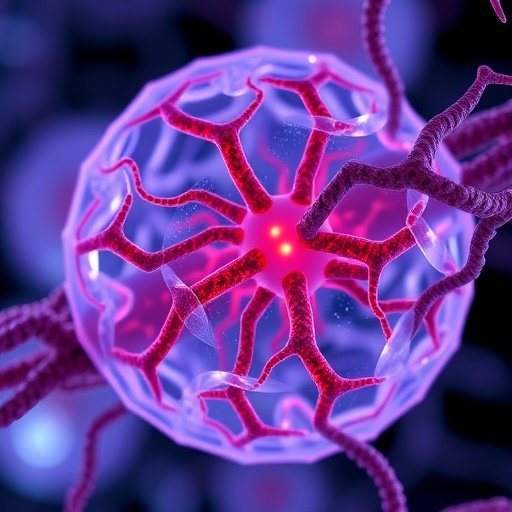
In a groundbreaking advance that bridges the domains of materials science, bioelectronics, and neural regeneration, a team of researchers has unveiled a novel mechano-bioactive hydrogel bioelectronic system capable of converting mechanical stimuli into electrical and bioenergetic signals. This innovation holds transformative potential for treating neurological injuries by fostering neural regeneration through direct glial modulation. The study, soon to be published in Nature Communications, represents a significant leap toward next-generation bioelectronic interfaces that seamlessly integrate with biological tissues, offering promising avenues for therapeutic interventions.
At the heart of this development lies a carefully engineered hydrogel—a water-rich, polymer-based material—infused with mechano-responsive bioelectronic properties. Hydrogels have long been appreciated for their biocompatibility and mechanical similarity to natural tissues, yet embedding them with functional electronics that not only detect but convert mechanical energy into usable biological signals marks a pivotal progress. The researchers crafted this bioelectronics platform to harness mechanical inputs from the dynamic physiological environment and transform these into electrical currents and bioenergetic molecules that stimulate local neural networks.
Mechanical force is an omnipresent signal in the body, integral to processes ranging from movement to cellular communication. However, translating these forces into therapeutic electrical and molecular cues in situ has remained a scientific challenge. The mechano-bioactive hydrogel bioelectronics introduced by Shen, Wu, Wang, and their colleagues addresses this by exhibiting an innovative capacity: converting mechanical deformation into bioelectrical outputs and biochemical energy in a sustained and bioactive manner, thus directly influencing glial cell behavior.
Glial cells, once thought to merely support neurons passively, have emerged as critical players in neural repair and regeneration. Modulating glial activity to promote beneficial outcomes such as remyelination or neuroprotection is a vibrant research front. This hydrogel bioelectronic system selectively modulates glial cells by interfacing them within a mechanically relevant and electrically stimulative environment. This synergy promotes a pro-regenerative milieu that catalyzes neural tissue renewal after injury.
The underlying mechanism integrates mechano-electrical transduction pathways with bioenergetic conversion processes. The materials engineered within the hydrogel matrix generate electrically charged species upon mechanical stimulation, which in turn drive bioenergetic reactions analogous to those fueling cellular metabolism. This dual conversion ensures that applied mechanical forces do not merely serve as physical cues but also supply biochemical energy essential for cellular functions during tissue healing.
One of the most compelling aspects of this technology is its adaptability. The hydrogel’s mechanical properties can be tuned to match the physical characteristics of various neural tissues, ensuring intimate and minimally invasive contact. This tailoring is critical, given that stiffness mismatches between implanted materials and host tissue can lead to scar formation and implant rejection. By mitigating mechanical discrepancies, this system preserves neural tissue integrity while delivering precise bioelectronic stimulation.
Additionally, the bioelectronic hydrogel exhibits an inherent self-healing property, allowing it to maintain functional integrity even after repeated mechanical stress—a common scenario within the nervous system’s complex microenvironment. This resilience not only extends the lifespan of the implant but also guarantees persistent communication between bioelectronic devices and the host tissue over extended therapeutic windows.
In experimental models of neural injury, application of the mechano-bioactive bioelectronic hydrogel prompted marked improvements in neuronal survival and axonal regrowth. The electrical stimuli generated by mechanical forces induced by natural movements or rehabilitative exercises were sufficient to activate downstream signaling pathways in glial cells that coordinate inflammation resolution and neural tissue remodeling. Such findings highlight the elegant integration of biomechanics and bioelectrical activity as a therapeutic modality.
From a technical perspective, the material synthesis involved incorporating piezoelectric nanomaterials within the hydrogel scaffold, facilitating this transduction of mechanical to electrical signals. Meanwhile, embedded bio-catalytic components enhanced the generation of bioenergetic molecules, such as adenosine triphosphate (ATP), at the interface with neural cells. This mechanistic design enables the sustained provision of energy necessary for neural repair processes, which are often energy-intensive and limited by local metabolic constraints.
Moreover, this system’s design contemplates clinical translation: its bioactive components are crafted from biocompatible, potentially degradable constituents that minimize chronic immune responses. The researchers envision various delivery modalities ranging from injectable forms that conform to irregular injury sites to implantable patches for localized stimulation. Such versatility could revolutionize personalized neuromodulation therapies tailored to specific injury types and severities.
In conjunction with neural regeneration benefits, the mechano-bioactive hydrogel bioelectronics also demonstrated an ability to modulate neuroinflammatory responses. Given that glial activation can lead to both protective and detrimental outcomes depending on context, the targeted electrical and metabolic cues delivered by the hydrogel foster a balanced neuroimmune environment conducive to healing rather than chronic inflammation or scar formation.
The broader implications of this technology are vast, potentially extending beyond classical neural repair. Bioelectronic hydrogels that convert mechanical stimuli into bioenergetic and electrical signals could serve as platforms for interfacing with other mechanosensitive tissues, including cardiac, muscular, and vascular systems. This could lead to integrated therapeutic devices capable of real-time sensing and adaptive stimulation, ultimately enhancing patient outcomes across numerous medical disciplines.
Collaborations across materials science, neurobiology, and clinical medicine underpin this achievement. The research melded advanced polymer chemistry, nanoengineering, and systems neuroscience to elucidate how synthetic materials could emulate and enhance natural biological functions. Such interdisciplinary efforts exemplify the future direction of regenerative medicine, where bioelectronics act not just as passive devices but as active partners in tissue repair.
As this new paradigm unfolds, the mechano-bioactive hydrogel bioelectronics will likely stimulate additional investigation into mechano-electrical-bioenergetic conversion phenomena in vivo. Understanding these principles could unlock entirely new classes of biomedical devices that are self-powered, self-adapting, and capable of precise therapeutic modulation based on the patient’s own biomechanical environment.
Looking ahead, the integration of advanced sensing technologies and machine learning with this bioelectronic platform may further refine its capacity to dynamically respond to changing tissue states. Such smart implants could provide continuous feedback and personalized stimulation regimens, optimizing neural regeneration outcomes and potentially restoring complex functionalities lost to injury or disease.
In conclusion, the research by Shen, Wu, Wang, and their team heralds a promising fusion of biomechanics, bioenergy, and bioelectronic engineering with regenerative neuroscience. By employing mechano-bioactive hydrogels capable of converting mechanical forces into therapeutic electrical and bioenergetic cues, this cutting-edge bioelectronic system offers a powerful new strategy for neural repair. The versatility, resilience, and bioactive sophistication of this approach marks it as a trailblazer toward clinically relevant neural regeneration therapies that harness the body’s own movements and biology to heal itself.
Cite Scienmag News
Cassandra Pierce. (November 23, 2025). Mechano-Bioactive Hydrogel Boosts Neural Regeneration. Scienmag. https://scienmag.com/mechano-bioactive-hydrogel-boosts-neural-regeneration/
Cassandra Pierce. "Mechano-Bioactive Hydrogel Boosts Neural Regeneration." Scienmag, 23 November 2025, https://scienmag.com/mechano-bioactive-hydrogel-boosts-neural-regeneration/. Accessed 3 September 2026.
Cassandra Pierce. "Mechano-Bioactive Hydrogel Boosts Neural Regeneration." Scienmag. November 23, 2025. https://scienmag.com/mechano-bioactive-hydrogel-boosts-neural-regeneration/


