

Tuesday, August 18, 2026
Science
No Result
View All Result
  • Login
  • HOME
  • SCIENCE NEWS
  • CONTACT US
  • HOME
  • SCIENCE NEWS
  • CONTACT US
No Result
View All Result
Scienmag
No Result
View All Result
Home Science News Psychology & Psychiatry

Mechanisms Connecting Gut Microbiome to Causality in Psychiatric Disorders

July 28, 2026
in Psychology & Psychiatry
Reading Time: 2 mins read
0
Mechanisms Connecting Gut Microbiome to Causality in Psychiatric Disorders

Mechanisms Connecting Gut Microbiome to Causality in Psychiatric Disorders

65
SHARES
587
VIEWS
Share on FacebookShare on Twitter
ADVERTISEMENT

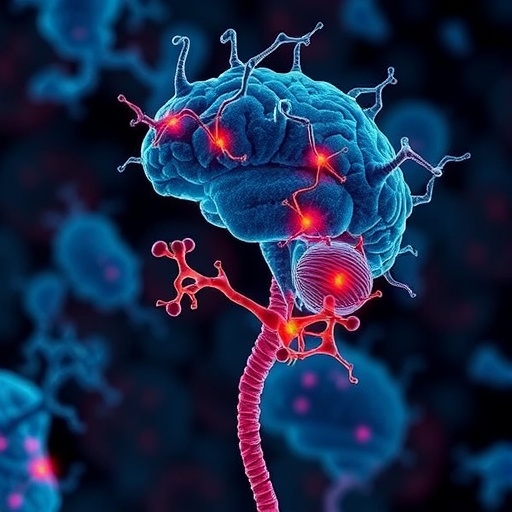
A new study is pushing beyond “correlation” to ask how the gut microbiome could actively contribute to psychiatric disorders. Published in Translational Psychiatry, the research maps mechanistic routes that may connect intestinal microbes to brain function, offering a framework for moving from association-based findings toward causal explanations.

Instead of treating microbiome differences as mere biomarkers, the authors synthesize evidence for biological pathways that plausibly transmit signals from the gut to the nervous system. They focus on how microbial communities can influence neuroactive chemistry, immune activity, and stress-response circuits that are often implicated in mental health.

One highlighted mechanism involves microbial metabolites—small molecules produced during fermentation and nutrient processing. These compounds can interact with host signaling systems, including pathways that regulate inflammation and neuronal signaling. By altering metabolite profiles, changes in gut ecology may shift the chemical environment that the brain indirectly receives.

Immune modulation is another central theme. The gut hosts a large fraction of the body’s immune cells, and microbial cues can shape cytokine production and immune tone. The study emphasizes that inflammatory signals can reach the brain through multiple routes, potentially affecting synaptic plasticity and neurotransmission.

The paper also discusses the gut barrier and microbial translocation risk. When intestinal permeability increases, bacterial components may access systemic circulation more readily, activating inflammatory pathways and potentially intensifying neuropsychiatric symptoms.

Stress physiology may connect these processes as well. The authors describe how stress hormones can alter gut microbial composition, which in turn can feed back to influence stress-reactive pathways. This bidirectional relationship supports a cycle in which microbial imbalance and mental symptoms reinforce each other.

Crucially, the authors frame causality as something that must be tested with mechanistic experiments, not inferred solely from observational studies. They outline experimental strategies that can strengthen causal inference, such as targeted manipulation of microbial taxa or metabolites and downstream measurement of brain-relevant outcomes.

Overall, the work positions the microbiome as a dynamic, bioactive system rather than a passive indicator. If verified in longitudinal and intervention studies, the proposed pathways could inform microbiome-based diagnostics and therapeutic approaches for psychiatric disorders.

Subject of Research: Gut microbiome mechanisms in psychiatric disorders
Article Title: From association to causality: mechanistic pathways linking the gut microbiome to psychiatric disorders.
Article References: Almarzooqi, S., Yassin, L.K., Alnuaimi, F. et al. From association to causality: mechanistic pathways linking the gut microbiome to psychiatric disorders. Transl Psychiatry (2026). https://doi.org/10.1038/s41398-026-04305-x
DOI: https://doi.org/10.1038/s41398-026-04305-x
Image Credits: AI Generated

Tags: causal mechanisms in psychiatric disordersGut microbiomegut-brain axisimmune modulation and inflammation in mental healthintestinal barrier integritymicrobial metabolites and neuroactive compoundsmicrobial signaling pathways and mental healthmicrobial translocationmicrobiome influence on stress responsemicrobiome-brain communication pathwaysmicrobiota-driven neurotransmitter regulationneuroimmune interactions
Share26Tweet16
Previous Post

Global Tidal Wetland Soil Organic Carbon Patterns and Environmental Drivers Since 2009

Next Post

Elephant Vaccine Early Results Show Protection Against Deadly Virus

Related Posts

Education on gender development predicts support for transgender youths’ identity autonomy
Psychology & Psychiatry

Education on gender development predicts support for transgender youths’ identity autonomy

August 18, 2026
Brain neural dynamics sustain persistent behavior over minutes
Psychology & Psychiatry

Brain neural dynamics sustain persistent behavior over minutes

August 18, 2026
Voluntary Attention Modulates Acute Immune Responses in Humans
Psychology & Psychiatry

Voluntary Attention Modulates Acute Immune Responses in Humans

August 17, 2026
Parental haplotypes in 440,209 UK and Estonian participants reveal assortative mating
Psychology & Psychiatry

Parental haplotypes in 440,209 UK and Estonian participants reveal assortative mating

August 17, 2026
Intensive arts therapy reshapes brain network connectivity in adolescents with depression
Psychology & Psychiatry

Intensive arts therapy reshapes brain network connectivity in adolescents with depression

August 17, 2026
Delayed brain energy network development in preterm youth linked to poorer cognition
Psychology & Psychiatry

Delayed brain energy network development in preterm youth linked to poorer cognition

August 17, 2026
Next Post
Elephant Vaccine Early Results Show Protection Against Deadly Virus

Elephant Vaccine Early Results Show Protection Against Deadly Virus

  • Mothers who receive childcare support from maternal grandparents show more

    Mothers who receive childcare support from maternal grandparents show more parental warmth, finds NTU Singapore study

    27656 shares
    Share 11059 Tweet 6912
  • University of Seville Breaks 120-Year-Old Mystery, Revises a Key Einstein Concept

    1061 shares
    Share 424 Tweet 265
  • Bee body mass, pathogens and local climate influence heat tolerance

    682 shares
    Share 273 Tweet 171
  • Researchers record first-ever images and data of a shark experiencing a boat strike

    546 shares
    Share 218 Tweet 137
  • Groundbreaking Clinical Trial Reveals Lubiprostone Enhances Kidney Function

    531 shares
    Share 212 Tweet 133
Science

Embark on a thrilling journey of discovery with Scienmag.com—your ultimate source for cutting-edge breakthroughs. Immerse yourself in a world where curiosity knows no limits and tomorrow’s possibilities become today’s reality!

RECENT NEWS

  • Bottom-heavy stellar populations reveal hidden mass in early galaxies
  • Signals Recruit and Dispatch Components Across Reconfigurable Phase-Separated Protocell Networks
  • Transfer Learning Recalibrates Deployment Data for Better Survival Prediction Under Covariate Shifts
  • Atomically Thin Amorphous Carbon Achieves an Ultralow Dielectric Constant

Categories

  • Agriculture
  • Anthropology
  • Archaeology
  • Athmospheric
  • Biology
  • Biotechnology
  • Blog
  • Bussines
  • Cancer
  • Chemistry
  • Climate
  • Earth Science
  • Editorial Policy
  • Marine
  • Mathematics
  • Medicine
  • Pediatry
  • Policy
  • Psychology & Psychiatry
  • Science Education
  • Social Science
  • Space
  • Technology and Engineering

Subscribe to Blog via Email

Success! An email was just sent to confirm your subscription. Please find the email now and click 'Confirm Follow' to start subscribing.

Join 5,150 other subscribers

© 2025 Scienmag - Science Magazine

Welcome Back!

Login to your account below

Forgotten Password?

Retrieve your password

Please enter your username or email address to reset your password.

Log In
No Result
View All Result
  • HOME
  • SCIENCE NEWS
  • CONTACT US

© 2025 Scienmag - Science Magazine
