


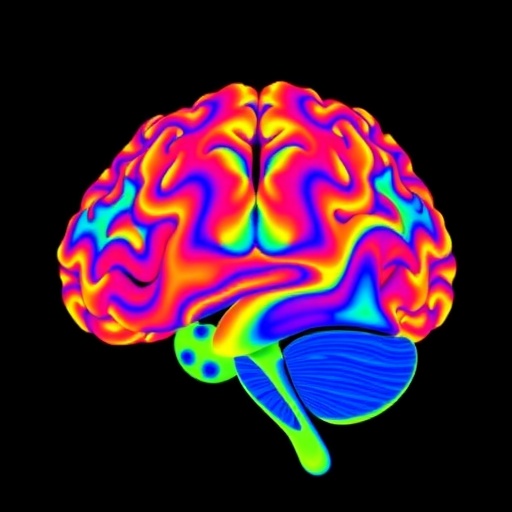
In the quiet, relentless progression of Parkinson’s disease, cognitive decline often shadows the hallmark motor symptoms, presenting a daunting challenge for scientists and clinicians alike. A groundbreaking study led by Li, Bu, Pang, and colleagues, published in npj Parkinsons Disease in 2025, dives deep into the intricate architecture of the striatum—a subcortical brain region crucial for motor and cognitive functions—to uncover how its functional gradients change alongside continuous cognitive impairment in Parkinson’s patients. This research not only elucidates the subtle neurofunctional shifts in the striatum but also bridges these changes to specific gene expression patterns, offering new vistas for understanding, diagnosing, and potentially mitigating cognitive deterioration in the disease.
Parkinson’s disease has long been understood primarily as a movement disorder, characterized by tremors, rigidity, and bradykinesia. However, the cognitive impairments that often accompany it, ranging from mild cognitive decline to severe dementia, have sparked intense interest in the scientific community. Cognitive symptoms significantly impact quality of life and complicate therapeutic strategies, yet their neural underpinnings remain poorly characterized. The striatum, as a hub of the basal ganglia circuitry, plays a pivotal role not only in motor control but also executive function, decision-making, and reward processing. The novel approach taken by the authors focuses on “functional gradients” within this structure—gradual transitions in connectivity patterns that reveal how different subregions are specialized and interconnected.
Leveraging advanced neuroimaging techniques and computational modeling, the team mapped these functional gradients by analyzing resting-state functional MRI data from a cohort of Parkinson’s patients with varying degrees of cognitive impairment. This gradient-based perspective transcends traditional voxelwise or region-based analyses, capturing a continuous spectrum of functional organization. Remarkably, the study found that the gradients in the striatum become progressively disrupted as cognitive deficits worsen, suggesting that Parkinson’s-related cognitive decline is closely linked with altered connectivity patterns rather than just localized damage.
The importance of these functional gradients lies in their ability to reflect the integrative properties of brain networks. In healthy individuals, the striatum exhibits smoothly varying gradients that represent transitions from sensorimotor to associative and limbic regions. In patients with cognitive impairment, however, these gradients showed blurring and fragmentation, indicating a loss of clear functional boundaries. This breakdown likely contributes to the impaired ability to process and integrate information, manifesting as the executive and memory challenges common in Parkinson’s dementia.
Beyond functional imaging, the authors integrated transcriptomic data, capitalizing on publicly available gene expression atlases to associate spatial patterns of gene activity with observed neurofunctional gradients. This aspect of the study highlights a fascinating interdisciplinary interface between genomics and systems neuroscience. They identified specific gene sets whose expressions correlate with the disrupted gradients, implicating molecular pathways related to synaptic function, neuroinflammation, and protein aggregation—all known to be involved in Parkinson’s pathology.
One of the profound insights from this transcriptome-gradient mapping is that certain genes involved in dopamine signaling and mitochondrial function are differentially expressed along the altered striatal gradients. Given dopamine’s centrality in Parkinson’s, this provides a molecular rationale for the observed functional impairments. Moreover, genes associated with neuroinflammatory responses were linked to gradient disruptions, emphasizing the role of immune mechanisms in cognitive decline—a rapidly evolving area of Parkinson’s research.
These findings lend themselves to translational applications. By pinpointing gradient patterns and gene expression profiles that signify early cognitive impairment, it may become feasible to develop biomarkers for early diagnosis. This could revolutionize clinical approaches by enabling interventions before severe cognitive decline occurs. Furthermore, understanding the molecular correlates of functional disruption opens doors to targeted therapies that modulate specific pathways responsible for gradient destabilization.
The study’s use of continuous cognitive impairment, rather than binary classifications of cognitive status, reflects a sophisticated appreciation for the disease’s heterogeneity. Cognitive changes in Parkinson’s patients are often subtle and progressive, and capturing this continuum enhances the sensitivity and relevance of the findings. It also mirrors the continuous nature of functional gradients themselves, offering a harmonious conceptual framework.
Critically, this research encourages a shift from localization-based thinking towards network dynamics as the core to understanding neurodegenerative cognitive deficits. The gradient approach reveals how distributed systems lose coherence, rather than exclusively identifying areas of atrophy or dysfunction. This paradigm aligns with emerging views in neuroscience that emphasize connectivity and integration in brain function and dysfunction.
Moreover, the methodological innovations in this paper set a precedent for future investigations. By integrating multimodal data—functional MRI and transcriptomics—the researchers have crafted a template for holistic brain mapping in neurological diseases. Such cross-modal approaches will likely expedite discovery of novel targets and biomarkers not only in Parkinson’s but also other disorders involving complex network alterations.
Yet, questions remain. How do these gradient disruptions evolve over time? Are they causes, consequences, or both in the cognitive decline cascade? Longitudinal studies combining disease progression metrics will be essential. Additionally, how do therapeutic interventions like deep brain stimulation or pharmacotherapies influence striatal functional gradients? Exploring these queries will refine clinical management and precision medicine efforts.
The societal impact of this study can hardly be overstated. Parkinson’s affects millions globally, with cognitive impairment imposing a heavy emotional, social, and economic toll. Innovations that improve mechanistic understanding and clinical assessment could transform patient outcomes and reduce burdens on families and healthcare systems. Early detection and tailored therapies might delay or soften the cognitive decline that currently robs patients of autonomy and dignity.
Furthermore, the work of Li and colleagues sheds light on the delicate interplay between neural circuits and genetic undercurrents. By weaving together data streams once considered disparate, this research exemplifies the power of integrative neuroscience to unravel the complexity of brain diseases. It marks a step towards truly personalized neurology, where interventions are tailored not only to symptomatic presentations but also to individual neural and molecular landscapes.
In summation, the mapping of striatal functional gradients combined with gene expression profiling in Parkinson’s disease represents a milestone in understanding cognitive impairments. This multifaceted approach reveals that disruptions in the smooth gradients of striatal connectivity, mirrored by alterations in the expression of genes crucial for neural health, underpin the progressive cognitive decline seen in patients. The fusion of advanced neuroimaging, computational analysis, and genomics heralds a promising direction for future research and clinical practice, fostering hope for innovative diagnostics and therapies against Parkinson’s-related dementia.
As science marches forward, studies like this illuminate the shadows of neurodegeneration with new clarity and precision. The revelation that cognitive decline can be traced within the nuanced fabric of functional gradients offers not just knowledge, but actionable insight—a beacon for researchers, clinicians, and patients alike. The path ahead is challenging, yet powered by such integrative and visionary work, the prospects for mitigating Parkinson’s cognitive impairments look brighter than ever.
Cite Scienmag News
Cassandra Pierce. (May 31, 2025). Mapping Striatal Changes Linked to Parkinson’s Cognitive Decline. Scienmag. https://scienmag.com/mapping-striatal-changes-linked-to-parkinsons-cognitive-decline/
Cassandra Pierce. "Mapping Striatal Changes Linked to Parkinson’s Cognitive Decline." Scienmag, 31 May 2025, https://scienmag.com/mapping-striatal-changes-linked-to-parkinsons-cognitive-decline/. Accessed 6 September 2026.
Cassandra Pierce. "Mapping Striatal Changes Linked to Parkinson’s Cognitive Decline." Scienmag. May 31, 2025. https://scienmag.com/mapping-striatal-changes-linked-to-parkinsons-cognitive-decline/


