


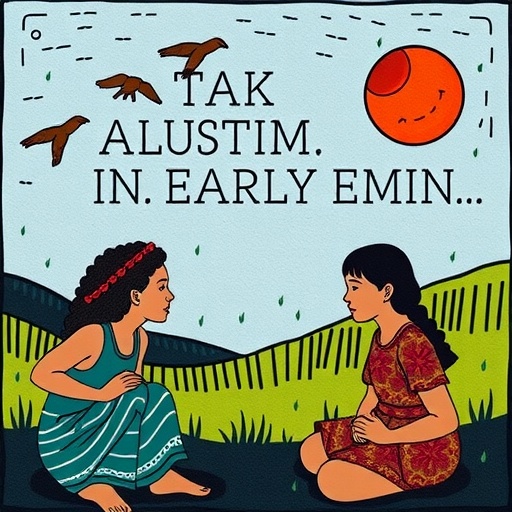
In recent years, the significance of inclusivity in education has gained paramount importance, particularly concerning children with unique learning needs. A recent study titled “Educator Perspectives on the Inclusion of Tamariki Takiwātanga Māori (Autistic Māori Children) in Early Childhood Education” delves into this crucial discourse, providing insights through the lens of educators working with Māori children exhibiting autism. The research unfolds across various dimensions, examining critical factors affecting the inclusion process, examining pedagogical approaches, and understanding the lived experiences of Māori autistic children.
The study features contributions from a diverse group of educators, marking a vital step forward in acknowledging the profound need for tailored educational strategies that resonate with cultural values and traditions. These educators spotlight how cultural understandings and interpersonal relationships play pivotal roles in fostering environments conducive to learning. Their perspectives, drawn from personal and professional experiences, elucidate both the challenges and successes encountered in these educational contexts.
One of the cornerstones of this research is the emphasis on culturally responsive pedagogy, an approach increasingly recognized as essential in modern education. The study underscores how educators are striving to adapt their teaching methodologies to incorporate Māori cultural paradigms, thereby enhancing the learning experiences of Tamariki Takiwātanga. This adaptation is not merely cosmetic; it aims to instill a sense of belonging and identity in autistic Māori children by aligning educational activities with their cultural narratives.
Engaging with parents and whānau (family) emerges as another critical theme in the study. Educators are challenged to form genuine partnerships with families, recognizing that children’s learning is deeply intertwined with their familial and cultural contexts. This collaboration is vital, as it enables the sharing of knowledge, resources, and support systems that benefit both educators and families. By fostering such relationships, educators not only enrich their understanding of children’s needs but also empower families as active participants in the educational journey of their children.
The research also sheds light on the various barriers that prevent the effective inclusion of Tamariki Takiwātanga in early childhood settings. Many educators reported encountering systemic issues ranging from insufficient training in autism spectrum disorders to a lack of resources tailored to culturally responsive teaching. These systemic barriers can inadvertently perpetuate exclusion, leaving autism awareness and understanding underdeveloped among educators, ultimately impacting the children they aim to support.
On the positive side, the study highlights exemplary practices and success stories that serve as beacons of hope and inspiration within the educational community. Educators who have successfully navigated the complexities of inclusion shared strategies that embrace both the individuality of children and their cultural heritage. By implementing practices that prioritize cultural sensitivity, these educators have managed to create thriving learning environments where Tamariki Takiwātanga can flourish.
Another vital element of the research is the call for a shift in professional development programs for educators. The study suggests that these programs should prioritize training in cultural competency and strategies for supporting autistic children. Professional development should not only impart theoretical knowledge but also provide practical skills that educators can apply in their classrooms. Such training can lead to transformative changes in teaching practices, promoting long-term positive outcomes for Māori autistic students.
Moreover, the study underscores the importance of reflecting on one’s biases and assumptions. Educators must engage in ongoing self-reflection to understand their perceptions of autism and how these perceptions can influence their interactions with Tamariki Takiwātanga. Developing awareness around personal biases is essential for creating equitable learning environments that respect and honor the dignity of all children, regardless of their neurodiversity.
The potential role of technology in facilitating inclusive education is another illuminating aspect of this research. Educators discuss how digital tools and resources can enhance learning experiences by providing diverse means of engagement and communication for Tamariki Takiwātanga. Technology can bridge gaps in understanding, enabling educators to tailor learning experiences that meet the unique needs of each child, while also fostering connection with their cultural roots.
As the study draws to a close, it calls for a concerted effort from policymakers, educational institutions, and community stakeholders to bolster support for inclusive practices. There is an urgent need for a collaborative framework that prioritizes the integration of Māori perspectives in educational policies and practices, ensuring that the voices of educators, families, and children are central to shaping a more inclusive future.
Ultimately, the findings from this research resonate with wider conversations around diversity, equity, and inclusion in educational settings. They invite educators, policymakers, and communities to rethink their approaches and commit to fostering environments where all children, especially those with unique needs, can thrive alongside their peers. This transformation is not merely a goal but a pressing necessity for a just and equitable society.
In their compelling conclusion, the authors emphasize that the journey towards inclusivity is ongoing and requires collective efforts. They stress the importance of advocacy and continuous dialogue surrounding the experiences of Māori autistic children and their families. The insights garnered from this study not only serve as a springboard for future research but also provide actionable recommendations for improving educational practices across the board.
As discussions on inclusion continue to evolve, it is essential to center the narratives of marginalized groups, ensuring that every child’s voice is heard and valued in the classroom. By doing so, educators can create a robust foundation for future generations, where the brilliance of diversity is celebrated and embraced.
In conclusion, the study by Tupou, Ataera, and Wallace-Watkin provides a rich tapestry of perspectives that illuminate the complexities and possibilities surrounding the inclusion of Tamariki Takiwātanga in early childhood education. It challenges educators and stakeholders to engage deeply with cultural contexts and advocate for systemic changes that foster vibrant, inclusive learning environments for all children.
Tupou, J., Ataera, C., Wallace-Watkin, C. et al. Educator Perspectives on the Inclusion of Tamariki Takiwātanga Māori (Autistic Māori Children) in Early Childhood Education.
Early Childhood Educ J (2026). https://doi.org/10.1007/s10643-025-02097-1
Cite Scienmag News
Courtney Benton. (January 14, 2026). Māori Perspectives on Autistic Inclusion in Early Education. Scienmag. https://scienmag.com/maori-perspectives-on-autistic-inclusion-in-early-education/
Courtney Benton. "Māori Perspectives on Autistic Inclusion in Early Education." Scienmag, 14 January 2026, https://scienmag.com/maori-perspectives-on-autistic-inclusion-in-early-education/. Accessed 3 September 2026.
Courtney Benton. "Māori Perspectives on Autistic Inclusion in Early Education." Scienmag. January 14, 2026. https://scienmag.com/maori-perspectives-on-autistic-inclusion-in-early-education/


