


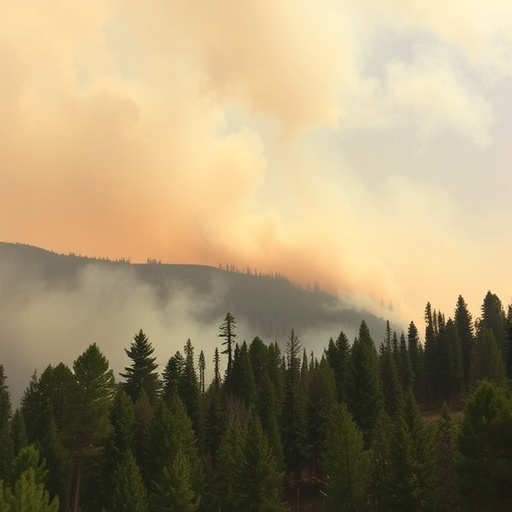
In a world increasingly besieged by wildfires, the smoky haze that blankets vast regions is far more than a mere environmental nuisance. For millions of individuals living with chronic obstructive pulmonary disease (COPD), the infiltration of wildfire smoke into their lungs presents a complex and serious health threat. COPD, a progressive respiratory condition encompassing emphysema and chronic bronchitis, affects over 30 million Americans and ranks as the fourth leading cause of death worldwide. The recent findings published in the May 2026 issue of the Chronic Obstructive Pulmonary Diseases: Journal of the COPD Foundation shed critical light on the alarming gap between the health risks posed by wildfire smoke and the preparedness of COPD patients to mitigate these risks.
The study, spearheaded by researchers affiliated with Kaiser Permanente Northern California, delves deep into the lived experiences of COPD patients residing near major wildfire events. These individuals, who are among the most vulnerable to the noxious effects of particulate matter and toxic gases released by wildfires, offer invaluable insight into current behaviors, knowledge, and systemic failures in health communication. The investigation specifically probes how this population understands wildfire smoke, their defensive actions, and where they seek information in real-time environmental health crises.
Wildfire smoke contains a complex mixture of airborne pollutants, including fine particulate matter (PM2.5), carbon monoxide, volatile organic compounds, and other combustion by-products that readily penetrate deep into the lungs. For patients with compromised respiratory function due to COPD, these airborne toxins exacerbate airway inflammation, increase mucus production, and trigger severe bronchospasm, significantly heightening the risk of acute exacerbations. These exacerbations often necessitate hospitalization and accelerate disease progression, underscoring the urgency for effective exposure mitigation strategies tailored to this at-risk group.
The qualitative interviews conducted in this study reveal that despite the recognized dangers, many COPD patients exhibit a fragmented and incomplete understanding of how wildfire smoke affects their respiratory health. The majority turn to smartphone applications and online air quality indexes for environmental updates—a reliance indicative of modern technology’s role in public health information dissemination. Nevertheless, this self-monitoring is inconsistent and often unaccompanied by professional medical advice, highlighting a crucial gap in patient-provider communication.
Perhaps most concerning is the scarcity of direct conversations between patients and healthcare professionals regarding air quality’s influence on COPD symptomatology. The absence of clinician-led education about real-time protective measures—such as the strategic use of indoor air purifiers or the activation of vehicle air recirculation systems during smoke events—leaves patients ill-equipped to respond adequately when environmental conditions deteriorate. This shortfall reveals an opportunity for healthcare systems to institute proactive patient-centered protocols focusing on environmental health hazards.
Moreover, the participants expressed a pronounced preference for receiving immediate, personalized guidance from their healthcare teams during episodes of poor air quality, rather than relying solely on generic public sources. This desire for tailored information underscores the necessity of integrating environmental health monitoring within chronic disease management frameworks, enabling timely interventions that can preempt severe exacerbations and hospital admissions.
Scientifically, the dynamic and often unpredictable nature of wildfire smoke plumes demands flexible, data-driven approaches to exposure reduction. Emerging wearable technologies and real-time air sensors paired with patient health monitoring could transform COPD care, allowing clinicians to deliver individualized, context-sensitive recommendations. The study advocates for such innovations and stresses the importance of enhancing patients’ environmental health literacy as a critical component of comprehensive COPD management.
In addition to patient education and technology integration, systemic changes at the policy level are imperative to ensure vulnerable populations receive immediate alerts and support during wildfire events. Collaboration between public health agencies, healthcare providers, and environmental monitoring services can facilitate the development of robust preparedness frameworks. The authors emphasize that wildfire smoke preparedness should no longer be a generic public health message but a specialized strategy tailored to the needs of those with chronic respiratory diseases.
Among the behavioral adaptations discussed, the use of indoor air purifiers equipped with high-efficiency particulate air (HEPA) filters emerges as a scientifically validated intervention for reducing indoor PM2.5 levels. These devices can significantly lower the concentration of airborne pollutants infiltrating living spaces during wildfire episodes. However, study findings suggest many patients remain unaware of this option or face economic barriers to accessing such technology, signaling a need for broader educational and financial support initiatives.
Similarly, in-vehicle air quality management, often overlooked, represents a simple yet effective method to minimize smoke exposure during necessary travel. Engaging the vehicle’s air recirculation setting prevents outside smoke-laden air from entering the cabin, thereby decreasing inhaled toxin levels. The research indicates that these practical mitigation tools are underutilized, reinforcing the call for targeted instructional efforts by healthcare providers.
The evidence presented points to a critical paradigm shift in approaching chronic respiratory disease management—one that encompasses environmental health risks as integral to patient well-being. Beyond pharmacologic therapies and pulmonary rehabilitation, healthcare providers must champion the incorporation of environmental risk mitigation strategies into routine care pathways for COPD patients. This holistic perspective may ultimately reduce disease exacerbations, improve quality of life, and alleviate the broader healthcare system burden during wildfire seasons.
In summary, the latent threat posed by wildfire smoke to individuals with COPD transcends basic public health advisories. It demands scientifically informed, patient-specific interventions underpinned by seamless communication, advanced technological tools, and systemic policy support. As wildfires become an entrenched feature of the American landscape due to climate change, these findings serve as a clarion call for healthcare innovation and environmental health empowerment tailored to COPD patients, to shield them from the invisible but deadly embrace of wildfire smoke.
News Publication Date: June 23, 2026
Web References:
Cite Scienmag News
Barbara Leach. (June 23, 2026). Many People Are Unaware of the Health Risks Posed by Wildfire Smoke. Scienmag. https://scienmag.com/many-people-are-unaware-of-the-health-risks-posed-by-wildfire-smoke/
Barbara Leach. "Many People Are Unaware of the Health Risks Posed by Wildfire Smoke." Scienmag, 23 June 2026, https://scienmag.com/many-people-are-unaware-of-the-health-risks-posed-by-wildfire-smoke/. Accessed 4 September 2026.
Barbara Leach. "Many People Are Unaware of the Health Risks Posed by Wildfire Smoke." Scienmag. June 23, 2026. https://scienmag.com/many-people-are-unaware-of-the-health-risks-posed-by-wildfire-smoke/


