

Tuesday, July 28, 2026
Science
No Result
View All Result
  • Login
  • HOME
  • SCIENCE NEWS
  • CONTACT US
  • HOME
  • SCIENCE NEWS
  • CONTACT US
No Result
View All Result
Scienmag
No Result
View All Result
Home Science News Medicine

Magnesium Sulfate May Protect Newborn Brains in Neonatal Encephalopathy

July 28, 2026
in Medicine, Pediatry
Reading Time: 2 mins read
0
Magnesium Sulfate May Protect Newborn Brains in Neonatal Encephalopathy

Magnesium Sulfate May Protect Newborn Brains in Neonatal Encephalopathy

65
SHARES
587
VIEWS
Share on FacebookShare on Twitter
ADVERTISEMENT

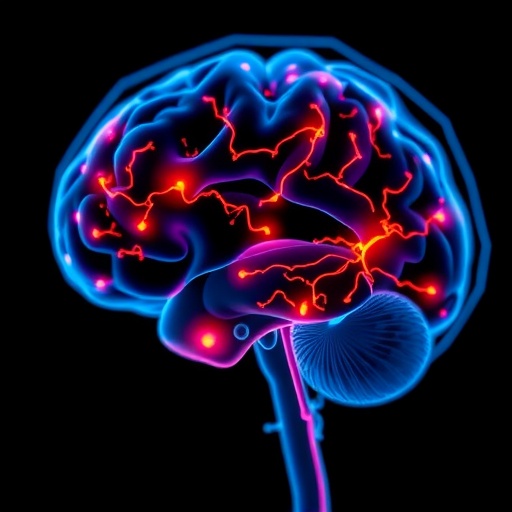
A new systematic review is putting postnatal magnesium sulfate (MgSO₄) under the microscope as a potential neuroprotective strategy for newborns with neonatal encephalopathy (NE), a condition linked to hypoxic-ischemic brain injury and substantial lifelong neurological risk.

Published in the Journal of Perinatology, the study by Mimouni and colleagues synthesizes available evidence on whether giving magnesium after birth can protect the developing brain when NE is suspected or confirmed. The work focuses specifically on “postnatal” administration, distinguishing it from prenatal approaches that have been explored elsewhere.

Magnesium sulfate is biologically plausible as a brain-protecting agent because it can modulate excitotoxic pathways. By influencing neuronal activity through effects on calcium handling and related signaling, MgSO₄ may reduce cascades that worsen injury after oxygen deprivation—mechanisms that are central to how NE evolves over the first hours and days of life.

The review evaluates both safety and efficacy outcomes, addressing a critical gap in neonatal care: interventions must be not only effective but also tolerable in a fragile population where even small adverse effects can be consequential.

Although hypothermia is the current standard neuroprotective treatment in many settings, not all infants receive it promptly or at all, and questions remain about residual injury even with cooling. This has fueled interest in adjunct therapies—treatments that could further reduce brain damage beyond temperature management alone.

The authors’ systematic approach aggregates findings across studies, aiming to clarify whether MgSO₄ changes key clinical endpoints and whether it introduces safety concerns such as impacts on respiratory stability, blood pressure, or metabolic parameters. For clinicians, this matters because any additional drug must integrate smoothly with established neonatal protocols.

For families affected by NE, the stakes are high: early intervention can influence neurodevelopmental trajectories, including motor function, cognition, and seizure risk. For clinicians, evidence quality determines whether magnesium could become a routine add-on therapy or remains an investigational option.

By mapping the current evidence landscape, the review provides a viral-ready, science-news snapshot of where the field stands—and, importantly, where uncertainty persists—setting the stage for future trials designed to test magnesium in rigorous, clinically relevant ways.

Subject of Research: Postnatal magnesium sulfate (MgSO₄) for neuroprotection in neonatal encephalopathy (NE)

Article Title: Magnesium sulfate for brain protection in neonatal encephalopathy: a systematic review

Article References: Mimouni, F.B., Dadon, Y., Arad, I. et al. J Perinatol (2026). https://doi.org/10.1038/s41372-026-02812-9

DOI: 10.1038/s41372-026-02812-9

Keywords:

Tags: brain injury modulation in neonatesefficacy of magnesium sulfate in NEhypothermia and magnesium sulfate combined therapyhypoxic-ischemic encephalopathy treatmentmagnesium sulfate neuroprotectionmagnesium sulfate safety in newbornsneonatal brain injury preventionneonatal encephalopathyneonatal neurological outcomesneonatal neuroprotection systematic reviewneonatal neuroprotective strategiespostnatal magnesium sulfate
Share26Tweet16
Previous Post

Iron-Loaded Biochar Boosts Electron Shuttling for Ammonium Nitrate Reduction in Rice Soils

Next Post

Early Brain Development Predicts Driving Experience in Youth With Congenital Heart Disease

Related Posts

Electronic Resonance Boosted Molecule Improves Perovskite Solar Cell Performance
Medicine

Electronic Resonance Boosted Molecule Improves Perovskite Solar Cell Performance

July 28, 2026
Mitophagy dampens mitochondrial DNA–triggered cGAS-STING activation in autoimmune thyroiditis
Medicine

Mitophagy dampens mitochondrial DNA–triggered cGAS-STING activation in autoimmune thyroiditis

July 28, 2026
Unlinked medical records hinder dementia care for patients and caregivers
Medicine

Unlinked medical records hinder dementia care for patients and caregivers

July 28, 2026
Imaging Nanoscale Polar Textures Reveals Quantum Paraelectric Behavior in SrTiO3
Medicine

Imaging Nanoscale Polar Textures Reveals Quantum Paraelectric Behavior in SrTiO3

July 28, 2026
Atezolizumab After Single or Multiple Fractions of Stereotactic Radiotherapy in TNBC
Medicine

Atezolizumab After Single or Multiple Fractions of Stereotactic Radiotherapy in TNBC

July 28, 2026
Pre-Transfusion Platelet Levels Predict Bleeding in Very Low Birth Weight Infants
Medicine

Pre-Transfusion Platelet Levels Predict Bleeding in Very Low Birth Weight Infants

July 28, 2026
Next Post
Early Brain Development Predicts Driving Experience in Youth With Congenital Heart Disease

Early Brain Development Predicts Driving Experience in Youth With Congenital Heart Disease

  • Mothers who receive childcare support from maternal grandparents show more

    Mothers who receive childcare support from maternal grandparents show more parental warmth, finds NTU Singapore study

    27656 shares
    Share 11059 Tweet 6912
  • University of Seville Breaks 120-Year-Old Mystery, Revises a Key Einstein Concept

    1061 shares
    Share 424 Tweet 265
  • Bee body mass, pathogens and local climate influence heat tolerance

    682 shares
    Share 273 Tweet 171
  • Researchers record first-ever images and data of a shark experiencing a boat strike

    546 shares
    Share 218 Tweet 137
  • Groundbreaking Clinical Trial Reveals Lubiprostone Enhances Kidney Function

    531 shares
    Share 212 Tweet 133
Science

Embark on a thrilling journey of discovery with Scienmag.com—your ultimate source for cutting-edge breakthroughs. Immerse yourself in a world where curiosity knows no limits and tomorrow’s possibilities become today’s reality!

RECENT NEWS

  • Pusan National University pharmacy study explores rare atom-containing natural products
  • Electronic Resonance Boosted Molecule Improves Perovskite Solar Cell Performance
  • Interoceptive Performance Shows No Link to Mental Health Symptoms in Study
  • Early Adversity Tunes Brain and Behavior’s Oxytocin Response in Altruism

Categories

  • Agriculture
  • Anthropology
  • Archaeology
  • Athmospheric
  • Biology
  • Biotechnology
  • Blog
  • Bussines
  • Cancer
  • Chemistry
  • Climate
  • Earth Science
  • Editorial Policy
  • Marine
  • Mathematics
  • Medicine
  • Pediatry
  • Policy
  • Psychology & Psychiatry
  • Science Education
  • Social Science
  • Space
  • Technology and Engineering

Subscribe to Blog via Email

Enter your email address to subscribe to this blog and receive notifications of new posts by email.

Join 5,146 other subscribers

© 2025 Scienmag - Science Magazine

Welcome Back!

Login to your account below

Forgotten Password?

Retrieve your password

Please enter your username or email address to reset your password.

Log In
No Result
View All Result
  • HOME
  • SCIENCE NEWS
  • CONTACT US

© 2025 Scienmag - Science Magazine

Discover more from Science

Subscribe now to keep reading and get access to the full archive.

Continue reading
