

Tuesday, July 28, 2026
Science
No Result
View All Result
  • Login
  • HOME
  • SCIENCE NEWS
  • CONTACT US
  • HOME
  • SCIENCE NEWS
  • CONTACT US
No Result
View All Result
Scienmag
No Result
View All Result
Home Science News Technology and Engineering

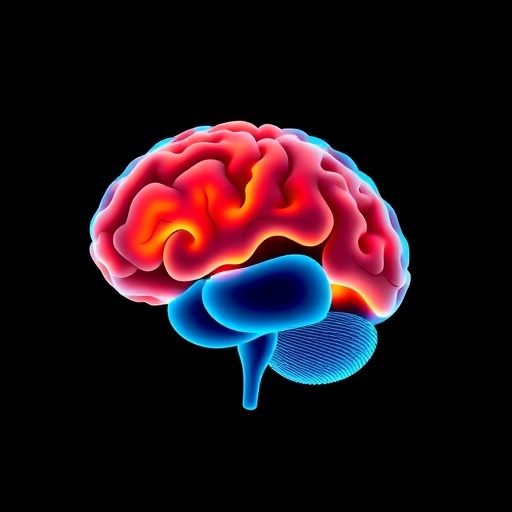
Early Brain Development Predicts Driving Experience in Youth With Congenital Heart Disease

July 28, 2026
in Technology and Engineering
Reading Time: 2 mins read
0
Early Brain Development Predicts Driving Experience in Youth With Congenital Heart Disease

Early Brain Development Predicts Driving Experience in Youth With Congenital Heart Disease

65
SHARES
587
VIEWS
Share on FacebookShare on Twitter
ADVERTISEMENT

Children who survive congenital heart disease (CHD) often face long-term challenges that extend beyond the heart, including measurable neurodevelopmental differences. While clinicians have increasingly documented cognitive, motor, and behavioral vulnerabilities in early life, less is known about how early developmental signals translate into concrete, everyday milestones during young adulthood. A new study published in Pediatric Research now links early neurodevelopment to a real-world indicator of independence: whether CHD survivors obtain a driver’s license.

Researchers followed a cohort of individuals with CHD and assessed early neurodevelopmental outcomes using established indicators such as developmental performance profiles that capture domains like attention, coordination, and broader cognitive functioning. The study then examined later driving experience at the transition to adulthood, focusing on the attainment of a driver’s license—a critical step that requires not only knowledge of road rules but also planning, sustained attention, reaction timing, and decision-making.

Statistically, the investigators found that early neurodevelopmental metrics were predictive of later driving outcomes. In other words, patterns identified in childhood were not merely associated with academic or clinical measures; they carried forward into functional tasks that demand integrated skills. The results suggest that neurodevelopmental organization—how efficiently the brain supports learning and behavior—can shape the likelihood of engaging in driving-related responsibilities years later.

The team emphasizes that driving licensure is a particularly meaningful endpoint because it reflects a combination of cognitive capacity, neurobehavioral stability, and practical life circumstances. It also provides a pragmatic lens on independence, complementing traditional health outcomes and offering a bridge between pediatric follow-up and adult functioning.

Importantly, the findings do not imply determinism. Many factors—family support, access to driver education, and individual health trajectories—also influence licensing. However, the study strengthens the argument that early developmental screening in CHD should be treated as a prognostic tool, not simply a descriptive assessment.

From a clinical perspective, the work supports earlier identification of children who may benefit from targeted interventions. Programs that address attention regulation, motor planning, or executive function could plausibly improve readiness for complex real-world activities, including driving.

Overall, the research reframes neurodevelopment in CHD as a forward-looking predictor of independence. With more survivors reaching adulthood, translating early developmental data into actionable guidance could help families and clinicians plan for smoother transitions.

Subject of Research: Congenital heart disease (CHD) survivors; neurodevelopment and functional independence
Article Title: Early neurodevelopment predicts driving experience in early adulthood in a congenital heart disease cohort.
Article References: Baxelbaum, K.S., Burnham, N., Hampton, L. et al. Early neurodevelopment predicts driving experience in early adulthood in a congenital heart disease cohort. Pediatr Res (2026). https://doi.org/10.1038/s41390-026-05306-8
Image Credits: AI Generated
DOI: 10.1038/s41390-026-05306-8
Keywords:

Tags: brain-behavior relationshipscognitive and motor developmentcongenital heart diseasedevelopmental milestonesdriving skills predictionearly childhood brain developmentlong-term neurobehavioral effectsneurodevelopmental assessmentneurodevelopmental outcomespediatric neurodevelopmenttransition to adulthoodyouth independence
Share26Tweet16
Previous Post

Magnesium Sulfate May Protect Newborn Brains in Neonatal Encephalopathy

Next Post

Mitophagy dampens mitochondrial DNA–triggered cGAS-STING activation in autoimmune thyroiditis

Related Posts

Electronic Resonance Boosted Molecule Improves Perovskite Solar Cell Performance
Medicine

Electronic Resonance Boosted Molecule Improves Perovskite Solar Cell Performance

July 28, 2026
Critical Care Doctor Warns Chatbot Dependence Signals Broader Health Care Failures
Technology and Engineering

Critical Care Doctor Warns Chatbot Dependence Signals Broader Health Care Failures

July 28, 2026
Imaging Nanoscale Polar Textures Reveals Quantum Paraelectric Behavior in SrTiO3
Medicine

Imaging Nanoscale Polar Textures Reveals Quantum Paraelectric Behavior in SrTiO3

July 28, 2026
Inflation-Induced Changes in Epinephrine Pharmacokinetics and Dynamics in Piglets
Technology and Engineering

Inflation-Induced Changes in Epinephrine Pharmacokinetics and Dynamics in Piglets

July 28, 2026
Terrain diversity shapes carbon storage in Brazil’s Atlantic Forest
Technology and Engineering

Terrain diversity shapes carbon storage in Brazil’s Atlantic Forest

July 27, 2026
Structure Reveals How Crimean-Congo Hemorrhagic Fever Virus Polymerase Is Inhibited
Medicine

Structure Reveals How Crimean-Congo Hemorrhagic Fever Virus Polymerase Is Inhibited

July 27, 2026
Next Post
Mitophagy dampens mitochondrial DNA–triggered cGAS-STING activation in autoimmune thyroiditis

Mitophagy dampens mitochondrial DNA–triggered cGAS-STING activation in autoimmune thyroiditis

  • Mothers who receive childcare support from maternal grandparents show more

    Mothers who receive childcare support from maternal grandparents show more parental warmth, finds NTU Singapore study

    27656 shares
    Share 11059 Tweet 6912
  • University of Seville Breaks 120-Year-Old Mystery, Revises a Key Einstein Concept

    1061 shares
    Share 424 Tweet 265
  • Bee body mass, pathogens and local climate influence heat tolerance

    682 shares
    Share 273 Tweet 171
  • Researchers record first-ever images and data of a shark experiencing a boat strike

    546 shares
    Share 218 Tweet 137
  • Groundbreaking Clinical Trial Reveals Lubiprostone Enhances Kidney Function

    531 shares
    Share 212 Tweet 133
Science

Embark on a thrilling journey of discovery with Scienmag.com—your ultimate source for cutting-edge breakthroughs. Immerse yourself in a world where curiosity knows no limits and tomorrow’s possibilities become today’s reality!

RECENT NEWS

  • Pusan National University pharmacy study explores rare atom-containing natural products
  • Electronic Resonance Boosted Molecule Improves Perovskite Solar Cell Performance
  • Interoceptive Performance Shows No Link to Mental Health Symptoms in Study
  • Early Adversity Tunes Brain and Behavior’s Oxytocin Response in Altruism

Categories

  • Agriculture
  • Anthropology
  • Archaeology
  • Athmospheric
  • Biology
  • Biotechnology
  • Blog
  • Bussines
  • Cancer
  • Chemistry
  • Climate
  • Earth Science
  • Editorial Policy
  • Marine
  • Mathematics
  • Medicine
  • Pediatry
  • Policy
  • Psychology & Psychiatry
  • Science Education
  • Social Science
  • Space
  • Technology and Engineering

Subscribe to Blog via Email

Enter your email address to subscribe to this blog and receive notifications of new posts by email.

Join 5,146 other subscribers

© 2025 Scienmag - Science Magazine

Welcome Back!

Login to your account below

Forgotten Password?

Retrieve your password

Please enter your username or email address to reset your password.

Log In
No Result
View All Result
  • HOME
  • SCIENCE NEWS
  • CONTACT US

© 2025 Scienmag - Science Magazine

Discover more from Science

Subscribe now to keep reading and get access to the full archive.

Continue reading
