


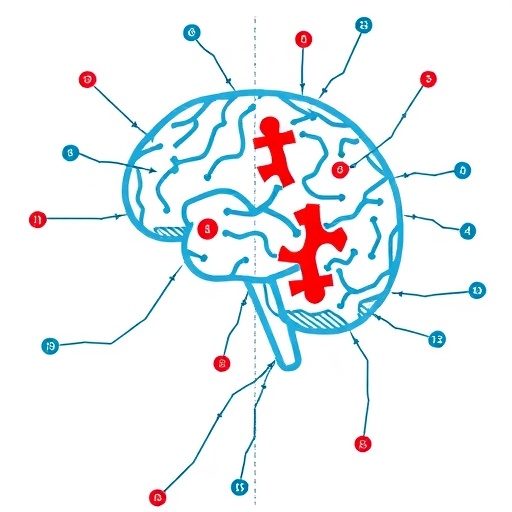
In recent years, the intersection of artificial intelligence and healthcare has emerged as one of the most promising arenas for transformative breakthroughs. A striking example lies in the application of machine learning (ML) models to the complex and multifaceted condition known as autism spectrum disorder (ASD). Researchers worldwide have been harnessing the enormous potential concealed within big data and sophisticated algorithms to refine diagnostic accuracy, personalize interventions, and unravel the disorder’s elusive neurobiological underpinnings. The landscape of ASD research has thus moved beyond traditional observational studies into an era where intelligent computational frameworks redefine our understanding and management of this neurodevelopmental condition.
Autism spectrum disorder encompasses a broad range of neurodevelopmental variations characterized primarily by challenges in social communication, restricted interests, and repetitive behaviors. One of the greatest challenges clinicians face is the heterogeneity of symptoms and the difficulty in early and precise diagnosis, which significantly impacts long-term outcomes. Machine learning offers a novel methodology to decode this heterogeneity by analyzing high-dimensional behavioral, genetic, and neuroimaging data. By identifying subtle patterns invisible to conventional statistical techniques, ML models can delineate subtypes within the spectrum, paving the way for more nuanced diagnoses.
Neuroimaging modalities, especially functional MRI (fMRI) and diffusion tensor imaging (DTI), produce extensive datasets capable of revealing structural and functional brain differences in ASD individuals. However, these datasets are notoriously complex and challenging to interpret. Machine learning algorithms, including support vector machines, deep neural networks, and random forests, have been progressively applied to extract meaningful biomarkers from neuroimaging data. These models achieve remarkable classification accuracy, often surpassing traditional methods, and illuminate neural connectivity aberrations that underpin social cognition deficits.
Beyond imaging, genetic data analysis has also immensely benefited from ML integration. Autism is known to have a significant heritable component, yet pinpointing specific causal genes remains elusive due to the complexity of gene-environment interactions and polygenic nature. Machine learning enables the aggregation and interpretation of genome-wide association studies (GWAS) and sequencing data to uncover novel genetic variants and gene expression profiles associated with ASD. This paves the way for identifying potential molecular targets for therapeutic development.
Behavioral assessment is another crucial domain where machine learning is revolutionizing practice. Standard ASD diagnostic tools, while comprehensive, involve subjective evaluations and are time-consuming. Leveraging large datasets from behavioral questionnaires, eye-tracking measures, and audio-visual recordings, ML algorithms can automate and enhance early screening processes. For instance, models trained on speech patterns and facial emotion recognition have demonstrated promising results in identifying autism-related behavioral markers, facilitating timely intervention.
Integration of multimodal data represents the cutting edge in ASD research. By amalgamating neuroimaging, genetic, and behavioral datasets through sophisticated machine learning frameworks, researchers can achieve a holistic view of autism’s multifactorial etiology. These integrative models not only improve diagnostic precision but also assist in stratifying individuals for personalized treatment plans that consider unique biological, cognitive, and environmental factors.
Despite these exciting advances, the application of machine learning in ASD research is not without challenges. Data heterogeneity, scarcity of large-scale well-annotated datasets, and the risk of overfitting models to specific populations impose limitations on generalizability. Ethical concerns related to data privacy, algorithmic bias, and transparency in decision-making also necessitate rigorous frameworks to ensure responsible deployment of AI technologies in clinical settings.
Future directions in this burgeoning field emphasize the importance of explainable AI to foster clinician trust and adoption. Developing interpretable models that provide insights into the decision-making process is essential to bridge the gap between algorithmic predictions and actionable clinical knowledge. Additionally, collaborative efforts toward standardizing data formats and creating open repositories can democratize access and drive innovation.
Personalized medicine, tailored to an individual’s unique neurobiological profile as predicted by machine learning tools, is poised to reshape autism treatment paradigms. Pharmacological interventions may be optimized based on predicted response patterns, while behavioral therapies can be dynamically adjusted to target specific deficits identified through computational analyses. Such adaptive approaches promise to enhance efficacy and reduce trial-and-error in management plans.
Moreover, longitudinal studies empowered by ML can track developmental trajectories and predict outcomes with unprecedented accuracy. Early prediction models that utilize continuous monitoring data have the potential to identify high-risk infants years before traditional clinical symptoms manifest, enabling preemptive interventions that could alter the disorder’s course significantly.
Interdisciplinary collaboration lies at the heart of these successes. Neuroscientists, geneticists, data scientists, and clinical practitioners must synergize expertise to design models that reflect biological realities while addressing clinical exigencies. This cross-pollination accelerates the translation of computational discoveries into real-world applications, ultimately benefiting patients and families affected by autism.
Educational initiatives to upskill clinicians in AI literacy ensure that emerging tools are integrated seamlessly into existing healthcare frameworks. Bridging the knowledge gap enhances confidence in interpreting machine learning outputs and fosters seamless communication between human expertise and artificial intelligence capabilities.
Additionally, the ethical deployment of machine learning in ASD diagnosis and therapy warrants active involvement of patient advocacy groups and policymakers. Ensuring equitable access, mitigating biases against underrepresented groups, and safeguarding individual rights must be prioritized to maintain public trust in these technologies.
In summary, the evolving role of machine learning in autism spectrum disorder research heralds a transformative era characterized by enhanced diagnostic accuracy, personalized intervention strategies, and deeper biological insight. While challenges remain, the synergy of computational power and clinical acumen promises a future where ASD is better understood, diagnosed earlier, and managed more effectively than ever before. This dynamic confluence of disciplines invites robust investment and continued exploration to unlock the full potential of machine learning in improving lives on the spectrum.
Cite Scienmag News
Blake Davidson. (December 16, 2025). Machine Learning’s Growing Impact on Autism Research. Scienmag. https://scienmag.com/machine-learnings-growing-impact-on-autism-research/
Blake Davidson. "Machine Learning’s Growing Impact on Autism Research." Scienmag, 16 December 2025, https://scienmag.com/machine-learnings-growing-impact-on-autism-research/. Accessed 4 September 2026.
Blake Davidson. "Machine Learning’s Growing Impact on Autism Research." Scienmag. December 16, 2025. https://scienmag.com/machine-learnings-growing-impact-on-autism-research/


