


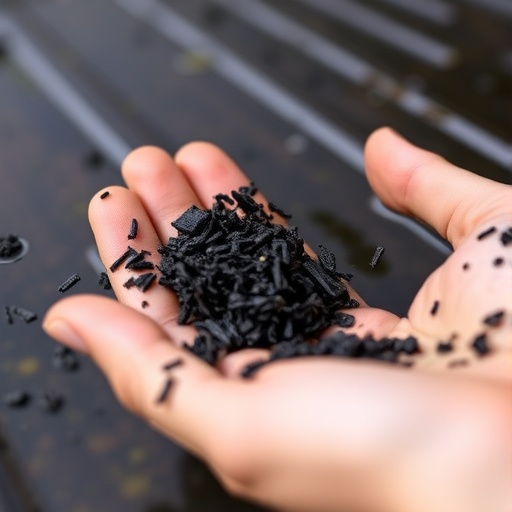
In a significant breakthrough for sustainable materials and climate mitigation technology, a team of researchers has unveiled a cutting-edge machine learning framework designed to revolutionize the production of biochar from algae. Traditionally, biochar—an essential carbon-rich product derived from biomass subjected to pyrolysis in low-oxygen environments—has predominantly relied on woody or agricultural residues. However, this new study focuses on algal feedstocks, harnessing the rapid growth rates and minimal land requirements of these organisms to create an environmentally friendly and efficient alternative.
The complexity of algae’s biochemical composition has historically posed challenges to optimizing biochar yield. Parameters such as carbon and nitrogen content, volatile matter, and ash fractions impact the thermal degradation process, making conventional trial-and-error experimental methods costly and time-intensive. Addressing these hurdles, the research team amalgamated extensive experimental datasets with sophisticated machine learning algorithms to identify the precise pyrolysis conditions that maximize biochar output from various algal biomass sources.
Their approach began with compiling a comprehensive dataset derived from 48 peer-reviewed studies over the last decade, encompassing 373 unique experimental data points. These data included critical compositional details of different algal species alongside processing variables like pyrolysis temperature, heating rate, residence time, particle size, and nitrogen flow rates during synthesis. This rich dataset enabled the development and benchmarking of multiple machine learning models, including decision trees, support vector machines, Gaussian process regression, as well as ensemble tree-based methods.
To further enhance predictive performance, the team integrated bioinspired optimization algorithms, specifically genetic algorithms and particle swarm optimization, which mimic natural evolutionary and flocking behaviors to discover optimal model parameters. Among these, an ensemble tree method optimized through genetic algorithms demonstrated superior accuracy in forecasting algal biochar yields across diverse process settings and feedstock types. This robust model not only aligned closely with experimental results but also elucidated the hierarchical influence of various input factors on biochar synthesis.
Temperature emerged as the dominant variable controlling biochar yield, underscoring its critical role in determining the extent of thermal decomposition and carbon retention. Volatile matter content and heating rate also were pivotal, revealing that their interaction intricately affects reaction kinetics and char formation dynamics. This nuanced understanding validates empirical observations by experimentalists but advances the field by quantifying these effects in a predictive modeling framework capable of capturing nonlinear interdependencies.
Leveraging the model’s inverse design capabilities, the team identified an optimal pyrolysis parameter set predicted to yield biochar outputs exceeding 76 percent. Importantly, these conditions were experimentally validated using freshwater algal samples, with actual biochar yields closely matching machine learning forecasts. This synergy between computational prediction and experimental verification highlights the framework’s potential to accelerate innovation while minimizing resource-intensive lab work.
Beyond its predictive power, the study employed Monte Carlo simulations and Sobol sensitivity analyses to rigorously assess uncertainties and interaction effects among process variables. Such statistical evaluations confirmed that the impact of individual parameters cannot be considered in isolation due to their intertwined, nonlinear relationships. This insight emphasizes machine learning’s capacity to model complex systems where traditional analytical or empirical approaches fall short.
This integrative methodology paves the way not merely for optimizing algal biochar yield but also for transforming the design and scale-up of biochar production systems. By streamlining experimental planning and reducing material waste, manufacturers can deploy more cost-effective and environmentally sustainable biochar technologies. Given algae’s abundance and renewability, these advancements hold considerable promise for applications spanning carbon sequestration, remediation of wastewater, soil enhancement, and renewable energy integration.
This paradigm shift in biochar technology reflects a broader trend in environmental engineering whereby artificial intelligence and computational intelligence serve as indispensable tools for tackling intricate, multidisciplinary challenges. The research underscores that machine learning frameworks are invaluable for deciphering the multifaceted interrelations inherent in biomass conversion processes, accelerating the development of green solutions critical for addressing global climate and sustainability targets.
As the first journal devoted exclusively to biochar science, the publication Biochar provided an ideal platform for unveiling this study. Their commitment to advancing the fundamental science and application of biochar—ranging from agronomy to environmental remediation—aligns well with this innovative work. It also reaffirms the critical role such interdisciplinary collaborations will play in the emerging bioeconomy.
This research represents not only a leap forward in algal biochar production but also a blueprint for leveraging data-driven approaches to optimize other biomass-based materials. The ability to efficiently predict and tailor material properties via combined computational-experimental methods is poised to catalyze breakthroughs across the renewable energy and bioproduct sectors. Ultimately, breakthroughs such as these are pivotal in crafting the carbon-neutral economies of the future.
News Publication Date: 7-Jan-2026
Web References: http://dx.doi.org/10.1007/s42773-025-00511-w
References: Gul, J., Khan, M.N.A., Sikander, U. et al. Machine learning optimization for algal biochar yield: integrating experimental validation and sensitivity analysis. Biochar 8, 8 (2026).
Cite Scienmag News
Blake Davidson. (February 1, 2026). Machine Learning Uncovers Optimal Methods to Maximize Biochar Production from Algae. Scienmag. https://scienmag.com/machine-learning-uncovers-optimal-methods-to-maximize-biochar-production-from-algae/
Blake Davidson. "Machine Learning Uncovers Optimal Methods to Maximize Biochar Production from Algae." Scienmag, 1 February 2026, https://scienmag.com/machine-learning-uncovers-optimal-methods-to-maximize-biochar-production-from-algae/. Accessed 4 September 2026.
Blake Davidson. "Machine Learning Uncovers Optimal Methods to Maximize Biochar Production from Algae." Scienmag. February 1, 2026. https://scienmag.com/machine-learning-uncovers-optimal-methods-to-maximize-biochar-production-from-algae/


