One of agriculture’s most persistent enemies, the oomycete Phytophthora infestans, the microbe behind potato late blight and the historic Irish famine, is now the focus of a computational study that peers into the molecular handshake between commercial fungicides and the pathogen’s own proteins. In research published in the journal BioRisk, scientists used advanced in silico methods to model how two widely deployed fungicides, fluopicolide and propamocarb, form stable complexes with two key target proteins of the pathogen: cytochrome P450 and glutathione-S-transferase. The findings offer a detailed picture of binding affinity and structural interaction that could inform the design of next-generation crop protection agents.
The stakes are considerable. Developing a single new synthetic pesticide from laboratory synthesis to production scale is estimated to cost between 250 and 280 million US dollars and take roughly ten years of laboratory and field testing. Computational biology offers a way to trim those costs by predicting molecular target structures and screening candidate compounds before expensive experimental campaigns begin. Structure-based molecular design has already been applied successfully in agrochemical research, for example in the discovery of novel inhibitors of the mitogen-activated protein kinase FgGpmk1, which is vital to the development and virulence of Fusarium graminearum, the causative agent of Fusarium head blight.
The genus Phytophthora contains roughly 200 species and is probably the most economically important group in plant pathology. Although a range of fungicides, including protective, translaminar, curative, systemic and antisporulant formulations, are used against these pathogens, Phytophthora populations are capable of developing resistance, forcing researchers to search continuously for new active molecules or to modernise existing ones. The study’s authors selected P. infestans as a typical representative of the genus and focused on two protein families with well-established links to fungicide biology.
Cytochrome P450 enzymes, heme-containing monooxygenases, play a crucial role in the biology and ecology of fungi, and proteins of the CYP450 system in Phytophthora capsici are known to be involved in the development of resistance to fungicides. Glutathione-S-transferase proteins in P. infestans may likewise participate in fungicide resistance and are actively expressed during infection of potato plants. Because no information on the specific target proteins of the fungicides under study could be found in the scientific literature, the researchers chose these two enzymes as their model targets, creating an opportunity to apply molecular docking to direct targets of the pathogen for the first time.
Fluopicolide, a synthetic benzamide fungicide characterised by its ability to delocalise spectrin-like proteins, and propamocarb, a synthetic carbamide fungicide that inhibits lipid synthesis, were selected for the investigation. Both are typical fungicides against Phytophthora and are used on experimental field farms, targeting oomycetes including Phytophthora and some Pythium species, and controlling root rot on crops such as grapes, hops, potatoes and various vegetables. Prior academic work on propamocarb is sparse, and the researchers found no published study of fluopicolide using molecular interaction modelling methods, making this the first such analysis.
Methodologically, the study combined machine learning prediction with homology-based cross-validation to identify ligand-binding sites on the target proteins. The researchers used the P2Rank algorithm, accessed through the PrankWeb server, to predict molecular cavities where ligands might reside, and then validated these predictions by performing BLAST alignment of reference proteins with annotated homologous structures from the UniProtKB database. This dual approach was designed to overcome a common problem in computational structural biology: when working with proteins obtained by homology modelling or neural network prediction tools such as AlphaFold, the pool of biomolecules often has a low level of experimental evidence, making it difficult to localise molecular cavities with confidence. By superimposing key amino acid residues found in better-annotated homologues onto the predicted cavities, the team could select the most suitable binding sites before refining ligand position through docking.
For the docking itself, the researchers employed rigid intermolecular blind docking using AutoDock version 4.2 with MGLtools version 1.5.6 as a graphical interface. They removed residual water from the protein structures, added protons to amino acid residues at potential binding sites, and defined cubic grid boxes with 40 by 40 by 40 angstrom faces to indicate the docking region. Five docking attempts were performed for each region, and a standard 50-repetition protocol was used for molecular interaction modelling. The resulting complexes were visualised in PyMol version 2.5.4 and Discovery Studio Visualizer to generate two-dimensional and three-dimensional images of the ligand-receptor interactions.
The results reveal a clear hierarchy of binding stability. The lowest minimum binding energy, at minus 9.53 kilocalories per mole, belonged to the CYP450-fluopicolide complex, while the highest, at minus 4.82 kilocalories per mole, belonged to the GST-propamocarb complex. Across all conformation ranks, fluopicolide consistently formed more stable complexes with both target proteins than propamocarb did. The difference in minimum binding energies between the two fungicides was 29.4 percent for CYP450 and 24.3 percent for GST. A total of 21 protein-fungicide complexes were modelled, with between four and six conformation ranks per complex, and the relatively small number of potential positions suggests a high probability of close interaction between ligand and protein site.
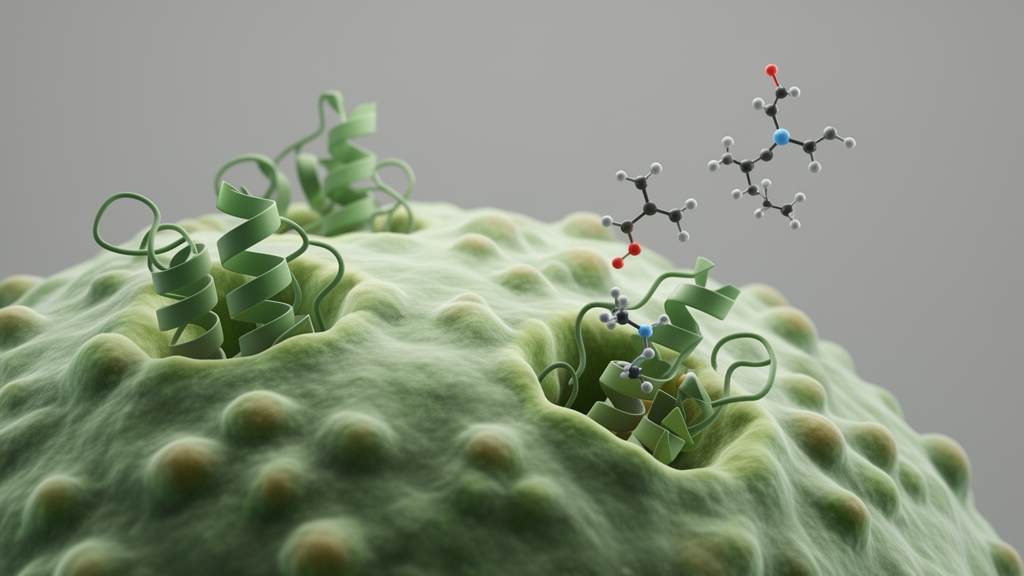
Beyond binding energy, the modelled complexes exhibited structural stability through the formation of multiple bond types, including hydrogen bonds, hydrophobic interactions, alkyl bonds and van der Waals forces. Between three and eight different types of bonds were observed across the various complexes, and between eight and seventeen amino acid residues were bound to the ligands during complex formation. For the CYP450-fluopicolide complex, these included alanine, arginine, histidine, methionine, leucine, asparagine, valine, serine, cysteine, tryptophan and proline, with a quantitative predominance of aliphatic amino acids across all complexes. The CYP450-fluopicolide complex showed the greatest diversity of bonding types, while the CYP450-propamocarb complex showed the least. Notably, docking with CYP450 occurred on the C-terminal side at the heme-binding cofactor site, while docking with GST occurred on the opposite side at the N-terminal domain, at the glutathione-binding G-site, suggesting that blocking these functional sites would likely impair protein function.
The study’s conclusions point towards fluopicolide as the more advantageous option for effectively controlling P. infestans, given its greater propensity to form stable ligand-receptor complexes with all presented target proteins. The researchers emphasise that their algorithm and results are characterised by a high degree of impartiality, making them readily applicable for adoption by fellow researchers in bioinformatics. As fungicide resistance continues to erode the efficacy of existing crop protection agents, computational approaches of this kind may prove increasingly valuable in identifying the molecular mechanisms underlying fungicide action and in guiding the rational design of new compounds before costly laboratory and field trials begin.
Subject of Research: In silico molecular docking of fungicides with Phytophthora infestans target proteins
Article Title: Elucidating fungicide complex formation mechanisms with Phytophthora infestans target proteins: In silico insights
Article References: Timkin, P. D., Gafforov, Y., Wang, M., Qiao, K., Ajiev, A. B., Pamirsky, I. E., & Golokhvast, K. S. (2025). Elucidating fungicide complex formation mechanisms with Phytophthora infestans target proteins: In silico insights. BioRisk, 23, 79-81. https://doi.org/10.3897/biorisk.23.139718
Image Credits: AI Generated
DOI: 10.3897/biorisk.23.139718
Keywords: Elucidating, fungicide, complex, formation, mechanisms, Phytophthora, infestans, target, proteins, silico, insights, scientific research
Cite Scienmag News
Kristina Jarvis. (October 17, 2026). Machine Learning Reveals How Fungicides Bind to Proteins of the Potato Blight Pathogen. Scienmag. https://scienmag.com/machine-learning-reveals-how-fungicides-bind-to-proteins-of-the-potato-blight-pathogen/
Kristina Jarvis. "Machine Learning Reveals How Fungicides Bind to Proteins of the Potato Blight Pathogen." Scienmag, 17 October 2026, https://scienmag.com/machine-learning-reveals-how-fungicides-bind-to-proteins-of-the-potato-blight-pathogen/. Accessed 17 October 2026.
Kristina Jarvis. "Machine Learning Reveals How Fungicides Bind to Proteins of the Potato Blight Pathogen." Scienmag. October 17, 2026. https://scienmag.com/machine-learning-reveals-how-fungicides-bind-to-proteins-of-the-potato-blight-pathogen/