


…
…
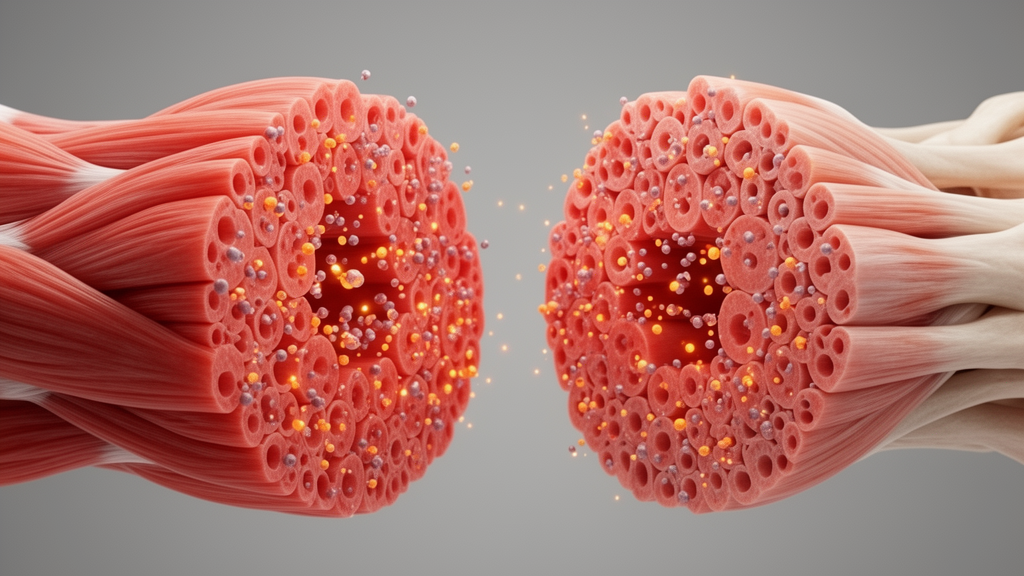
The concept of proteome plasticity offers a useful lens for interpreting why resistance training outcomes diverge so markedly across the lifespan. Skeletal muscle is among the most plastic tissues in the human body, and its functional capacity depends on a proteome comprising thousands of proteins that must be continuously synthesized, folded, trafficked, and degraded in coordinated fashion. When a muscle is loaded repeatedly, mechanical and metabolic signals converge on transcription factors, translational machinery, and protein turnover systems to shift the relative abundance of contractile, mitochondrial, metabolic, and structural proteins. In younger muscle, this remodeling appears broad and coordinated: many proteins change in abundance, and those changes cluster into functionally coherent pathways that support fiber growth and metabolic adaptation. The present findings suggest that this coherence frays with age, such that the older proteome not only responds less vigorously but responds less uniformly, with fewer proteins moving in concert and with weaker linkage between molecular change and measurable hypertrophy.
This framing helps reconcile long-standing observations that have puzzled exercise scientists for decades. Older adults can gain substantial strength during resistance training, often approaching the relative gains seen in younger trainees, yet their absolute gains in muscle size are consistently smaller. The strength gains are largely attributable to neural adaptations, including improved voluntary activation, better motor unit recruitment, and reduced antagonist coactivation, which occur relatively quickly and do not depend on extensive protein remodeling. Hypertrophy, by contrast, requires sustained net accretion of myofibrillar protein, expansion of sarcoplasmic and connective tissue compartments, and growth of the vascular and mitochondrial infrastructure supporting the enlarged fibers. If the aged proteome can mount only a muted and fragmented response to the anabolic stimulus of training, the disconnect between preserved neural-driven strength gains and attenuated size gains becomes mechanistically intelligible rather than merely descriptive.
The magnitude of the age difference in this study is notable when considered against the training stimulus itself. Both age groups performed supervised, progressive programs with comparable volume load tracking, meaning the external work prescribed and completed was similar across cohorts. This design feature matters because a frequent criticism of prior comparative work is that older participants may train less intensely or progress more slowly, confounding any age comparison. By holding the training stimulus as constant as practical and verifying volume load, the study strengthens the inference that the divergent outcomes reflect intrinsic differences in muscle responsiveness rather than differences in effort or exposure. The finding that older participants nonetheless achieved meaningful strength improvements, including substantial increases in deadlift one-repetition maximum, underscores that the neuromuscular system retains considerable adaptability with age even when the proteomic machinery for hypertrophy is constrained.
The fiber-type specificity of the findings deserves particular emphasis. Age-related muscle loss disproportionately affects type II fast-twitch fibers, which are more glycolytic, have larger cross-sectional areas, and are more responsive to anabolic stimuli in youth. The observation that type II fiber cross-sectional area increased robustly in younger participants while remaining essentially unchanged, or even trending downward, in older participants mirrors this well-documented pattern and extends it to the molecular level. Because type II fibers rely heavily on glycolytic metabolism and rapid protein turnover, age-related deficits in proteostasis, ribosomal capacity, and satellite cell activation within these fibers may compound to produce the selective atrophy characteristic of sarcopenia. The proteomic data suggesting that older muscle fails to upregulate contractile protein synthesis pathways to the same degree as younger muscle provides a molecular substrate for this fiber-type-selective failure to hypertrophy.
Methodologically, the use of data-independent acquisition mass spectrometry represents an important advance over earlier proteomic approaches in exercise science. First-generation proteomic techniques, typically relying on two-dimensional gel electrophoresis or data-dependent acquisition, could detect only the most abundant proteins and offered limited dynamic range, meaning that subtle but biologically meaningful changes in lower-abundance regulatory proteins went undetected. Data-independent acquisition fragments all ions systematically, enabling deeper coverage of the proteome and more reproducible quantification across samples. With more than two thousand proteins quantified per sample, the study captures a substantial fraction of the soluble muscle proteome, including mitochondrial enzymes, chaperones, ribosomal proteins, and cytoskeletal elements that earlier studies could not reliably track. This depth is what makes the trajectory clustering and pathway-level analyses possible, revealing coordinated programs of co-regulated proteins rather than isolated changes in individual abundant species.
The trajectory clustering approach, which groups proteins by the direction and pattern of their abundance changes across training, adds a dimension that simple differential expression analysis cannot provide. Two proteins may each show modest changes that fail to reach statistical significance individually, yet if dozens of proteins in the same pathway shift in the same direction, the collective signal becomes biologically compelling. In younger muscle, such coherent clusters likely encompass ribosomal biogenesis, oxidative phosphorylation, and myofibrillar assembly, reflecting the integrated remodeling required for fiber growth. In older muscle, the fragmentation of these clusters, with fewer proteins moving coherently within any given pathway, suggests that the aging muscle does not simply do less of what younger muscle does; it does it less consistently, with individual proteins drifting in idiosyncratic directions rather than following a unified adaptive program. This loss of coherence may be as consequential as the loss of magnitude, since hypertrophic remodeling requires that synthesis, degradation, and structural reorganization proceed in rough proportion across hundreds of gene products.
The hypothesis that some age-related proteomic signatures are reversible rather than fixed carries practical significance. If training can partially restore youthful expression patterns in proteins related to mitochondrial function, protein quality control, or extracellular matrix composition, then the molecular age of muscle is not an immutable countdown but a partially negotiable state. Prior transcriptomic work showing that resistance training reverses a subset of age-associated gene expression changes supports this possibility, and the present proteomic findings extend the logic to the protein level, where functional capacity actually resides. However, the extent of reversibility appears bounded: the older proteome does not converge on the younger profile, and the training-induced changes that do occur are smaller and less coordinated. The realistic goal, therefore, may be to slow or partially offset proteomic aging rather than to fully rejuvenate it, which still represents a meaningful clinical target given that even modest attenuation of sarcopenia progression could reduce fall risk, preserve metabolic health, and extend independent living.
The predictive question, whether baseline proteomic profiles forecast who will respond well to training, connects this work to the broader movement toward precision exercise medicine. Response heterogeneity to resistance training is well documented even among younger adults, and the sources of that heterogeneity remain incompletely understood. If specific baseline protein signatures, such as the abundance of ribosomal proteins, mitochondrial oxidative enzymes, or satellite cell-associated factors, correlate with subsequent hypertrophic response, they could eventually serve as biomarkers guiding intervention design. An older adult whose baseline proteome suggests limited ribosomal capacity, for example, might benefit from longer training durations, higher protein intake, or adjunct strategies targeting translational capacity, whereas someone with a more responsive baseline profile might achieve comparable results with standard programming. Such applications remain speculative until the predictive models are validated in independent cohorts, but the analytical framework demonstrated here establishes the feasibility of the approach.
Several limitations contextualize the interpretation. The cohort comprised only males, and female muscle exhibits distinct fiber-type distributions, hormonal influences, and possibly different proteomic aging trajectories, so generalization to women requires dedicated study. The age range of the older group, spanning the forties through late sixties, is broad enough that it may encompass biologically heterogeneous stages of muscle aging, and a narrower or older cohort might reveal stronger or different constraints. The parent studies from which biopsies were drawn varied somewhat in duration and programming, and although the analysis accounted for this, residual heterogeneity in training stimulus cannot be fully excluded. Sample sizes, while respectable for invasive biopsy-based proteomics, limit statistical power for detecting small effects, as the post hoc power analysis acknowledged, meaning that modest but real age differences in some pathways may have gone undetected. Finally, the soluble proteome represents only one compartment of muscle biology; membrane proteins, very low-abundance transcription factors, and post-translational modifications, all of which influence plasticity, were largely outside the analytical window.
Despite these caveats, the study fills an important gap by directly comparing training-induced proteome remodeling between age groups within a single analytical framework. Prior comparative work was limited by designs that trained only one age group, focused on function rather than size outcomes, or lacked the proteomic depth to resolve pathway-level coordination. By quantifying more than two thousand proteins before and after supervised training in both cohorts, and by linking molecular trajectories to fiber-specific hypertrophy and strength outcomes, the investigation moves the field from cataloging age-related baseline differences toward understanding how aging constrains the dynamic response to anabolic stimuli. This distinction matters because baseline differences, however striking, do not by themselves establish that the aged muscle responds differently; only paired longitudinal comparison can make that claim, and this study does so with unusual molecular resolution.
The broader implications extend to public health policy and clinical practice. Sarcopenia affects a large fraction of adults over seventy and imposes tens of billions of dollars in annual healthcare costs, yet no pharmacological treatment is approved, and exercise remains the cornerstone intervention. If the proteomic constraints identified here prove robust and mechanistically tractable, they suggest specific nodes for intervention: strategies that enhance ribosomal biogenesis, support mitochondrial quality control, improve autophagic clearance of damaged proteins, or activate satellite cells in type II fibers could potentially restore some of the lost plasticity and amplify training responses in older adults. Nutrition timing, particularly perimeal protein distribution to overcome anabolic resistance, and novel modalities such as blood flow restriction training that permit high mechanical stimulus at lower absolute loads, represent currently available approaches that may partially compensate for the blunted proteomic responsiveness. The present findings provide a molecular rationale for why such strategies might matter and a framework for testing whether they indeed restore proteome plasticity, not merely muscle size, in the aging population that stands to benefit most.
Subject of Research: Molecular biology of aging and exercise
Article Title: Aging concomitantly reduces skeletal muscle proteome plasticity and hypertrophic responses to resistance training in male adults
Article References: Lewis, D. T., Michel, J. M., McIntosh, M. C., Tiede, D. R., Plotkin, D. L., Mattingly, M. L., Kontos, N. J., Kontos, G., Jr., Mueller, B. J., Norton, S. C., Godwin, J. S., Schoenfeld, B. J., Boersma, M. D., Frugé, A. D., Mobley, C. B., Kavazis, A. N., & Roberts, M. D. (2026). Aging concomitantly reduces skeletal muscle proteome plasticity and hypertrophic responses to resistance training in male adults. Physiological Reports, 14(19), Article e71141. https://doi.org/10.14814/phy2.71141
Image Credits: AI Generated
DOI: 10.14814/phy2.71141
Keywords: sarcopenia, resistance training, proteomics, skeletal muscle, aging, hypertrophy, concomitantly, reduces, skeletal, muscle, proteome, plasticity
Cite Scienmag News
Beatrice Stafford. (October 17, 2026). Aging Blunts Muscle Proteome Plasticity and Resistance Training Gains in Men. Scienmag. https://scienmag.com/aging-blunts-muscle-proteome-plasticity-and-resistance-training-gains-in-men/
Beatrice Stafford. "Aging Blunts Muscle Proteome Plasticity and Resistance Training Gains in Men." Scienmag, 17 October 2026, https://scienmag.com/aging-blunts-muscle-proteome-plasticity-and-resistance-training-gains-in-men/. Accessed 17 October 2026.
Beatrice Stafford. "Aging Blunts Muscle Proteome Plasticity and Resistance Training Gains in Men." Scienmag. October 17, 2026. https://scienmag.com/aging-blunts-muscle-proteome-plasticity-and-resistance-training-gains-in-men/


