


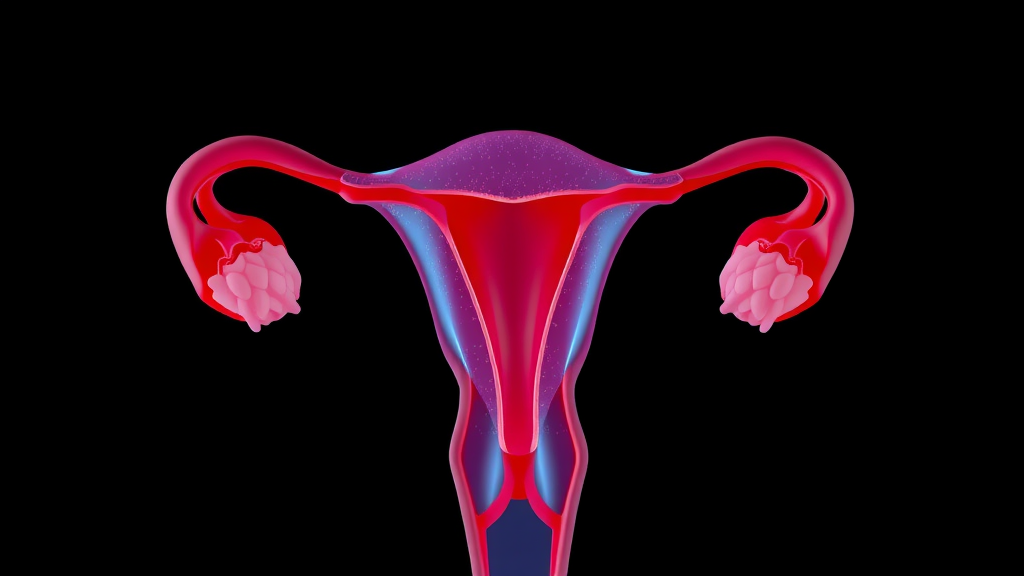
A team of researchers in China has built an artificial intelligence tool that can flag which women with fading ovarian function are most likely to slide into full-blown premature ovarian insufficiency within the next three years. The study, published in the Journal of Ovarian Research, offers something fertility medicine has long lacked: a quantitative, individualized forecast of how quickly a compromised ovary will fail, delivered through an algorithm that doctors can actually interrogate rather than a black box they must simply trust.
Premature ovarian insufficiency, usually abbreviated POI, is defined as the loss of normal ovarian activity before a woman turns 40, bringing with it infertility, sharply elevated cardiovascular and skeletal health risks, and a profound psychological burden. Diminished ovarian reserve, or DOR, sits one step earlier on the same trajectory. Women with DOR still ovulate and may still conceive, but their egg supply is measurably depleted, signaled by rising follicle-stimulating hormone, falling anti-Müllerian hormone, and shrinking antral follicle counts on ultrasound. The clinical problem is that DOR is not a single destination. Some women plateau for years, while others deteriorate rapidly into POI, and until now no validated tool existed to tell these two groups apart at the moment of diagnosis.
The researchers, led by Linzi Zhang and colleagues at Hunan University of Chinese Medicine and the First Hospital of Hunan University of Chinese Medicine, assembled a decade of real-world clinical data. They enrolled 312 patients diagnosed with diminished ovarian reserve at the First Hospital between January 2014 and January 2024, then followed them to see who crossed the threshold into premature ovarian insufficiency within three years. The answer was striking: 153 of the 312 women, essentially half, did progress. That near-coin-flip probability underscores why clinicians have been desperate for a way to stratify patients, because treating every DOR diagnosis as equally urgent would flood clinics while missing the women who genuinely need the most aggressive counseling and follow-up.
Building the predictive model required careful data hygiene before any algorithm was allowed near the numbers. Missing values were addressed first, and the dataset was then split into a training cohort containing 70 percent of patients and a validation cohort holding the remaining 30 percent, using stratified random sampling to preserve the balance of outcomes in both groups. Because many hormonal and ultrasound measures move together, the team removed multicollinear variables through correlation analysis, preventing redundant features from distorting the models. Feature selection then proceeded along two independent tracks: the least absolute shrinkage and selection operator, known as LASSO, which shrinks weak predictors toward zero, and the Boruta algorithm, a wrapper method that tests each variable against shuffled shadow features to confirm it carries real signal. Only variables selected by both methods survived, a conservative intersection designed to keep the final feature set lean and defensible.
With the curated features in hand, the researchers trained seven different machine learning algorithms and let performance decide the winner. The contenders spanned the standard predictive modeling toolbox, including logistic regression, decision trees, support vector machines, artificial neural networks, and the gradient-boosting methods XGBoost and LightGBM, alongside random forests. Each model was judged on the area under the receiver operating characteristic curve, the standard measure of discrimination between patients who progress and those who do not, supplemented by accuracy, sensitivity, specificity, calibration curves that test whether predicted probabilities match observed reality, and decision curve analysis, which quantifies the clinical net benefit of acting on the model’s predictions at various risk thresholds. When the scores were tallied, the Random Forest model came out on top, outperforming its six rivals across the validation battery.
Random Forest’s victory is fitting for the problem at hand. The algorithm works by growing hundreds of decision trees, each trained on a random bootstrap sample of the patients and a random subset of the variables, and then averaging their votes. This ensemble structure makes it robust to the noise, nonlinearity, and interactions that pervade reproductive endocrinology, where the effect of one hormone level may depend entirely on a patient’s age or another concurrent measurement. A single tree would overfit such tangled relationships; a forest smooths them out. Critically, the team did not stop at predictive accuracy. They applied SHAP, short for SHapley Additive exPlanations, a technique borrowed from cooperative game theory that decomposes every individual prediction into the contribution of each input variable, with both magnitude and direction.
The SHAP analysis delivered the study’s most clinically consequential finding: follicle-stimulating hormone emerged as the primary risk factor driving progression from diminished ovarian reserve to premature ovarian insufficiency. This aligns with reproductive physiology, since FSH rises as the pituitary works harder to recruit follicles from a dwindling pool, making it a sensitive barometer of accelerating ovarian aging. Beyond FSH, the analysis identified seven key features that collectively shape each patient’s three-year risk, and, crucially, revealed the direction of each feature’s effect, showing clinicians not just which measurements matter but whether higher or lower values push a given patient toward or away from progression. That interpretability matters enormously in medicine, where a prediction a physician cannot explain is a prediction a physician cannot responsibly act on.
The practical implications reach further than the algorithm itself. A woman newly diagnosed with diminished ovarian reserve often faces an agonizing decision about how aggressively to pursue assisted reproductive technology, whether to freeze eggs or embryos while her reserve still permits it, and how intensively to monitor her hormonal trajectory. A validated three-year risk estimate transforms those conversations from vague reassurance into quantified counseling. Patients identified as high-risk could be prioritized for earlier fertility preservation, closer surveillance of bone density and cardiovascular markers that POI exacerbates, and timely initiation of hormone therapy to bridge the gap until natural menopause age. Meanwhile, women flagged as lower-risk could be spared unnecessary interventions and anxiety, an equally important outcome in an era of medicine increasingly aware of the costs of over-treatment.
The study’s methodology also offers a template for how clinical machine learning should be done in a field drowning in opaque algorithms. The dual-feature-selection strategy, the head-to-head comparison of seven algorithms, the multi-axis performance evaluation including calibration and decision curve analysis, and the SHAP-based transparency together form a pipeline that other reproductive medicine groups can replicate on their own cohorts. The retrospective, single-center design at a Chinese hospital means external validation in diverse populations remains the necessary next step before the model can be widely deployed, and the authors acknowledge that the tool is intended to guide clinical decision making and patient counseling rather than replace clinical judgment. Still, the message is clear: with 312 real patients, a decade of follow-up, and an interpretable model that names its reasons, the era of guessing which diminished ovarian reserve patient will fail early is drawing to a close, replaced by data-driven foresight that arrives in time to change the outcome.
Subject of Research: Machine learning-based prediction of three-year progression from diminished ovarian reserve to premature ovarian insufficiency
Article Title: The construction of machine learning-based predictive models for progression to premature ovarian insufficiency within three years in patients with diminished ovarian reserve
Article References: Zhang, L., Yang, Y., Li, Y., Xiong, Y., Yang, R., You, H., & Liu, W. (2026). The construction of machine learning-based predictive models for progression to premature ovarian insufficiency within three years in patients with diminished ovarian reserve. Journal of Ovarian Research. https://doi.org/10.1186/s13048-026-02258-9
Image Credits: AI Generated
DOI: 10.1186/s13048-026-02258-9
Keywords: premature ovarian insufficiency, diminished ovarian reserve, machine learning, Random Forest, SHAP, predictive model, follicle-stimulating hormone, ovarian aging, fertility preservation, Journal of Ovarian Research, XGBoost, clinical prediction
Cite Scienmag News
Blake Davidson. (September 12, 2026). Machine Learning Predicts Which Women Will Face Early Ovarian Failure Within Three Years. Scienmag. https://scienmag.com/machine-learning-predicts-which-women-will-face-early-ovarian-failure-within-three-years/
Blake Davidson. "Machine Learning Predicts Which Women Will Face Early Ovarian Failure Within Three Years." Scienmag, 12 September 2026, https://scienmag.com/machine-learning-predicts-which-women-will-face-early-ovarian-failure-within-three-years/. Accessed 5 October 2026.
Blake Davidson. "Machine Learning Predicts Which Women Will Face Early Ovarian Failure Within Three Years." Scienmag. September 12, 2026. https://scienmag.com/machine-learning-predicts-which-women-will-face-early-ovarian-failure-within-three-years/


