Wednesday, October 28, 2026
Science
No Result
View All Result
  • Login
  • HOME
  • SCIENCE NEWS
  • CONTACT US
  • HOME
  • SCIENCE NEWS
  • CONTACT US
No Result
View All Result
Scienmag
No Result
View All Result
Home Science News Technology and Engineering

Machine learning predicts strength of nanoparticle-modified basalt fiber composites

October 28, 2026
in Technology and Engineering
Teresa Odom
By Teresa Odom Scienmag Editorial Profile - Machine Learning
Reading Time: 3 mins read
0
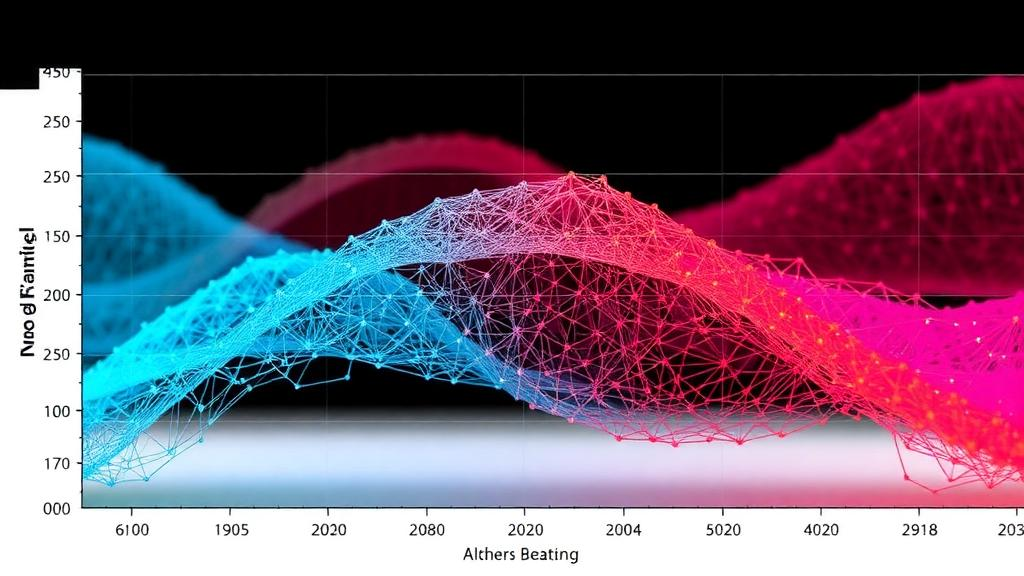
Machine learning predicts strength of nanoparticle-modified basalt fiber composites

Machine learning predicts strength of nanoparticle-modified basalt fiber composites

65
SHARES
587
VIEWS
Share on FacebookShare on Twitter
ADVERTISEMENT

Machine learning models can now predict the tensile and flexural strength of nanoparticle-modified basalt fiber reinforced epoxy composites, according to a peer-reviewed study published in Discover Materials on 27 October 2026. The research, authored by Md. Saphin Hasan and Md. Ashraful Islam, built eight supervised regression models trained on two experimental datasets compiled from previously published studies.

Basalt fiber reinforced epoxy composites are widely studied structural materials, and adding nanoparticles to the epoxy matrix is a known strategy for improving overall mechanical performance. According to the study, nanoparticles enhance matrix stiffness, the bond between fibers and matrix, crack resistance, and stress transfer efficiency. However, the final strength of such a composite depends on many interacting variables, including the type of nanoparticle, particle ratio, particle size, curing condition, fiber layer count, fiber orientation, fiber density, the test standard used, and the manufacturing process. That complexity makes traditional trial-and-error experimentation slow and costly, which is the gap the authors set out to address with data-driven prediction.

The researchers trained and evaluated eight algorithms: Linear Regression, LightGBM, AdaBoost, Gradient Boosting, K-Nearest Neighbors, CatBoost, Extreme Gradient Boosting, and Random Forest.

Performance differed by target property. For tensile strength, CatBoost was the best predictive model, achieving a testing R² of 0.8530 and a testing mean absolute error of 58.39 MPa. For flexural strength, Random Forest delivered the strongest results, with a mean absolute error of 44.94 MPa and an R² of 0.9512.

A key contribution of the study is its emphasis on interpretability rather than prediction alone. The authors incorporated partial dependency plots, which show how predicted strength changes as an input variable varies, and SHAP (SHapley Additive exPlanations) analysis, which quantifies each feature’s contribution to individual predictions. Together, these tools reveal which parameters matter most and whether their effects are linear, nonlinear, or dependent on category.

The SHAP analysis indicated that fiber orientation, curing temperature, and test standard had the largest influence on tensile strength. Flexural strength, by contrast, was strongly influenced by a broader set of factors: fiber orientation, particle type, test standard, particle size, and fiber layer. The partial dependency plots showed nonlinear effects and category-dependent behavior for important numerical and categorical variables, meaning that the effect of a given parameter can change in magnitude and direction depending on its value or class.

To probe robustness, the authors applied a leave-one-study-out (LOSO) evaluation, and the results showed the models were robust.

The authors describe the proposed framework as a tool that can predict the mechanical strength behavior of nanoparticle-modified basalt/epoxy composites, helping to reduce experimental trial and error and supporting the design of optimized composite materials. Because the models were trained on published experimental data rather than new laboratory measurements, their accuracy reflects the scope and quality of the compiled datasets, and the study presents the framework as a design aid rather than a replacement for experimental verification.

For basalt/epoxy composites modified with nanoparticles, the study's SHAP analysis points to fiber orientation, curing temperature, and test standard as the largest influences on tensile strength, and to fiber orientation, particle type, test standard, particle size, and fiber layer as strong influences on flexural strength.

Subject of Research: Interpretable machine learning prediction of tensile and flexural strength in nanoparticle-modified basalt fiber reinforced epoxy composites

Article Title: Interpretable machine learning-based prediction of tensile and flexural strength of nanoparticle modified basalt fiber reinforced epoxy composites

Article References: Hasan, M. S., & Islam, M. A. (2026). Interpretable machine learning-based prediction of tensile and flexural strength of nanoparticle modified basalt fiber reinforced epoxy composites. Discover Materials. https://doi.org/10.1007/s43939-026-01030-6

Image Credits: AI Generated

DOI: 10.1007/s43939-026-01030-6

Keywords: machine learning, basalt fiber composites, epoxy, nanoparticles, tensile strength, flexural strength, SHAP, CatBoost, Random Forest, interpretability, materials design, Interpretable

Cite Scienmag News

Teresa Odom. (October 28, 2026). Machine learning predicts strength of nanoparticle-modified basalt fiber composites. Scienmag. https://scienmag.com/machine-learning-predicts-strength-of-nanoparticle-modified-basalt-fiber-composites/

Teresa Odom. "Machine learning predicts strength of nanoparticle-modified basalt fiber composites." Scienmag, 28 October 2026, https://scienmag.com/machine-learning-predicts-strength-of-nanoparticle-modified-basalt-fiber-composites/. Accessed 28 October 2026.

Teresa Odom. "Machine learning predicts strength of nanoparticle-modified basalt fiber composites." Scienmag. October 28, 2026. https://scienmag.com/machine-learning-predicts-strength-of-nanoparticle-modified-basalt-fiber-composites/
Tags: advanced modeling of fiber-reinforced epoxy compositesbasalt fiber compositesCatBoostdata-driven prediction of composite mechanical propertiesepoxyflexural strengthflexural strength modeling in fiber-reinforced polymersinterpretabilityinterpretableMachine learningmachine learning algorithms for materials sciencemachine learning performance in structural composite predictionmachine learning tensile strength predictionmaterials designmulti-variable influence on composite strengthnanoparticle effects on epoxy matrixNanoparticle-enhanced basalt fiber compositesnanoparticlesoptimizing basalt fiber composite manufacturing with AIpredicting strength of nanoparticle-modified compositesRandom ForestSHAPsupervised regression models for composite materialstensile strength
Share26Tweet16
Previous Post

Severe Eye Infection and Corneal Hydrops Strike Three Young Patients After Cross-Linking

Next Post

Indonesia’s production network is organized around multiple Java-centered rich cores

Related Posts

Machine learning moves to the heart of 6G networks in new systematic review
Technology and Engineering

Machine learning moves to the heart of 6G networks in new systematic review

October 28, 2026
Wire EDM unlocks Haynes 230 superalloy machining with optimized cutting rate and surface finish
Technology and Engineering

Wire EDM unlocks Haynes 230 superalloy machining with optimized cutting rate and surface finish

October 28, 2026
Cadmium Sulfide Doping Boosts MXene Catalyst for Hydrogen Production
Chemistry

Cadmium Sulfide Doping Boosts MXene Catalyst for Hydrogen Production

October 28, 2026
AI Model Flags Risky International Trade Transactions With Up to 98.9% Accuracy
Technology and Engineering

AI Model Flags Risky International Trade Transactions With Up to 98.9% Accuracy

October 28, 2026
Augmented reality remains rare on Nigerian construction sites despite wide professional awareness
Technology and Engineering

Augmented reality remains rare on Nigerian construction sites despite wide professional awareness

October 28, 2026
Memory capacitors that never forget: a six-dimensional circuit settles into chaos
Technology and Engineering

Memory capacitors that never forget: a six-dimensional circuit settles into chaos

October 28, 2026
Next Post
Indonesia’s production network is organized around multiple Java-centered rich cores

Indonesia's production network is organized around multiple Java-centered rich cores

  • Mothers who receive childcare support from maternal grandparents show more optimized

    Mothers who receive childcare support from maternal grandparents show more parental warmth, finds NTU Singapore study

    27656 shares
    Share 11059 Tweet 6912
  • University of Seville Breaks 120-Year-Old Mystery, Revises a Key Einstein Concept

    1061 shares
    Share 424 Tweet 265
  • Bee body mass, pathogens and local climate influence heat tolerance

    682 shares
    Share 273 Tweet 171
  • Researchers record first-ever images and data of a shark experiencing a boat strike

    546 shares
    Share 218 Tweet 137
  • Groundbreaking Clinical Trial Reveals Lubiprostone Enhances Kidney Function

    531 shares
    Share 212 Tweet 133
Science

Embark on a thrilling journey of discovery with Scienmag.com—your ultimate source for cutting-edge breakthroughs. Immerse yourself in a world where curiosity knows no limits and tomorrow’s possibilities become today’s reality!

RECENT NEWS

  • French trial to test support program for relatives after emergency department deaths
  • MRI Index Tied to the Brain’s Waste Clearance System May Be Misleading in Epilepsy
  • Systematic review maps how researchers build scenarios of possible futures
  • How Scientists Measure Lactate Thresholds in Runners Varies Widely, Review Finds

Categories

  • Agriculture
  • Anthropology
  • Archaeology
  • Athmospheric
  • Biology
  • Biotechnology
  • Blog
  • Bussines
  • Cancer
  • Chemistry
  • Climate
  • Earth Science
  • Editorial Policy
  • Marine
  • Mathematics
  • Medicine
  • Pediatry
  • Policy
  • Psychology & Psychiatry
  • Science Education
  • Science News
  • Social Science
  • Space
  • Technology and Engineering

Subscribe to Blog via Email

Enter your email address to subscribe to this blog and receive notifications of new posts by email.

Join 5,151 other subscribers

© 2025 Scienmag - Science Magazine

Welcome Back!

Login to your account below

Forgotten Password?

Retrieve your password

Please enter your username or email address to reset your password.

Log In
No Result
View All Result
  • HOME
  • SCIENCE NEWS
  • CONTACT US

© 2025 Scienmag - Science Magazine

Discover more from Science

Subscribe now to keep reading and get access to the full archive.

Continue reading