Wednesday, October 28, 2026
Science
No Result
View All Result
  • Login
  • HOME
  • SCIENCE NEWS
  • CONTACT US
  • HOME
  • SCIENCE NEWS
  • CONTACT US
No Result
View All Result
Scienmag
No Result
View All Result
Home Science News Chemistry

Cadmium Sulfide Doping Boosts MXene Catalyst for Hydrogen Production

October 28, 2026
in Chemistry, Technology and Engineering
Bethany Barker
By Bethany Barker Scienmag Editorial Profile - Catalysis
Reading Time: 3 mins read
0
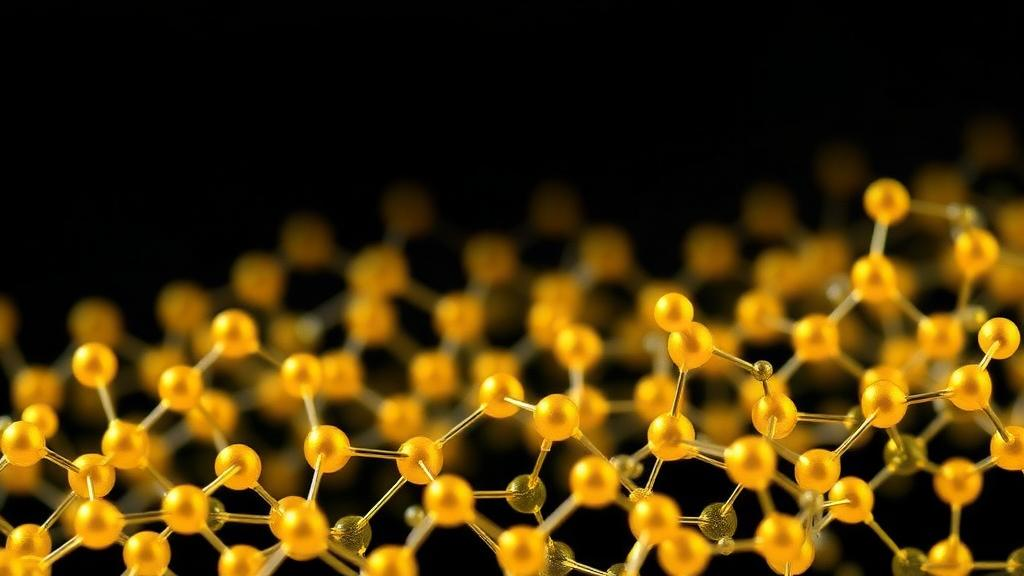
Cadmium Sulfide Doping Boosts MXene Catalyst for Hydrogen Production

Cadmium Sulfide Doping Boosts MXene Catalyst for Hydrogen Production

65
SHARES
587
VIEWS
Share on FacebookShare on Twitter
ADVERTISEMENT

Researchers have synthesized a series of cadmium sulfide-doped Ti3C2Tx MXene nanocomposites and identified an optimal formulation for the electrocatalytic hydrogen evolution reaction (HER), a key process for producing clean hydrogen fuel from water. The work, published in Discover Chemical Engineering, reports that a composite containing 1 wt% CdS delivered the strongest catalytic performance among the materials tested.

The team, led by Ritu Raj, Mitali Hupele, Yalamarti Venkat Rajat Rao, Rajan Singh, Krishna Kanta Haldar and Gajendra Prasad Singh, prepared four composites, labeled MC1 through MC4, with CdS loadings ranging from 0.5 to 5 wt%. The materials were produced using a hydrothermal approach and evaluated as HER catalysts in a 0.5 M H2SO4 electrolyte, an acidic environment that is demanding for most catalysts.

Structural characterization supported the successful integration of CdS into the layered MXene host. X-ray diffraction confirmed the doping of CdS into the MXene structure, while Raman spectroscopy revealed systematic phonon shifts consistent with compressive in-plane strain. Transmission electron microscopy showed CdS nanoparticles anchored onto the Ti3C2Tx nanosheets, indicating intimate contact between the two components.

The interfacial loading proved critical to performance. Among the four composites, the sample with 1 wt% CdS, designated MC2, emerged as the optimal composition, suggesting that the balance between CdS coverage and MXene surface accessibility plays a decisive role in catalytic activity.

In electrochemical testing, MC2 recorded the lowest overpotential of the series, 310 mV at a current density of -10 mA/cm2, along with the smallest Tafel slope of 98 mV/dec. These values indicate that the composite requires less applied voltage to drive hydrogen generation and that its reaction kinetics are more favorable than those of the other samples tested.

MC2 also showed advantageous charge-transfer properties. Electrochemical impedance measurements yielded the lowest charge transfer resistance of the series, 152.2 ohms, alongside the highest mass activity of 48.90 A/g and the largest electrochemically active surface area, 38.625 cm2. A larger active surface area provides more sites where the hydrogen evolution reaction can take place, which helps explain the composite’s superior activity.

Durability is a central requirement for any practical electrocatalyst, and the optimized composite performed well in stability testing. MC2 maintained its activity over 2000 linear sweep voltammetry cycles, with only a negligible overpotential shift of 9.21 mV, indicating that the CdS-MXene interface remains functional under prolonged acidic operating conditions.

The authors position CdS-doped Ti3C2Tx MXene as a promising, cost-effective electrocatalyst for sustainable hydrogen production, drawing on the search for efficient catalysts made from earth-abundant elements rather than precious metals. Because the study reports performance in laboratory electrochemical testing in 0.5 M H2SO4, further work would be needed to establish how the material performs in operating devices and over longer timescales. The findings add to a growing body of research on MXene-based and transition-metal-doped catalysts for hydrogen evolution, a field that has seen recent reviews and related studies on heterojunction designs combining MXenes with other two-dimensional materials.

Subject of Research: Electrocatalytic hydrogen evolution using CdS-doped Ti3C2Tx MXene nanocomposites

Article Title: CdS-doped Ti3C2Tx MXene for efficient and stable electrocatalytic hydrogen evolution reaction

Article References: Raj, R., Hupele, M., Rao, Y. V. R., Singh, R., Haldar, K. K., & Singh, G. P. (2026). CdS-doped Ti3C2Tx MXene for efficient and stable electrocatalytic hydrogen evolution reaction. Discover Chemical Engineering. https://doi.org/10.1007/s43938-026-00145-9

Image Credits: AI Generated

DOI: 10.1007/s43938-026-00145-9

Keywords: MXene, Ti3C2Tx, CdS, hydrogen evolution reaction, electrocatalysis, nanocomposite, Tafel slope, overpotential, hydrothermal synthesis, green hydrogen, electrochemistry, CdS-doped

Cite Scienmag News

Bethany Barker. (October 28, 2026). Cadmium Sulfide Doping Boosts MXene Catalyst for Hydrogen Production. Scienmag. https://scienmag.com/cadmium-sulfide-doping-boosts-mxene-catalyst-for-hydrogen-production/

Bethany Barker. "Cadmium Sulfide Doping Boosts MXene Catalyst for Hydrogen Production." Scienmag, 28 October 2026, https://scienmag.com/cadmium-sulfide-doping-boosts-mxene-catalyst-for-hydrogen-production/. Accessed 28 October 2026.

Bethany Barker. "Cadmium Sulfide Doping Boosts MXene Catalyst for Hydrogen Production." Scienmag. October 28, 2026. https://scienmag.com/cadmium-sulfide-doping-boosts-mxene-catalyst-for-hydrogen-production/
Tags: acidic electrolyte testing for HER catalystsCadmium sulfide doping in MXene nanocompositesCdSCdS loading effects on HER activityCdS-dopedElectrocatalysiselectrocatalytic hydrogen evolution reactionelectrochemistrygreen hydrogenhydrogen evolution reactionhydrothermal synthesisMXenenanocompositenanocomposite synthesis via hydrothermal methodnanoparticle anchoring on MXene nanosheetsoptimized catalyst performance for hydrogen productionoverpotentialRaman and X-ray diffraction analysis of doped MXenerole of interfacial loading instructural characterization of MXene/CdS compositesTafel slopeTi3C2TxTi3C2Tx MXene catalyst
Share26Tweet16
Previous Post

AI Model Flags Risky International Trade Transactions With Up to 98.9% Accuracy

Next Post

Wire EDM unlocks Haynes 230 superalloy machining with optimized cutting rate and surface finish

Related Posts

CO2-Rich Fluids Alter How Sandstone Permeability Responds to Stress in Lab Tests
Earth Science

CO2-Rich Fluids Alter How Sandstone Permeability Responds to Stress in Lab Tests

October 28, 2026
Friction Stir Processing Refines AZ41 Magnesium Alloy Grains and Slows Biocorrosion in Simulated Body Fluid
Technology and Engineering

Friction Stir Processing Refines AZ41 Magnesium Alloy Grains and Slows Biocorrosion in Simulated Body Fluid

October 28, 2026
Waste-Fed Microbes and Smart Statistics Could Cut Biosurfactant Costs
Chemistry

Waste-Fed Microbes and Smart Statistics Could Cut Biosurfactant Costs

October 28, 2026
Mushroom Sheets Laminated with Glycerol Form Tough, Recyclable Leather Alternative
Technology and Engineering

Mushroom Sheets Laminated with Glycerol Form Tough, Recyclable Leather Alternative

October 28, 2026
Gum-Based Magnetic Hydrogel Shows pH-Controlled Naproxen Release in Lab Tests
Chemistry

Gum-Based Magnetic Hydrogel Shows pH-Controlled Naproxen Release in Lab Tests

October 28, 2026
Indonesia’s growth-emissions link flips depending on how the model is built
Technology and Engineering

Indonesia’s growth-emissions link flips depending on how the model is built

October 28, 2026
Next Post
Wire EDM unlocks Haynes 230 superalloy machining with optimized cutting rate and surface finish

Wire EDM unlocks Haynes 230 superalloy machining with optimized cutting rate and surface finish

  • Mothers who receive childcare support from maternal grandparents show more optimized

    Mothers who receive childcare support from maternal grandparents show more parental warmth, finds NTU Singapore study

    27656 shares
    Share 11059 Tweet 6912
  • University of Seville Breaks 120-Year-Old Mystery, Revises a Key Einstein Concept

    1061 shares
    Share 424 Tweet 265
  • Bee body mass, pathogens and local climate influence heat tolerance

    682 shares
    Share 273 Tweet 171
  • Researchers record first-ever images and data of a shark experiencing a boat strike

    546 shares
    Share 218 Tweet 137
  • Groundbreaking Clinical Trial Reveals Lubiprostone Enhances Kidney Function

    531 shares
    Share 212 Tweet 133
Science

Embark on a thrilling journey of discovery with Scienmag.com—your ultimate source for cutting-edge breakthroughs. Immerse yourself in a world where curiosity knows no limits and tomorrow’s possibilities become today’s reality!

RECENT NEWS

  • Systematic review maps end-of-life psychosocial and spiritual needs in physical disability
  • Text Message Campaign Reached Only a Third of Patients Overdue for Colorectal Cancer Screening
  • FOXO1 Emerges as Candidate Regulator and Biomarker in Hip Dysplasia
  • Regulators, developers and clinicians in Shenzhen voice concerns over medical AI governance

Categories

  • Agriculture
  • Anthropology
  • Archaeology
  • Athmospheric
  • Biology
  • Biotechnology
  • Blog
  • Bussines
  • Cancer
  • Chemistry
  • Climate
  • Earth Science
  • Editorial Policy
  • Marine
  • Mathematics
  • Medicine
  • Pediatry
  • Policy
  • Psychology & Psychiatry
  • Science Education
  • Science News
  • Social Science
  • Space
  • Technology and Engineering

Subscribe to Blog via Email

Enter your email address to subscribe to this blog and receive notifications of new posts by email.

Join 5,151 other subscribers

© 2025 Scienmag - Science Magazine

Welcome Back!

Login to your account below

Forgotten Password?

Retrieve your password

Please enter your username or email address to reset your password.

Log In
No Result
View All Result
  • HOME
  • SCIENCE NEWS
  • CONTACT US

© 2025 Scienmag - Science Magazine

Discover more from Science

Subscribe now to keep reading and get access to the full archive.

Continue reading