


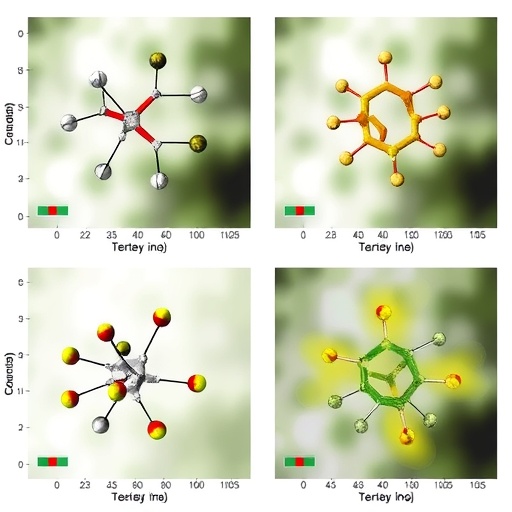
Smells can do more than make food seem appealing or unpleasant: they can steer an animal’s behavior before it has tasted anything. Now, researchers have built a machine-learning framework designed to predict whether a chemical odorant will attract or repel mice, using the molecule’s structure as the starting point. The study links three traditionally separate areas—chemical informatics, animal behavior and artificial intelligence—to address a central problem in food science: how to forecast the biological effect of a flavor compound without testing every candidate extensively in living animals or relying solely on human descriptions such as “fruity,” “woody” or “floral.” The work, published in Current Research in Food Science, examines nearly 300 odorant molecules and treats a mouse’s first approach or avoidance response as an objective behavioral signal. Rather than predicting only what an odor might smell like to people, the model is intended to estimate what the odor could make an animal do. That distinction is important because olfactory perception is not a simple translation of molecular chemistry into a single sensory label. The same molecule can activate multiple odor receptors, produce different perceptual qualities at different concentrations and trigger behavioral responses shaped by biological relevance, experience and context. By focusing on approach–avoidance behavior, the researchers sought to model a more direct link between chemical structure and an evolutionarily conserved response.
Food-flavor research has traditionally depended on sensory panels, in which people evaluate aroma and describe its qualities, or on devices such as electronic noses that detect chemical patterns through sensor arrays. Both approaches are useful, but neither fully captures the biological meaning of an odor. Human sensory judgments can vary with culture, age, language and individual experience, while instrumental systems often produce signals that are difficult to connect to behavior. A sensor may indicate that two compounds are chemically distinguishable, for example, without revealing whether either compound would encourage exploration, suppress it or have little effect. The challenge is especially large because odorants occupy a highly multidimensional chemical space. Their molecular weight, functional groups, shape, polarity, volatility and three-dimensional arrangement can all influence how they reach the nose and interact with olfactory receptors. These features do not combine in a straightforward linear fashion. Machine-learning methods are attractive in this setting because they can examine many molecular descriptors simultaneously and identify statistical relationships too subtle or complex for conventional rules. Earlier computational work has often concentrated on predicting perceptual descriptors or plotting molecules in an “odor space.” The new framework instead asks whether molecular information can predict an observable behavioral output.
To create the behavioral dataset, the researchers selected 304 odorant molecules from a much larger human olfactory perception resource containing 8,503 compounds annotated with 118 odor descriptors. The human labels were not treated as measurements of mouse behavior. Instead, they were used to ensure that the selected library covered a broad range of odor-related chemistry and semantic categories. The molecules were reorganized into eight large groups: fruity, pungent, gourmand, floral, herbaceous, woody, sulfurous and aminic. Within those categories were more specific descriptions, including citrus, berry, vanilla, coffee, mint, green, mushroom, garlic, musk and animal-like notes. Stratified sampling across these categories and their original labels produced a chemically and semantically diverse panel for animal testing. Representative compounds included isobutyl butyrate in the fruity group, methyl jasmonate among floral odorants, cis-3-hexen-1-ol in the herbaceous category and propane-1,2-dithiol among sulfurous molecules. This design allowed the researchers to use an established human odor vocabulary as a map for selecting compounds while avoiding the assumption that a human descriptor directly predicts a mouse’s behavioral preference. The distinction matters: an odor described as “sweet” or “woody” by people is not itself a biological endpoint, whereas time spent investigating an odor source can be measured quantitatively.
The behavioral experiments used healthy male C57BL/6J mice aged six to eight weeks. In total, 150 naive animals contributed to the behavioral library. Each mouse encountered approximately 20 different odorants, but any particular odorant was presented to an individual animal only once, making each measurement a first encounter. Every odorant was tested in 10 mice. Repeated tests involving the same mouse were separated by at least 48 hours, and the order of odorants was randomized to reduce order effects. Before testing, the animals were habituated to the apparatus for at least 30 minutes a day over three days. They were also screened for inherent side preferences in the empty chamber, and animals showing a bias were excluded. The setup was engineered to separate odor delivery from movement tracking. It consisted of a 50-centimeter-long chamber divided into a central buffer zone and two lateral compartments, with an odor-delivery system at both ends, an exhaust pump and an infrared camera. During a trial, one side received an odorant diluted 1:1000 in mineral oil, while the other contained the solvent alone. The mouse began in the center, the doors opened, and its movements were recorded for five minutes in a dark, quiet room while the experimenter was absent.
The central behavioral measurement was a Preference Index, calculated from the time spent on the odor side and the time spent on the odor-free side. In mathematical terms, the index is the difference between those two times divided by their sum. A positive value indicates that the animal spent more time near the odor, while a negative value indicates avoidance; the absolute magnitude represents the strength of the tendency. This type of normalized measure helps account for differences in total movement time between animals and trials. It also transforms a continuous trajectory into a behavioral phenotype that can be compared across many chemically unrelated compounds. The researchers used a neutral threshold of 0.02 to convert the continuous index into two classes: approach-related or avoidance-related. Although such classification simplifies a complex response, it provides a practical target for supervised learning. The standardized dilution was chosen to compare structure-driven behavioral tendencies under a common stimulus condition rather than to equalize perceived intensity among compounds. The authors describe the concentration as detectable but non-saturating, based on preliminary tests that produced reliable exploration without overt aversion. That choice is consequential because odor concentration can change both perceptual quality and behavior, meaning predictions from this dataset should be understood as applying to the defined testing conditions rather than to every possible exposure level.
The computational workflow then compared traditional machine-learning approaches with deep-learning models using multidimensional representations of the odorant molecules. A molecular structure can be encoded in several ways, including physicochemical descriptors, fingerprints that indicate the presence of substructures, and graph-based representations in which atoms are nodes and chemical bonds are edges. Graph neural networks can process such molecular graphs directly, updating the representation of each atom according to its chemical neighbors before combining the information into a whole-molecule prediction. This is potentially useful for odorants because small structural changes—such as adding a carbon branch, altering a functional group or changing the position of a substituent—can affect volatility, receptor interactions and biological activity. However, deep models generally require large datasets, while behavioral experiments with animals are relatively expensive and the study contains only a few hundred compounds. The researchers therefore evaluated multiple modeling strategies rather than assuming that the most sophisticated architecture would perform best. Their stated aim was to identify a predictive approach suited to limited biological sample sizes, where a simpler model using carefully selected molecular features may generalize more reliably than a highly parameterized network. The framework also included interpretability analysis, allowing the investigators to examine which structural motifs contributed most strongly to predicted approach or avoidance.
That interpretability component is central to the study’s promise. A model that produces a numerical prediction but offers no chemical rationale may be difficult to use for flavor discovery, toxicological triage or biological hypothesis generation. Feature-analysis methods can instead highlight fragments or molecular properties repeatedly associated with a behavioral class. Such patterns do not automatically prove that a particular chemical group causes attraction or aversion, because correlated features may reflect volatility, solubility or broader scaffold effects. They can, however, suggest testable hypotheses about how odorant structures are translated into neural signals. Mammalian olfaction begins when volatile molecules enter the nasal cavity and bind to combinations of olfactory receptors. The resulting receptor activity is processed through the olfactory bulb and higher brain regions involved in motivation, memory and decision-making. Approach and avoidance are therefore emergent outputs of a circuit, not direct readouts of one receptor. A structure-based model cannot reproduce that entire pathway, but it may learn statistical regularities connecting molecular inputs to the final measurable response. The researchers present the identified motifs as molecular-level explanations that could help prioritize compounds for further behavioral and sensory validation, rather than as definitive rules governing all odors or all species.
The study also illustrates why behavioral data may complement, rather than replace, human sensory science. Mice possess olfactory systems with conserved features, making them useful for examining basic odor-driven responses, but their ecology, receptor repertoire and experience differ from those of humans. A mouse’s decision to investigate an odor in a controlled chamber is not equivalent to a person’s judgment that a food smells delicious. The experiments likewise measure immediate, unconditioned behavior under a defined exposure protocol, not long-term preference, learned food value or consumption. Presenting the odorant against a solvent control isolates a directional response, but it cannot capture interactions among ingredients in a real food matrix, where temperature, humidity, fat content and chemical reactions alter release into the air. The common dilution improves comparability while leaving open questions about dose dependence and intensity. These limitations do not undermine the modeling strategy; instead, they define the scope of what the predictions mean. The framework is best viewed as a screening tool for ranking molecules according to their likelihood of eliciting approach-like or avoidance-like behavior in a mouse first-encounter assay. Compounds prioritized in this way would still require laboratory, sensory and product-level testing.
By combining chemical representations, controlled behavioral phenotyping and explainable prediction, the researchers propose a route toward faster exploration of flavor-related molecular libraries. Conventional sensory evaluation becomes increasingly difficult as the number of candidate compounds expands, particularly when many molecules have subtle, unfamiliar or mixed odor qualities. A model capable of narrowing that search could reduce the number of compounds requiring intensive follow-up and could reveal chemical candidates overlooked by descriptor-based screening. More broadly, the work treats olfactory behavior as a computationally tractable biological endpoint. Its significance lies less in replacing noses—whether human or animal—than in making the relationship between molecular structure and behavioral relevance measurable at scale. Future validation will need to test the predictions on molecules outside the training library, examine how results change with concentration and exposure history, and determine how well mouse responses correspond to human food preferences. Even with those challenges ahead, the study offers a striking example of how artificial intelligence can move beyond labeling what an odor smells like to asking a more provocative question: what, precisely, will that odor make a living organism do?
Cite Scienmag News
Blake Davidson. (August 28, 2026). Machine Learning Model Predicts Odor-Driven Behavioral Preferences for Odorant Molecules. Scienmag. https://scienmag.com/machine-learning-model-predicts-odor-driven-behavioral-preferences-for-odorant-molecules/
Blake Davidson. "Machine Learning Model Predicts Odor-Driven Behavioral Preferences for Odorant Molecules." Scienmag, 28 August 2026, https://scienmag.com/machine-learning-model-predicts-odor-driven-behavioral-preferences-for-odorant-molecules/. Accessed 3 September 2026.
Blake Davidson. "Machine Learning Model Predicts Odor-Driven Behavioral Preferences for Odorant Molecules." Scienmag. August 28, 2026. https://scienmag.com/machine-learning-model-predicts-odor-driven-behavioral-preferences-for-odorant-molecules/


