


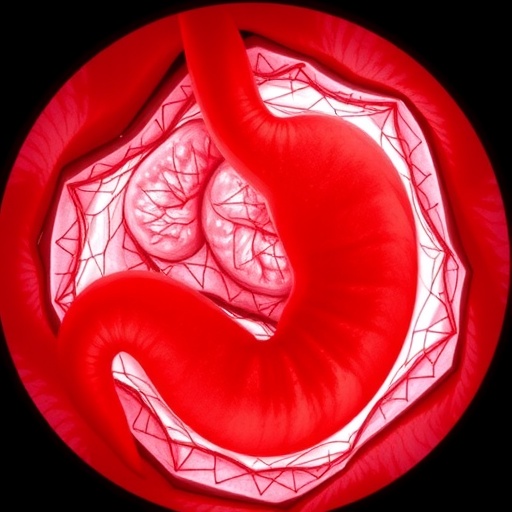
In a groundbreaking retrospective cohort study published in Scientific Reports in 2026, researchers led by Yoshikawa, Iwamuro, and Nakagawa have provided substantial insights into the long-term clinical outcomes following endoscopic resection of gastric adenocarcinoma of the fundic gland type (GA-FG) and oxyntic gland adenoma (OGA). This research illuminates the nuanced prognosis and curative potential of minimally invasive endoscopic interventions for these rare but clinically significant gastric lesions, setting a new benchmark for therapeutic strategies and patient management in gastroenterology.
Gastric adenocarcinoma of the fundic gland type represents a unique histopathological entity distinct from conventional gastric cancers. Characterized by its differentiation resembling the fundic glands in the stomach, GA-FG often presents a diagnostic challenge due to its subtle endoscopic appearance and indolent biological behavior. The simultaneous study of oxyntic gland adenomas, benign neoplasms with similar gastric fundic gland differentiation, further contributes to understanding the spectrum of gastric fundic gland lesions and their clinical implications.
Endoscopic resection, encompassing techniques such as endoscopic mucosal resection (EMR) and endoscopic submucosal dissection (ESD), has emerged as an effective minimally invasive approach for localized gastric neoplasms. These techniques allow complete excision of superficial tumors without the need for radical gastrectomy, thereby preserving gastric anatomy and function. However, assessment of long-term outcomes such as recurrence rates, survival, and potential complications after endoscopic resection of GA-FG and OGA had been limited prior to this study.
The retrospective cohort designed by Yoshikawa and colleagues meticulously analyzed patient data over an extended follow-up period, offering unparalleled clarity on the durability of curative resection. With a sizeable patient population drawn from multiple high-volume centers, the study scrutinized factors including tumor size, histological subtype, margin status, and presence of lymphovascular invasion, correlating these parameters with recurrence-free survival and overall patient prognosis.
One of the pivotal findings from the research is the exceptionally low recurrence rates following complete endoscopic resection of both GA-FG and OGA. This discovery defies conventional apprehensions regarding the malignant potential of these gastric lesions and supports the stance that meticulous endoscopic techniques can achieve oncologic clearance comparable to surgical resection, but with significantly reduced morbidity. The implications for clinical practice entail a shift towards favoring endoscopic management, especially in patients deemed high-risk for surgical interventions due to comorbidities.
Moreover, the study elucidated the morphological and molecular hallmarks distinguishing GA-FG from other gastric adenocarcinomas, emphasizing the importance of precise histopathological evaluation and advanced endoscopic imaging modalities in preoperative diagnosis. Techniques such as magnifying endoscopy with narrow-band imaging (NBI) proved instrumental in delineating tumor margins and facilitating en bloc resection, thereby minimizing residual disease and local recurrence.
Impressively, the research also addressed the long-term survival outcomes, demonstrating excellent overall survival rates post-endoscopic treatment. Crucially, no significant difference was observed between patients treated for GA-FG and those with OGA, suggesting that these entities share a relatively indolent clinical course when appropriately managed. This finding is poised to influence follow-up protocols, potentially reducing the frequency and intensity of surveillance endoscopies and associated healthcare costs.
The study was further enriched by detailed analysis of adverse events related to endoscopic procedures. The incidence of complications such as bleeding, perforation, and postoperative strictures remained low, highlighting the safety profile of endoscopic resection for patients with fundic gland neoplasms. Importantly, the authors advocate for the critical role of operator expertise and institution experience in optimizing procedural outcomes, thus underscoring the need for centralized care in specialized centers.
In addition to clinical data, the investigation delved into the pathophysiological mechanisms that underpin the development and progression of GA-FG and OGA. It explored the cellular origin theories, proposing that these neoplasms arise from the oxyntic mucosa’s fundic gland cells, which possess distinct proliferative and differentiation characteristics. Understanding these processes may pave the way for targeted molecular therapies and enhance diagnostic precision through biomarker development.
Equally significant is the study’s contribution to refining the diagnostic criteria and staging systems specific to fundic gland-type gastric neoplasms. Traditional gastric cancer staging often fails to account for the unique behavior of GA-FG and OGA, which led the authors to recommend modifications that reflect their low malignant potential and anatomical confinement. Such refinements could lead to more personalized treatment approaches and accurate prognostication.
The comprehensive data collected also shed light on demographic and epidemiological trends, indicating a predilection of GA-FG and OGA toward older adults with a slight male predominance. Interestingly, the study suggests potential associations with Helicobacter pylori infection status, gastric mucosal atrophy, and other environmental factors, though these correlations warrant further prospective exploration.
This extensive retrospective analysis serves as a catalyst for future multicentric prospective trials and experimental research aimed at enhancing endoscopic techniques, integrating novel imaging technologies, and developing adjuvant therapies for cases with submucosal invasion or incomplete resection. The identification of genetic alterations unique to these adenocarcinomas could revolutionize screening strategies, enabling earlier detection and preventive interventions.
Ultimately, the study by Yoshikawa et al. heralds a paradigm shift in the management of gastric fundic gland neoplasms, affirming that with precise diagnosis and skilled endoscopic intervention, patients can achieve excellent long-term outcomes with minimal morbidity. This landmark research not only fills gaps in current clinical knowledge but also charts a promising course for innovation and patient-centered care in gastroenterology.
The integration of technical precision with clinical acumen demonstrated in this retrospective cohort underscores the transformative power of endoscopic therapies in oncology. As the medical community increasingly embraces organ-preserving treatment modalities, studies such as this will be instrumental in informing guidelines, shaping policy, and ultimately improving patient quality of life worldwide. This progression resonates well within the broader context of minimally invasive cancer management, underscoring the ongoing evolution of gastrointestinal oncology.
As a testament to the depth and robustness of this research, it is anticipated that the findings will stimulate a cascade of academic inquiry and clinical adoption, fostering collaborations between endoscopists, pathologists, oncologists, and researchers globally. The seamless blend of innovative methodology, detailed histopathological scrutiny, and longitudinal patient follow-up exemplifies best practices in translational research, promising a new era of refined therapeutic strategies for gastric neoplasms of fundic gland origin.
Cite Scienmag News
Nathaniel Bowman. (June 13, 2026). Long-Term Outcomes of Endoscopic Resection in Gastric Adenocarcinoma. Scienmag. https://scienmag.com/long-term-outcomes-of-endoscopic-resection-in-gastric-adenocarcinoma/
Nathaniel Bowman. "Long-Term Outcomes of Endoscopic Resection in Gastric Adenocarcinoma." Scienmag, 13 June 2026, https://scienmag.com/long-term-outcomes-of-endoscopic-resection-in-gastric-adenocarcinoma/. Accessed 4 September 2026.
Nathaniel Bowman. "Long-Term Outcomes of Endoscopic Resection in Gastric Adenocarcinoma." Scienmag. June 13, 2026. https://scienmag.com/long-term-outcomes-of-endoscopic-resection-in-gastric-adenocarcinoma/


