


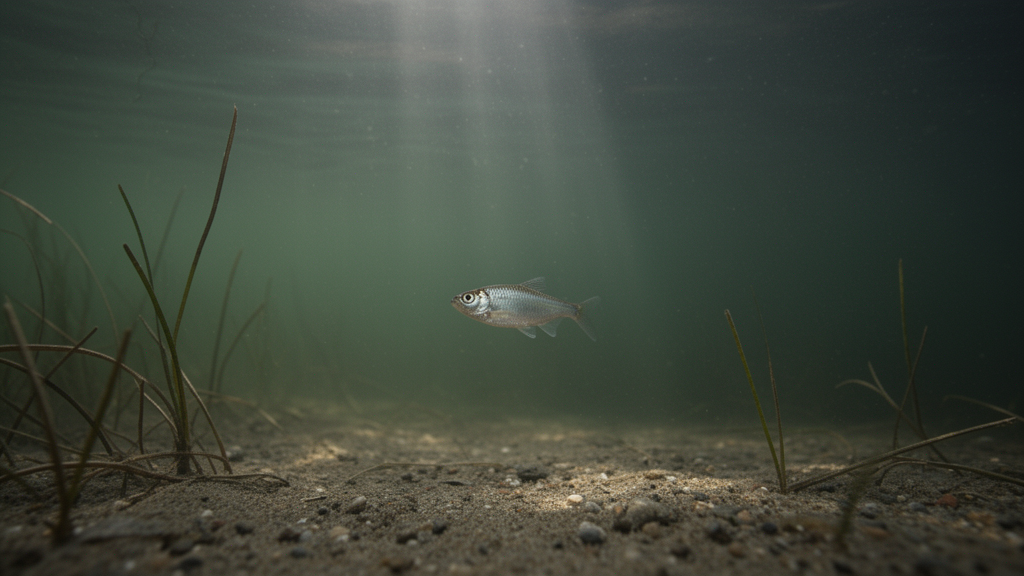
The lake minnow, scientifically known as Rhynchocypris percnurus, is a tiny, short-lived freshwater fish that has recently become the subject of urgent conservation concern in Lithuania. Although the species has been documented in Lithuanian inland waters for over two decades, a comprehensive new study reveals that its population has collapsed dramatically in recent years. The research, published in Acta Ichthyologica et Piscatoria, provides the first detailed inventory of the species in the country and paints a stark picture of a fish on the very edge of extinction. This small member of the Leuciscidae family, which belongs to the order Cypriniformes, was originally described by Pallas in 1814 and has a complex taxonomic history that has involved debates over its genus classification. Molecular phylogenetic studies have ultimately confirmed its placement in the genus Rhynchocypris, distinguishing it from other similar minnows. Despite its global status being listed as Least Concern, the species is critically endangered at the western edge of its range, particularly in countries like Lithuania and Poland.
The primary objective of the study was to provide a precise overview of the past and present status of Rhynchocypris percnurus in Lithuanian inland waters, including a rapid evaluation of threats to its habitats and populations. The researchers conducted a thorough inventory survey between 2018 and 2019, investigating 360 small water bodies across the country that were potentially suitable for the species. These water bodies were identified using high-resolution orthophoto maps and suggestions from local anglers. The survey followed established Polish methodologies for monitoring the lake minnow, involving the use of specialized folding traps baited with bread. Fish were captured and assessed for abundance, sex ratio, and age structure to determine the conservation status of each population. This systematic approach allowed the scientists to move beyond anecdotal reports and provide a data-driven assessment of the species’ viability in Lithuania.
The results of the 2018–2019 survey revealed that lake minnows were present in only 12 of the 360 water bodies investigated, representing a mere 3.3% of the suitable habitats. All identified sites were located in southern Lithuania, specifically within the territory of Meteliai Regional Park. This concentration suggests that the region has served as a significant refuge for the species, likely due to its diverse topography and the presence of numerous small, shallow water bodies. The total range of the species in Lithuania was estimated to be approximately 177 square kilometers, constituting about 0.3% of the country’s territory. The discovery of 11 new sites, in addition to the two previously known locations, indicated that the species had a broader distribution than previously thought. However, the abundance of the fish varied significantly among these sites, with some populations thriving while others were already showing signs of decline.
Despite the initial discovery of 12 sites, the situation deteriorated rapidly in the years following the survey. By 2024, the species had gone extinct at nine of the twelve sites identified in 2019, leaving only three water bodies where the fish could still be found. This dramatic decline highlights the fragility of the lake minnow’s habitat and the accelerating pace of its disappearance. The remaining populations are confined to a relatively small geographical area, making them highly vulnerable to local environmental changes. The researchers noted that the process of species disappearance is not only ongoing but is accelerating, driven by a combination of natural and anthropogenic factors. The loss of nine sites in just five years underscores the urgent need for immediate conservation action to prevent the complete extinction of the species in Lithuania.
The habitats of Rhynchocypris percnurus are characterized by their small size, shallow depth, and eutrophic conditions. The water bodies inhabited by the minnows ranged in surface area from 0.01 to 0.60 hectares and in maximum depth from 0.3 to 1.6 meters. Most of these sites were of anthropogenic origin, such as former peat excavations or cattle drinking ponds, while a few were natural forest lakes. All sites were densely overgrown with submerged and emergent vegetation, which provides essential cover and spawning grounds for the fish. The water chemistry of these habitats was generally neutral, with pH values ranging from 6.9 to 7.6. However, the habitats are highly vulnerable to destruction from natural processes such as shallowing, vegetation encroachment, and desiccation, as well as human activities like land reclamation and landfilling. The existence of these habitats is often limited to just a few decades, making long-term conservation strategies challenging.
Climate change has emerged as a primary driver of the lake minnow’s decline in Lithuania. Prolonged periods of hot and dry weather during the summer months have led to significant decreases in water levels in the small, shallow habitats where the species resides. In some locations, water bodies have undergone complete desiccation, while others have experienced substantial drops in water level, rendering them unsuitable for the fish. The researchers observed that the majority of the known habitats were in an unfavorable state by 2024, with only one site classified as having a favorable habitat condition. The combination of climate-induced drying and the inherent instability of these small water bodies has created a perfect storm for the extinction of the species. The impact of climate change is not unique to Lithuania; similar declines have been observed in neighboring Poland, where the lake minnow also faces significant threats from drought and habitat loss.
In addition to climate change, the introduction of predatory fish has been identified as another pivotal factor in the decline of Rhynchocypris percnurus. In 2019, no overlap between the lake minnow and predatory fishes was observed in the studied sites. However, by 2024, individuals of Perca fluviatilis and Esox lucius were recorded at four sites where the lake minnow had previously been observed. The presence of these predators is likely due to illegal stocking by local anglers, who may have introduced them to create a competitive environment for other fish populations. The introduction of non-indigenous species, such as Perccottus glenii, has also been shown to cause the loss of lake minnow populations in Poland. These invasive and predatory species pose a significant threat to the already vulnerable populations of Rhynchocypris percnurus, further complicating conservation efforts. The combined effect of climate change, habitat degradation, and biological invasions has accelerated the rate of population decline in Lithuania.
The conservation of Rhynchocypris percnurus in Lithuanian inland waters necessitates the urgent implementation of comprehensive active protection measures. The researchers recommend safeguarding the extant genetic variability of the species by establishing an artificial subpopulation under strict protection within a controlled environment. This population would serve as a reserve for future use as breeding material, ensuring that the genetic diversity of the species is preserved even if wild populations continue to decline. Additionally, the restoration of known habitats, including partial deepening of water bodies, is necessary for the survival of the species. However, the researchers noted that deepening alone has proven insufficient in some cases, and stocking with artificially cultivated juveniles is essential. The establishment of new populations through the translocation of wild or cultivated individuals into suitable habitats would significantly increase the chances of species survival at the regional scale. This approach has met with considerable success in Poland and could be adapted for use in Lithuania.
New populations should be established in sites of the highest natural value, free from threats of illegal human activity such as the introduction of predatory fish. This would ensure the best prospects for long-term success and help to build resilience against future environmental changes. The conservation of the lake minnow requires a multi-faceted approach that addresses the root causes of its decline, including climate change, habitat loss, and biological invasions. By combining habitat revitalization, artificial breeding programs, and the translocation of fish populations, it may be possible to reverse the trend of extinction and secure a future for Rhynchocypris percnurus in Lithuania. The urgency of the situation cannot be overstated, as the species is currently on the brink of extinction, with only one viable population remaining. Immediate action is needed to protect this unique and endangered freshwater fish and to preserve the biodiversity of Lithuanian inland waters.
Subject of Research: Conservation status and distribution of the lake minnow in Lithuanian inland waters
Article Title: Lake minnow, Rhynchocypris percnurus ( Actinopterygii , Cypriniformes , Leuciscidae ), in Lithuanian inland waters: Distribution and current population state
Article References: Rakauskas, V., Steponėnas, A., Virbickas, T., & Wolnicki, J. (2025). Lake minnow, Rhynchocypris percnurus (Actinopterygii, Cypriniformes, Leuciscidae), in Lithuanian inland waters: Distribution and current population state. Acta Ichthyologica et Piscatoria, 55, 273-280. https://doi.org/10.3897/aiep.55.163641
Image Credits: AI Generated
Keywords: Rhynchocypris percnurus, lake minnow, Lithuania, freshwater fish, conservation, habitat loss, climate change, population decline, invasive species, biodiversity, Lake, minnow
Cite Scienmag News
Margaret Porter. (October 18, 2026). Lithuania’s Lake Minnow Faces Imminent Extinction in Inland Waters. Scienmag. https://scienmag.com/lithuanias-lake-minnow-faces-imminent-extinction-in-inland-waters/
Margaret Porter. "Lithuania’s Lake Minnow Faces Imminent Extinction in Inland Waters." Scienmag, 18 October 2026, https://scienmag.com/lithuanias-lake-minnow-faces-imminent-extinction-in-inland-waters/. Accessed 18 October 2026.
Margaret Porter. "Lithuania’s Lake Minnow Faces Imminent Extinction in Inland Waters." Scienmag. October 18, 2026. https://scienmag.com/lithuanias-lake-minnow-faces-imminent-extinction-in-inland-waters/


