


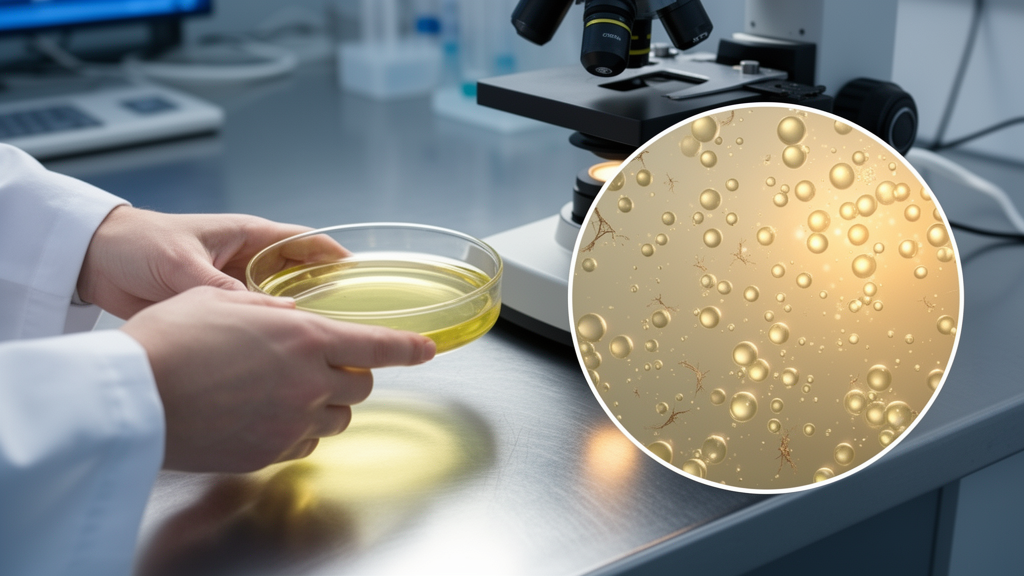
When veterinarians spin down a urine sample and peer through the microscope, they often spot something unexpected: glistening droplets of fat floating among the cells and crystals. A new retrospective study of 214 pets suggests these droplets are not a rare curiosity but a routine finding, appearing in more than half of all dogs and more than eight in ten cats examined. The research, published in the Journal of Veterinary Internal Medicine, offers the largest side-by-side comparison of urinary fat shedding, known as lipiduria, in the two species most commonly brought to veterinary clinics, and it hints that the droplets may carry more biological meaning than a simple laboratory artifact.
The study team reviewed urinalysis results from 140 dogs and 74 cats admitted to a private veterinary referral centre between January 2021 and June 2022. Only animals with complete urinalysis data were included, and each sample was classified as lipiduric or non-lipiduric depending on whether lipid droplets were visible on sediment examination. The result was striking: 58 percent of all animals, 125 of 214, were shedding fat into their urine. But the split between species was dramatic. Lipiduria appeared in 46 percent of dogs yet in 82 percent of cats, a difference so large that the statistical probability of it arising by chance was less than one in a hundred thousand.
The feline result fits a growing body of evidence that cats are unusual among mammals in how their kidneys handle fat. Felids physiologically store lipids, including triglycerides, phospholipids, and cholesterol, within the epithelial cells of the proximal convoluted tubule, the kidney segment that reclaims most of the filtered load. When these tubular cells turn over naturally or are injured, their lipid cargo can be released into the urinary space. Previous ultrasonographic work detected urinary lipids in 90 percent of cats studied, most of them clinically healthy with unremarkable lab results, and necropsy studies have documented lipid infiltration of the renal interstitium in up to 90 percent of cats with chronic kidney disease while finding it absent in cats without the condition.
Age emerged as a key variable in cats. Lipiduric cats in the study had a mean age of 9.5 years, compared with 6.2 years for their non-lipiduric counterparts, a statistically significant difference. This aligns with earlier reports of an age-associated increase in renal lipid content even in clinically healthy cats, and with observations that interstitial lipid deposition is more extensive in older individuals. The authors suggest that renal lipid accumulation may occur progressively over time, potentially driven by repeated episodes of tubular injury and the subsequent release of lipids when tubular epithelial cell membranes break down. Notably, the amount of lipiduria, graded from mild to severe on sediment examination, did not correlate with age, body condition, creatinine, or cholesterol in either species, meaning age influenced how often cats shed fat but not how much.
Dogs told a different story. Among the canine cohort, females were heavily overrepresented in the lipiduric group, making up 63 percent of lipiduric dogs versus 26 females among 76 non-lipiduric dogs. In multivariable logistic regression, female dogs had roughly 3.5 times the odds of lipiduria compared with males, with a 95 percent confidence interval of 1.7 to 7.3. Interestingly, histopathological investigations in cats have shown that the most extensive interstitial lipid deposition may occur in female animals, which the authors suggest could provide a biological rationale for the sex-related susceptibility they observed in dogs. No sex predisposition was found among the cats in this study.
Urine chemistry added another canine clue. Lipiduric dogs had a significantly higher mean urine pH, 6.8 versus 6.1, and in the second multivariable model urine pH remained independently associated with lipiduria, with the odds of shedding fat increasing by about 5 percent for each 0.1-unit rise in pH. In human medicine, persistently elevated urinary pH has been linked to proximal tubular alterations affecting cellular acid-base handling, and increased urinary lipid excretion has been associated with tubular oxidative stress and injury. The authors raise the hypothesis that lipiduria could reflect or contribute to tubular damage, potentially impairing the kidney’s ability to acidify urine. They caution, however, that the magnitude of the pH difference was small and may not be clinically relevant on its own.
The crystal findings reinforced the pH connection. Lipiduric dogs carried struvite crystals in their urine 17 percent of the time, compared with 5 percent of non-lipiduric dogs, a statistically significant difference consistent with the well-established association between alkaline urine and struvite formation. Conversely, bilirubin crystals, which male dogs produce physiologically when renal tubular cells conjugate bilirubin, were found only in non-lipiduric dogs, 16 percent versus zero, likely reflecting the female skew of the lipiduric group. Calcium oxalate crystals, meanwhile, appeared at similar rates in both groups. In humans, lipids are commonly identified within the stone matrix and experimental data indicate that lipid-rich matrices can act as a nidus for mineral nucleation, suggesting urinary fat may play an active role in lithogenesis rather than a passive one.
Perhaps the most reassuring finding was what did not differ. The distribution of disease categories, from urinary and gastrointestinal disorders to endocrine, inflammatory, and neoplastic conditions, was statistically indistinguishable between lipiduric and non-lipiduric animals in both species. Azotemia, elevated creatinine indicating reduced kidney function, was present in 72 percent of cats overall but showed no association with lipiduria in either species. Plasma cholesterol concentrations likewise failed to separate the groups, although the authors note that triglycerides, considered a more relevant marker of hyperlipidemia in dogs, were not measured, and only a small number of breeds classically predisposed to dyslipidemia were represented. Body condition score, assessed on a 5-point scale, also showed no difference, though the authors acknowledge this coarser scale may have limited the precision of adiposity assessment compared with the more sensitive 9-point system.
The study’s limitations temper its conclusions. As a retrospective analysis of referred, diseased animals, it included no healthy control group and encompassed heterogeneous diagnoses, limiting generalizability. Lipiduria was assessed exclusively by conventional sediment microscopy, without chromatographic characterization of the urinary lipids, precluding a detailed evaluation of their biochemical composition. Dietary history was not recorded, and the interval between urine collection and sediment examination could have altered crystal findings, although the significant differences observed concerned struvite crystalluria, which is relatively resistant to storage effects. The authors also address a practical concern: lipiduria in cats might theoretically result from fat contamination when a needle passes through body wall fat during cystocentesis, but adipocytes from subcutaneous tissue are cytologically distinct from the lipid droplets seen on urinalysis.
Even with those caveats, the study establishes lipiduria as a common finding in companion animals, particularly cats, and suggests it is not merely an epiphenomenon. In cats, age shapes its frequency without a sex predisposition; in dogs, females are overrepresented and a possible link with struvite crystalluria and alkaline urine emerges. Given the proposed role of lipids as pro-inflammatory mediators in feline chronic kidney disease, and the recognition of lipid metabolism as a key contributor to kidney disease progression in humans, the authors argue that these glistening droplets deserve closer scrutiny. Future prospective studies with lipid characterization and healthy controls will be needed to determine whether the fat in Fluffy’s urine is a harmless byproduct of tubular turnover or an early warning sign of kidney trouble.
Subject of Research: Frequency and clinical associations of lipiduria in dogs and cats
Article Title: Retrospective evaluation of lipiduria in urine from 140 dogs and 74 cats
Article References: Cervone, M., Legroux, D., Barral, G., & Ramery, E. (2026). Retrospective evaluation of lipiduria in urine from 140 dogs and 74 cats. Journal of Veterinary Internal Medicine, 40(5), Article aalag232. https://doi.org/10.1093/jvimsj/aalag232
Image Credits: AI Generated
Keywords: lipiduria, dogs, cats, urinalysis, veterinary medicine, chronic kidney disease, struvite crystals, urine pH, renal lipids, tubular injury, urolithiasis, retrospective study
Cite Scienmag News
Drew Townsend. (October 16, 2026). Lipid Droplets in Pet Urine Are Far More Common Than Vets Thought, Study Finds. Scienmag. https://scienmag.com/lipid-droplets-in-pet-urine-are-far-more-common-than-vets-thought-study-finds/
Drew Townsend. "Lipid Droplets in Pet Urine Are Far More Common Than Vets Thought, Study Finds." Scienmag, 16 October 2026, https://scienmag.com/lipid-droplets-in-pet-urine-are-far-more-common-than-vets-thought-study-finds/. Accessed 16 October 2026.
Drew Townsend. "Lipid Droplets in Pet Urine Are Far More Common Than Vets Thought, Study Finds." Scienmag. October 16, 2026. https://scienmag.com/lipid-droplets-in-pet-urine-are-far-more-common-than-vets-thought-study-finds/


