


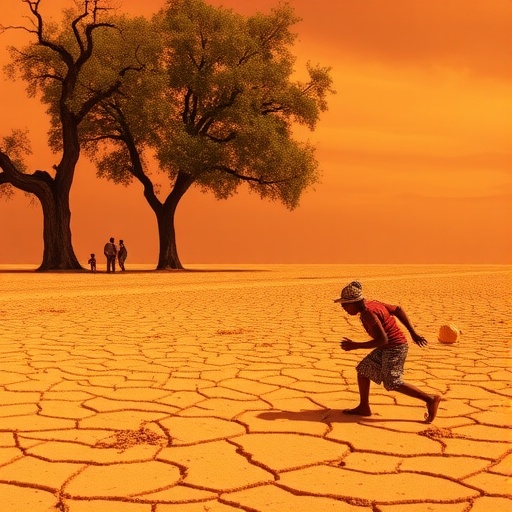
In an ambitious cross-sectional study spanning 42 low- and middle-income countries, researchers have uncovered a compelling association between drought conditions and heightened risks of intimate partner violence (IPV). This pioneering research adds a critical dimension to our understanding of how climate-induced environmental stressors ripple through societal fabrics and exacerbate vulnerabilities, especially among marginalized populations. As global climate patterns intensify, extreme weather events such as prolonged droughts are becoming alarmingly frequent and severe, with consequences that reach far beyond agricultural yields or economic indicators. This study elucidates the underexplored pathophysiological and sociological interplay that makes domestic violence a pressing issue amid climate crises.
Drought, as a climatic phenomenon, influences ecosystems by drastically reducing water availability, thereby impairing food production and livelihood stability. The compounded economic strain on households during drought periods intensifies psychological stress and strains interpersonal relationships. This research illustrates that such environmental stressors correspond with an increase in IPV incidents, portraying drought as a potent, indirect catalyst for violence within intimate settings. The findings were robust, transcending geographic and cultural diversity inherent in the 42 countries examined, underscoring a global pattern rather than isolated instances.
The methodology employed was rigorous, utilizing large-scale population surveys cross-referenced with meteorological data to assess drought periods and their temporal overlap with reported instances of intimate partner violence. Climate data from reputable sources were integrated with demographic and health surveys using geospatial techniques to align environmental conditions with individual-level IPV reports. This multifaceted analytical approach enabled researchers to discern patterns correlating drought duration and intensity with domestic violence prevalence, while controlling for confounding socioeconomic variables such as income inequality and regional disparities.
One of the pivotal insights from this research is the temporal dimension of drought exposure. The length and severity of drought spells were consistently linked with escalating rates of IPV. Short-term droughts, while stressful, seem less impactful compared to prolonged dry spells that can erode resilience by exhausting coping resources, leading to chronic stress and heightened conflict potential. This nuanced understanding prompts a reevaluation of disaster response frameworks to incorporate mental health and domestic violence prevention as integral components, especially in regions prone to recurrent drought.
Moreover, the sociological implications are profound. Income inequality—a known risk factor for domestic violence—interacts synergistically with environmental hardship to compound vulnerabilities. Resource scarcity exacerbated by drought not only magnifies economic disparities but also instigates power imbalances within households. This intersectionality of climate stress and social inequality accelerates the risk trajectories towards abusive dynamics. By highlighting these interactions, the study advocates for multidimensional intervention policies that simultaneously address environmental, economic, and social determinants of violence.
From a behavioral psychology perspective, the research draws attention to the mechanisms by which drought-induced stress manifests as aggression and violence. Psychosocial models emphasize that chronic stress disrupts mental health, leading to irritability, decreased emotional regulation, and conflict escalation. Men in drought-affected households may experience diminished livelihoods and traditional roles as providers, triggering feelings of frustration and loss of control, which can precipitate IPV. Women, as disproportionately affected individuals in these contexts, bear the brunt of this violence, perpetuating cycles of trauma that transcend generations.
The study’s geographic breadth is notable, including countries across Africa, Asia, and Latin America, each with distinct climatic regimes and socioeconomic contexts. Despite this diversity, the consistent association discovered emphasizes the universality of the drought-IPV link. Such evidence advocates for global-scale policy responses and resource allocation to address climate vulnerability not just in terms of physical survival, but in safeguarding societal well-being and human rights.
Climate change, as an overarching driver of increased drought incidence, underscores the urgency of these findings. As global temperatures continue to rise, the frequency and intensity of extreme weather events, including droughts, are projected to swell. The associated downstream effects, such as increased violence and instability, highlight the interdependence of environmental health and social systems. Given that many affected countries are already struggling with fragile infrastructures and limited social services, the compounded burdens call for integrative adaptation strategies.
Preventive medicine, typically concerned with direct physical health risks, stands to benefit from these insights by expanding its scope to include psychosocial factors linked to environmental adversity. Integrating domestic violence prevention into climate adaptation frameworks could enhance resilience. Early-warning systems for drought, coupled with targeted social support and mental health services, could mitigate the escalation of IPV cases. These proactive measures would alleviate societal costs associated with violence, including healthcare burdens and lost productivity.
The study also raises important questions about data collection and the role of interdisciplinary research in unraveling complex issues at the nexus of climate and public health. By marrying meteorological science, sociology, psychology, and epidemiology, the research exemplifies a holistic approach necessary for contemporary global challenges. It paves the way for future longitudinal studies aimed at causal pathways, intervention effectiveness, and policy impact evaluations.
In conclusion, the evidence asserts that drought conditions are not merely environmental phenomena affecting crops and economies but are deeply entwined with human behavior and societal conditions. Addressing the intimate partner violence exacerbated by climate extremes demands coordinated efforts across sectors. This includes investments in sustainable water management, social safety nets, gender equity programs, and mental health infrastructure. As the climate crisis advances, such integrative responses will be essential in protecting vulnerable populations and fostering resilient communities globally.
Cite Scienmag News
Courtney Benton. (August 20, 2025). Linking Drought and Extreme Heat to Rising Intimate Partner Violence in Low- and Middle-Income Countries. Scienmag. https://scienmag.com/linking-drought-and-extreme-heat-to-rising-intimate-partner-violence-in-low-and-middle-income-countries/
Courtney Benton. "Linking Drought and Extreme Heat to Rising Intimate Partner Violence in Low- and Middle-Income Countries." Scienmag, 20 August 2025, https://scienmag.com/linking-drought-and-extreme-heat-to-rising-intimate-partner-violence-in-low-and-middle-income-countries/. Accessed 4 September 2026.
Courtney Benton. "Linking Drought and Extreme Heat to Rising Intimate Partner Violence in Low- and Middle-Income Countries." Scienmag. August 20, 2025. https://scienmag.com/linking-drought-and-extreme-heat-to-rising-intimate-partner-violence-in-low-and-middle-income-countries/


