


In the rugged mountainous and hilly landscapes of Japan, the echoes of medieval times are etched not only in history books but also inscribed vividly upon the terrain itself. Recent advances in airborne light detection and ranging (LiDAR) technology have opened unprecedented windows into these ancient landscapes, unveiling a complex interplay between human engineering and natural geomorphology. A pioneering research effort led by scientists at the University of Tsukuba and Hiroshima Institute of Technology has employed sophisticated topographic analysis of LiDAR-derived digital elevation models (DEMs) to quantify the extent of landscape transformation associated with the construction of hilltop castles during Japan’s medieval period.
This investigation harnesses ultra-high-resolution DEMs with 1-meter spatial fidelity, derived from extensive airborne LiDAR surveys in Hiroshima Prefecture, a region steeped in both historical significance and diverse geomorphic features. By meticulously comparing 39 medieval mountain castle sites with an equivalent number of nearby unaltered natural ridges, researchers sought to delineate subtle yet measurable deviations induced by human modifications centuries ago. The goal was to move beyond qualitative assessments and provide a rigorous, numeric characterization of how historic anthropogenic activities remodeled the natural topography.
The analytical framework centers on two primary geomorphometric parameters: slope gradient and curvature. Slope gradient quantifies the steepness of terrain, while curvature describes the shape of surface contours, differentiating convex ridges, concave valleys, and planar slopes. By integrating these metrics, the team constructed a dual-indicator approach capable of detecting spatial signatures indicative of medieval construction activities superimposed on natural ridge landscapes.
Findings from the study reveal that castle sites diverge significantly from natural ridges in their slope variability patterns. Castle locations consistently exhibited pronounced heterogeneity in slope gradients, reflecting the extensive earthworks, cut-and-fill operations, and fortification embankments implemented by medieval builders. These engineered alterations were likely designed to optimize defensive advantages, controlling vantage points and hindering enemy movement, but they also inadvertently destabilized slope integrity.
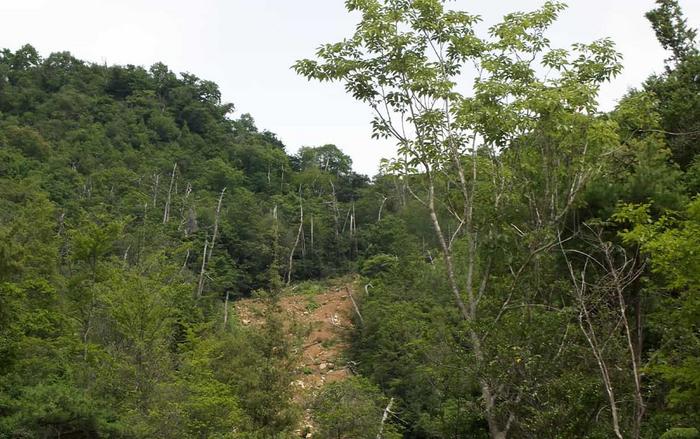
Moreover, a correlation emerged between sites exhibiting high slope variability combined with an increased proportion of valley-like slopes and the presence of shallow landslide scarps within castle boundaries. This crucial insight suggests that historical landscape modifications have had a lasting impact on geomorphic susceptibility to mass wasting processes, potentially heightening landslide risks in these historically significant but geotechnically compromised terrains.
The implications of this research are profound, pushing the frontier of geoarchaeological studies toward a synthesis of modern remote sensing data with classical topographic analysis. It offers a scalable, quantitative method to identify and evaluate subtle anthropogenic signatures embedded in the landscape that precede the availability of detailed topographic records, especially those reflecting human activity prior to the mid-20th century.
Such capacity to differentiate anthropogenically shaped topographies from naturally evolved landforms also holds promise for heritage conservation strategies. Understanding which areas are prone to geomorphic instability due to medieval modifications allows for better risk assessment and informed planning to safeguard these irreplaceable archaeological sites against natural hazards such as landslides.
Furthermore, by leveraging LiDAR’s ability to penetrate forest canopies and capture ground surface characteristics in fine detail, this approach overcomes the limitations imposed by vegetation cover and erosion, which often obscure conventional methods. The exceptionally fine spatial resolution of the DEMs enhances sensitivity to microtopographic variations, which are critical for distinguishing the subtle geomorphic signatures of hilltop castle construction.
The interdisciplinary collaboration underpinning this study integrates expertise in geoscience, archaeology, and environmental engineering, showcasing how contemporary technologies can revisit and reinterpret ancient human-environment interactions. This model of investigation paves the way for similar topographic analyses in other regions globally, where hilltop fortifications or terraced landscapes embody centuries of land management and cultural imprint.
Notably, this research also contributes to the growing body of knowledge about historical landscape resilience and human-induced geomorphic processes. It challenges assumptions that medieval land use was invariably harmonious with natural terrain by highlighting the unintended environmental consequences, including elevated landslide susceptibility due to slope reconfiguration.
The work is supported by the Japan Society for the Promotion of Science, emphasizing the critical role of funding agencies in advancing multidisciplinary research that bridges past and present through cutting-edge technological applications. The findings were published in Physical Geography, heralding a new era of quantitative landscape archaeology facilitated by remote sensing.
As researchers continue to refine these analytical techniques, the possibility emerges of constructing detailed historical topographic reconstructions and predictive models that assess the long-term geomorphological impacts of ancient human activity. Such ventures promise to deepen our understanding of how medieval societies engineered their environments and how those changes continue to shape contemporary landscape dynamics.
This study beautifully illustrates the synergy between cutting-edge technology and historical inquiry, transforming LiDAR data from mere digitized elevation points into vibrant narratives of human endeavor etched across time and terrain. The legacy of Japan’s hilltop castles thus transcends cultural heritage, informing present-day geoenvironmental stewardship and archaeological exploration.
News Publication Date: 13-Mar-2026
Web References:
https://doi.org/10.1080/02723646.2026.2643590
Cite Scienmag News
Courtney Benton. (April 28, 2026). LiDAR Reveals Topographic Changes in Medieval Mountain Castles and Links to Landslide Risk. Scienmag. https://scienmag.com/lidar-reveals-topographic-changes-in-medieval-mountain-castles-and-links-to-landslide-risk/
Courtney Benton. "LiDAR Reveals Topographic Changes in Medieval Mountain Castles and Links to Landslide Risk." Scienmag, 28 April 2026, https://scienmag.com/lidar-reveals-topographic-changes-in-medieval-mountain-castles-and-links-to-landslide-risk/. Accessed 4 September 2026.
Courtney Benton. "LiDAR Reveals Topographic Changes in Medieval Mountain Castles and Links to Landslide Risk." Scienmag. April 28, 2026. https://scienmag.com/lidar-reveals-topographic-changes-in-medieval-mountain-castles-and-links-to-landslide-risk/


