


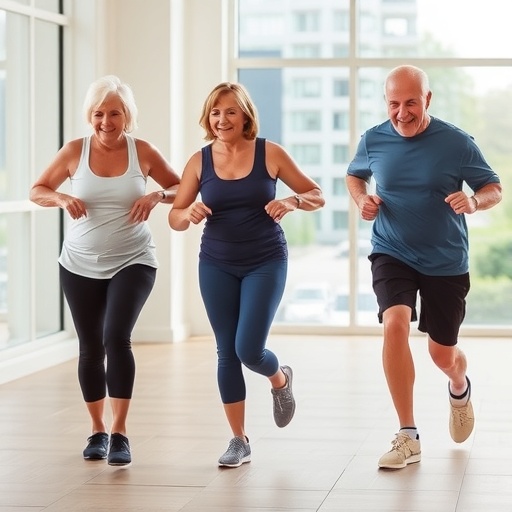
In an era where global populations are rapidly aging, understanding how lifestyle choices impact the health and functional capabilities of older adults has taken center stage in scientific research. The latest study published in BMC Geriatrics in 2026 provides compelling insights into the associations between leisure-time physical activity and various domains of muscle strength and functional fitness in community-dwelling older adults. This investigation sheds light on the pivotal role that physical activity plays not only in maintaining but potentially enhancing the quality of life among elderly individuals.
As the workforce ages and healthcare systems brace for unprecedented demands, comprehending how simple, accessible interventions like leisure-time physical activity affect musculoskeletal health becomes paramount. Researchers Mao, Li, Han, and colleagues undertook a cross-sectional observational approach, encompassing a robust sample of older adults living independently within the community. Their primary aim was to dissect the nuanced relationships between habitual physical activity undertaken during leisure periods and the strength capacities and functional fitness domains critical for autonomy and daily functioning.
Muscle strength and functional fitness are cornerstone elements in geriatric health, influencing everything from fall risk to cognitive function. Functional fitness spans a spectrum of abilities, including balance, endurance, flexibility, and agility—traits often diminished with age but vital for maintaining independence. The study meticulously evaluated participants through standardized physical assessments, capturing data on grip strength, lower limb strength, and performance in tests mimicking everyday tasks such as rising from a chair or navigating short walking courses.
One of the study’s significant technical contributions lies in its detailed stratification of physical activity types and durations, enabling a clear linkage between different patterns of leisure-time activities and specific muscular and functional outcomes. The researchers categorized activities ranging from walking and swimming to more vigorous sports and resistance training, aligning these with measured outcomes in a statistically rigorous manner that accounted for potential confounding variables such as comorbidities and socioeconomic factors.
The results elucidate a robust positive correlation between moderate-to-vigorous leisure-time physical activity and enhanced muscle strength across various muscle groups. Notably, grip strength—a widely recognized biomarker for overall muscle health—demonstrated substantial gains among participants who engaged regularly in weight-bearing and resistance exercises during their leisure time. This finding underscores the importance of incorporating diverse activity modalities rather than restricting older adults to low-impact or solely aerobic exercises.
Beyond muscle strength, the study highlights improvements in functional fitness measures integral to everyday independence. Participants with higher leisure-time activity levels outperformed their less active counterparts in balance tests and the sit-to-stand test, both predictive of fall risk and mobility decline. These functional metrics have direct clinical relevance as they frequently dictate the ability of older adults to live autonomously and avoid institutionalization.
Importantly, the research methodology employed ensures that the associations observed are not merely cross-sectional snapshots but frame a foundational understanding for potential causal inferences. By adjusting for a wide spectrum of demographic and health-related factors, the investigators strengthen the scientific case for promoting tailored leisure-time physical activity as a preventive strategy against debilitating muscular decline and functional deterioration.
The implications of this work resonate throughout the domains of public health, geriatrics, and preventive medicine. As worldwide populations age, crafting effective interventions capable of delaying or mitigating functional impairments is vital. This study provides empirical evidence advocating for structured leisure-time physical activity programs as feasible and impactful public health measures, potentially reducing the burden on healthcare systems by preserving muscular and functional capacities that enable older adults’ independence.
Moreover, the study emphasizes the psychological and social benefits that accompany increased physical activity in older populations. Engaging in leisure activities frequently fosters social interaction, mitigates feelings of isolation, and supports mental health, thereby generating a holistic improvement in health status. While the primary focus was on muscular and functional markers, these secondary benefits cannot be discounted and warrant further exploration in future longitudinal research.
The meticulous design and rigorous statistical analysis employed in this study serve as a model for future investigations in the field. By integrating objective physical performance assessments with self-reported activity logs, the researchers enriched their dataset’s validity and reliability. Such comprehensive approaches are essential to unravel the complex yet critical interactions between lifestyle behaviors and aging physiology.
Notably, the study addresses gaps in existing literature where leisure-time physical activity’s specific impact on distinct functional domains lacked clarity. The differentiation between muscle strength components and functional fitness measures allows for nuanced recommendations tailored to individual capacities and preferences, moving beyond generic exercise prescriptions often seen in geriatric care.
As the research community continues to grapple with identifying scalable interventions to promote healthy aging, these findings pave the way for multidisciplinary strategies blending physical therapy, community health engagement, and policy initiatives aimed at facilitating active lifestyles among seniors. Importantly, interventions must consider accessibility, enjoyment, and adherence to ensure sustained benefits across this population.
Future research trajectories emerging from this study include exploring causal pathways through longitudinal designs and intervention trials, assessing molecular and physiological mechanisms underpinning observed benefits, and evaluating economic impacts of physical activity promotion in older adults. Integrating wearable technology for continuous real-time monitoring of activity and its relation to functional outcomes also presents an exciting frontier.
In conclusion, the work spearheaded by Mao, Li, Han, and colleagues significantly advances our understanding of how leisure-time physical activity contributes to maintaining muscle strength and functional fitness among community-dwelling older adults. These insights underscore the critical value of promoting diverse and moderate-to-vigorous physical activities to sustain independence, reduce morbidity, and enhance overall wellbeing in aging populations globally. The call to action is clear: implementing tailored physical activity programs within community settings must become a priority in aging societies striving for healthy longevity.
Cite Scienmag News
Beatrice Stafford. (June 14, 2026). Leisure Activity Boosts Strength, Fitness in Older Adults. Scienmag. https://scienmag.com/leisure-activity-boosts-strength-fitness-in-older-adults/
Beatrice Stafford. "Leisure Activity Boosts Strength, Fitness in Older Adults." Scienmag, 14 June 2026, https://scienmag.com/leisure-activity-boosts-strength-fitness-in-older-adults/. Accessed 4 September 2026.
Beatrice Stafford. "Leisure Activity Boosts Strength, Fitness in Older Adults." Scienmag. June 14, 2026. https://scienmag.com/leisure-activity-boosts-strength-fitness-in-older-adults/


