


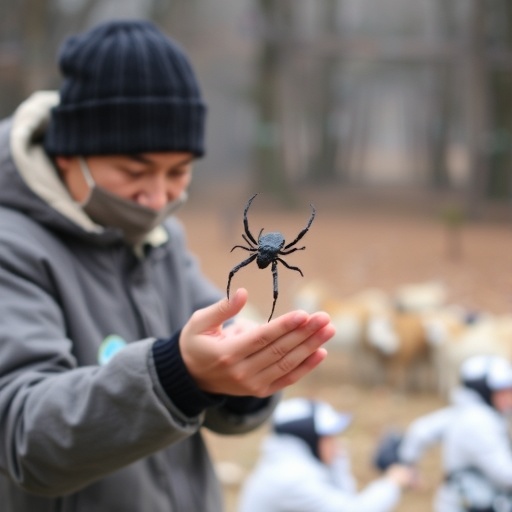
A groundbreaking study published in Science in One Health has unveiled significant and concerning deficiencies in public knowledge concerning tick-borne diseases across Northeast China and the Inner Mongolia Autonomous Region. This extensive survey involving 4,000 adults conducted in 2019 highlights an unsettling paradox: while general awareness of tick biology remains relatively robust, actionable knowledge on prevention and management of tick-borne illnesses remains markedly inadequate, particularly among populations with the highest exposure risks.
Ticks, known vectors of multiple pathogens including bacteria, viruses, and protozoa, have risen as formidable threats to public health globally. In northern China and Inner Mongolia, where ecological conditions foster extensive tick habitats, the incidence of tick-borne diseases such as Lyme disease, tick-borne encephalitis, and severe fever with thrombocytopenia syndrome has escalated alarmingly. Despite the increasing prevalence of these diseases, this study shows a stark disconnect between recognizing ticks and understanding the nuanced protective measures required to mitigate infection risk.
The survey stratified knowledge into four core areas: tick biology and ecology, treatment of tick bites, awareness of tick-borne diseases, and preventive strategies. While about 70% of respondents could correctly identify tick morphology and general behavior, less than half illustrated understanding of effective bite management practices or early disease recognition signs. This gap—between identification and prevention—poses a critical barrier in slowing the spread of tick-borne illnesses, underscoring a knowledge-action disparity that public health authorities must urgently address.
Data analysis revealed that rural populations, despite bearing the brunt of exposure due to their engagement in agriculture and outdoor labor, demonstrated significantly lower comprehension of protective measures. Moreover, individuals with previous tick bite experiences—the cohort at highest risk for subsequent infections—displayed puzzlingly deficient knowledge about transmission mechanisms and post-exposure interventions. These findings challenge the assumption that direct risk experience translates into better preventive awareness, suggesting systemic failures in educational outreach and disease communication in at-risk communities.
Geospatial variations in knowledge were equally telling. Certain administrative divisions exhibited relatively high awareness levels, likely reflecting the efficacy of localized health education initiatives and surveillance programs. Conversely, other regions lagged behind, revealing the uneven reach of public health messaging. This heterogeneity emphasizes that uniform, generalized campaigns fall short—targeted, region-specific interventions anchored in empirical knowledge mapping are essential for meaningful impact.
The implications for public health policy are profound. The study advocates for the transition from passive information dissemination towards active engagement strategies that provide clear, practical guidance on tick avoidance—such as appropriate protective clothing, use of repellents, thorough skin examinations after outdoor activities—and immediate proper treatment of tick bites. This approach must also extend to veterinary and environmental health sectors, embracing one health principles given the zoonotic nature of many tick-borne pathogens.
Furthermore, enhancing community-based surveillance and establishing feedback loops between local healthcare providers and public health institutions can propel adaptive education models, ensuring that emerging knowledge gaps are swiftly identified and addressed. Incorporation of culturally appropriate communication modalities, including visual aids and vernacular languages, especially in rural and indigenous areas, could enhance understanding and retention of preventative measures.
The study’s methodological rigor—leveraging a statistically representative sample across diverse sociodemographic backgrounds—lends considerable credence to its findings. It delineates critical knowledge metrics that serve as both baseline and benchmarks for future interventions. Such quantitative insights are invaluable for nationwide strategic planning, resource allocation, and monitoring the efficacy of implemented programs in reducing tick-borne disease morbidity and mortality.
Scientifically, tick ecology itself is multifaceted, with seasonal and environmental variables influencing vector density and pathogen prevalence. Hence, public health messaging must be dynamic, integrating real-time epidemiological surveillance data to preemptively warn vulnerable populations during peak tick activity periods. Incorporating climate change models predicting shifts in tick habitat ranges should further inform long-term community preparedness plans.
The repercussions of these knowledge deficits reverberate beyond individual health risks; they extend to economic burdens due to increased healthcare costs, lost productivity, and strain on medical infrastructure. Given the trend of expanding tick populations influenced by ecological transformations, addressing educational shortcomings emerges as an indispensable element of comprehensive disease control frameworks.
In conclusion, this seminal research elucidates the stark chasm between awareness of tick biology and the critical understanding required to mitigate tick-borne illnesses effectively. It calls on health authorities, government agencies, and community organizations to forge collaborative, evidence-based health education strategies customized for vulnerable populations in Northeast China and Inner Mongolia. The urgency of this task cannot be overstated as the landscapes of vector ecology and infectious threats evolve concurrently with human demographic patterns and climate pressures.
Subject of Research: Risk perception and knowledge gaps of tick-borne diseases in Nei Mongol Zizhiqu and Northeast China
Article Title: Assessing risk perception and knowledge gaps of tick-borne diseases in Nei Mongol Zizhiqu and Northeast China
News Publication Date: 4-Feb-2026
Image Credits: Tingting Wang, Sen Li
Keywords: Risk assessment, tick-borne diseases, public health education, Northeast China, Inner Mongolia, vector ecology, disease prevention, knowledge gaps
Cite Scienmag News
Courtney Benton. (April 28, 2026). Lack of Knowledge Increases Tick-Borne Disease Risks Among Vulnerable Groups in Northern China. Scienmag. https://scienmag.com/lack-of-knowledge-increases-tick-borne-disease-risks-among-vulnerable-groups-in-northern-china/
Courtney Benton. "Lack of Knowledge Increases Tick-Borne Disease Risks Among Vulnerable Groups in Northern China." Scienmag, 28 April 2026, https://scienmag.com/lack-of-knowledge-increases-tick-borne-disease-risks-among-vulnerable-groups-in-northern-china/. Accessed 5 September 2026.
Courtney Benton. "Lack of Knowledge Increases Tick-Borne Disease Risks Among Vulnerable Groups in Northern China." Scienmag. April 28, 2026. https://scienmag.com/lack-of-knowledge-increases-tick-borne-disease-risks-among-vulnerable-groups-in-northern-china/


