

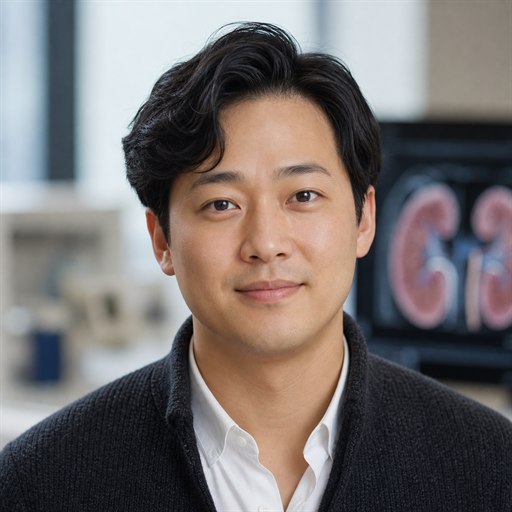

Manisha Jhamb, M.D., launched the Kidney-CHAMP study five years ago because she saw a looming tsunami of chronic kidney disease cases. She was pulled to find a way to assist the primary care physicians upon whom this burden would fall.

Credit: UPMC
Manisha Jhamb, M.D., launched the Kidney-CHAMP study five years ago because she saw a looming tsunami of chronic kidney disease cases. She was pulled to find a way to assist the primary care physicians upon whom this burden would fall.
Today, the results of her study are published in JAMA Internal Medicine. And, even though the study didn’t prove that Kidney-CHAMP staves off disease progression, Jhamb is encouraged that the intervention helped PCPs identify and triage patients with kidney disease, improving patient access to specialists and educational materials.
“Despite the null result, we found that the Kidney-CHAMP framework is scalable, provides equitable access and overcomes barriers on the provider, patient and health system levels,” said Jhamb, associate chief of the Renal-Electrolyte Division in the University of Pittsburgh School of Medicine and UPMC nephrologist. “The big positive is that we were able to implement this in more than 100 PCP practices across a large geographic area that included many rural communities in the midst of a global pandemic.”
Kidney-CHAMP, which stands for Coordinated HeAlth Management Partnership, uses the electronic health record to flag kidney disease patients for review by a multidisciplinary team of a nephrologist, pharmacist and physician. It then feeds individualized recommendations back to the patient’s PCP and their medical chart. During the next appointment, real-time reminders prompt the physician to review recommendations and place or change medication orders. Patients are referred to a telemedicine appointment with a nurse who provides personalized education.
Chronic kidney disease is a leading cause of death in the U.S. and occurs when the kidneys can no longer filter blood as well as they should, allowing excess fluid and waste to build up in the body. If left untreated, the kidneys will shut down and dialysis or a kidney transplant will be needed. But medications and lifestyle changes can delay and even prevent progression.
Starting in May 2019, Jhamb and her colleagues enrolled 101 UPMC-affiliated primary care practices in the Kidney-CHAMP trial, randomizing the practices to either receive the intervention or not. The main goal was to see if Kidney-CHAMP reduced risk of chronic kidney disease progression. Although Kidney-CHAMP neither helped nor hurt patient outcomes compared to those who received regular care, patients in the program were more likely to receive appropriate medications and very few physician practices opted out of the intervention.
Barbara Kevish, M.D., participated in the trial as a physician through Renaissance Family Practice, one of the primary care practices that received Kidney-CHAMP. The intervention continues to be offered to her patients through UPMC Health Plan.
“I say to my patients, ‘I have a kidney specialist who looked at your chart and gave me recommendations to help maintain your kidney function.’ And the patients love it because they get that specialized care without an extra appointment with a specialist,” said Kevish, who is also associate vice president of Medicare Medical Services at UPMC Health Plan. “From a primary care standpoint, it’s a no-brainer – this program isn’t extra work for me and it’s a value-add for my patients.”
Jhamb suspects that the COVID-19 pandemic, which shifted physician focus from chronic disease management to acute care nationwide, and too short of a follow-up period may be behind the null results. If they’d had more time, Jhamb suspects the study would start seeing positive outcomes.
In the meantime, Kidney-CHAMP formed a partnership with the UPMC Health Plan, and it has since been rolled out to more than 2,500 patients. Jhamb is especially encouraged because, for the first time in nearly 20 years, new therapies are being introduced to improve and prevent kidney failure.
“As soon as new medications become available, Kidney-CHAMP and its team of nephrologists and pharmacists review patient records to see who is most likely to benefit,” Jhamb said. “This provides support to busy PCPs who may not otherwise be aware of a brand-new medication or exactly which of their patients it could help.”
Additional study authors include Melanie R. Weltman, Pharm.D., Susan M. Devaraj, Ph.D., M.S., R.D., Linda-Marie Lavenburg, D.O., M.S., Zhuoheng Han, M.S., Alaa A. Alghwiri, Ph.D., Gary S. Fischer, M.D., Bruce L. Rollman, M.D., M.P.H., Thomas D. Nolin, Pharm.D., Ph.D., Jonathan Yabes, Ph.D., all of Pitt.
This research was supported by the National Institute of Diabetes and Digestive and Kidney Diseases (1R01DK116957, T32HL110849-11A1 and T32DK061296-19).
Journal
JAMA Internal Medicine
Article Title
Electronic Health Record Population health management to optimize CKD care: Cluster Randomized Trial
Article Publication Date
15-Apr-2024
Cite Scienmag News
Jerry Hayes. (April 15, 2024). Kidney disease intervention outcomes encouraging, despite null result. Scienmag. https://scienmag.com/kidney-disease-intervention-outcomes-encouraging-despite-null-result/
Jerry Hayes. "Kidney disease intervention outcomes encouraging, despite null result." Scienmag, 15 April 2024, https://scienmag.com/kidney-disease-intervention-outcomes-encouraging-despite-null-result/. Accessed 4 September 2026.
Jerry Hayes. "Kidney disease intervention outcomes encouraging, despite null result." Scienmag. April 15, 2024. https://scienmag.com/kidney-disease-intervention-outcomes-encouraging-despite-null-result/

