


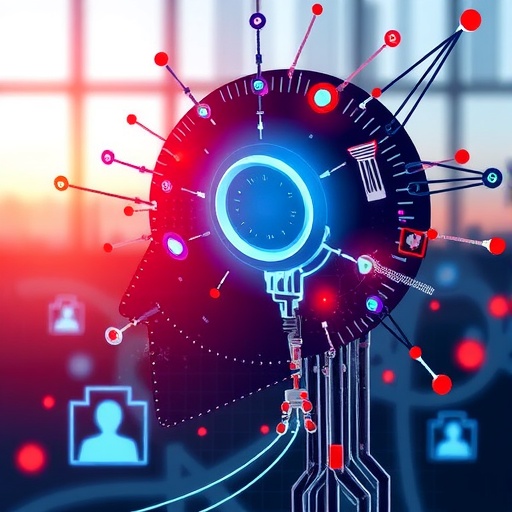
As artificial intelligence (AI) technologies swiftly advance, they are increasingly entrusted with tasks traditionally performed by humans. From medical diagnostics and financial forecasting to autonomous vehicles and creative arts, AI systems are no longer peripheral tools but central agents influencing critical aspects of daily life. This profound integration raises an essential question: when, why, and how do people come to trust these non-human systems? Moreover, it challenges whether such trust is warranted or beneficial—a question that transcends mere utility and ventures into the core of ethical, social, and psychological domains.
Trust in AI is far from a straightforward sentiment. Unlike trust in human relationships, which is based on shared experiences, social cues, and mutual understanding, trust in AI is largely inferred. People rarely experience AI as a conscious entity capable of intentions or emotions. Instead, they deduce trustworthiness from observed behavior, reputation, design transparency, and perceived reliability. This complex inferential process contributes to the dynamic and often fragile nature of trust in artificial agents, as users continuously update their beliefs based on performance outcomes and contextual information.
A crucial distinction emphasized in current psychological and technological discourse differentiates trustworthiness, trust itself, and trusting behavior. Trustworthiness refers to the inherent qualities of the AI system—its accuracy, security, fairness, and ethical alignment. Trust is the psychological state or attitude an individual holds toward the AI, which encompasses expectations about the system’s actions and intentions. Trusting behavior, however, is the tangible manifestation of trust, such as choosing to rely on an AI’s recommendation or delegating critical decisions to it. Recognizing these discrete yet interconnected elements is essential for measuring and cultivating trust in AI ecosystems.
Moreover, trust in AI is inherently multidimensional. It is not solely about technical performance or algorithmic accuracy but also deeply entwined with moral evaluations. Users assess AI not only based on what it can do but on what it ought to do—whether it aligns with ethical standards, respects privacy, and promotes fairness. For instance, a medical diagnostic AI might be highly accurate but fail to inspire trust if patients believe it disregards ethical concerns such as informed consent or data security. Moral and functional dimensions of trust interplay continuously, shaping the acceptance and integration of AI technologies.
Adding further complexity, trust in AI varies considerably across different types of AI agents. An autonomous vehicle raising safety concerns calls for a distinct kind of trust compared to a conversational chatbot designed for customer service. This agent-specific nature indicates that trust is not a monolithic construct but is sensitive to the characteristics, purposes, and contexts of the AI system involved. Consequently, models and frameworks for trust must accommodate these nuances rather than attempt to impose universal standards.
Individual differences also contribute considerably to the variance in trust toward AI. Psychological traits, prior experiences, education, cultural backgrounds, and personal values influence how people perceive and rely on AI. Some individuals may inherently possess a higher general disposition to trust technological systems, while others remain skeptical or critical. These varied orientations underscore the need for personalized trust-building strategies and adaptive interfaces that can engage diverse user populations effectively.
Interestingly, trust in AI is often strategically motivated. Users may choose to place trust in AI systems not merely because of genuine confidence in their capabilities but as a pragmatic decision facilitating efficiency, convenience, or the delegation of responsibility. For example, professionals in complex domains might rely on AI to augment their expertise, even while maintaining a critical stance. Such strategic trust highlights the calculative dimension of human-AI interaction, where trust serves as a functional tool rather than solely an emotional bond.
The inferred and multifaceted nature of trust in AI underlines the dynamic and contextual dependencies of this relationship. Trust is not a fixed attribute but fluctuates with ongoing interactions, system performance, social influences, and environmental factors. An AI system that once enjoyed high trust levels may lose credibility following a critical failure or breach of ethical standards. Conversely, user trust can be incrementally rebuilt through improved transparency, accountability measures, and positive experiences. This temporal fluidity requires continuous attention from developers, policymakers, and researchers to sustain appropriate levels of trust.
Ethical considerations emerge prominently in the discourse surrounding trust in AI. The act of trusting AI is not neutral: it enacts and shapes societal values, power dynamics, and individual autonomy. Blind or uncritical trust might enable the unchecked adoption of biased or harmful technologies, whereas excessive distrust could hinder beneficial innovation and accessibility. Therefore, fostering responsible trust in AI demands critical reflection on the kind of world such trust promotes—one where technology empowers rather than controls, where accountability is clear, and where human dignity is preserved.
Studying trust in AI involves interdisciplinary approaches blending psychology, computer science, sociology, and ethics. Psychological theories illuminate the cognitive and affective processes through which people infer and express trust. Technological research focuses on building transparent, explainable AI systems that provide users with comprehensible justifications for decisions. Sociological perspectives reveal the broader social and cultural contexts influencing trust norms, while ethical frameworks guide the development and deployment of AI aligned with human values.
Research advances reveal that design attributes such as transparency, fairness, and security play pivotal roles in enhancing perceived trustworthiness. Explainable AI, which provides users with insights into how decisions are made, reduces uncertainty and fosters a sense of control. Similarly, mechanisms ensuring data privacy and fairness in AI outputs address moral concerns, thus supporting both the moral and performance dimensions of trust. Investments in such features can significantly influence how people calibrate their trust in AI agents.
Nevertheless, trust in AI is not immune to manipulation or erosion. Overreliance on superficial markers of trustworthiness, such as endorsements or user interface aesthetics, without substantive ethical and technical underpinnings can lead to misplaced trust. Such situations risk amplifying harm when AI systems fail or perpetuate biases. Hence, promoting critical digital literacy and developing robust regulatory frameworks are vital to safeguarding meaningful and justified trust in technological systems.
The contextual setting in which AI is deployed deeply shapes the trust dynamics. Societal norms, legal standards, and organizational cultures interact with individual perceptions to create distinct ecosystems of trust. For instance, an AI used in healthcare benefits from regulatory oversight and trusted institutional settings, potentially enhancing user trust. In contrast, AI systems operating in less regulated or ambiguous domains may face greater skepticism and demand rigorous validation. Understanding and integrating these contextual factors are crucial for realistic assessments of trust.
Ultimately, trust in AI reflects the evolving relationship between humans and technology—a relationship characterized by complexity, uncertainty, and profound societal implications. Recognizing trust as a multifaceted, dynamic, and contextually embedded phenomenon allows for a more nuanced and responsible engagement with AI. It challenges simplistic narratives that frame AI either as an infallible oracle or a dangerous black box, advocating instead for a sophisticated ecosystem where trust is continuously negotiated and ethically grounded.
As the horizons of AI continue to expand, ongoing research and dialogue on the principles of trust will remain essential. Researchers must not only explore how people develop and manifest trust in AI but also critically examine the broader consequences of fostering such trust. This dual focus ensures that the advancement of AI technologies aligns with human values, promotes social good, and mitigates risks, crafting a future where trust in AI serves as a foundation for collaboration rather than a source of division or vulnerability.
In summary, understanding trust in artificial intelligence requires appreciating its inferred, agent-specific, individually variable, multidimensional, and strategically motivated nature. Trust involves an interplay between morality and performance and is situated within social contexts that shape and are shaped by technological adoption. These insights open new avenues for researchers, developers, and policymakers aiming to design AI systems that not only perform effectively but also earn and deserve the trust of their users—thereby fostering a technologically empowered yet ethically resilient society.
Cite Scienmag News
Blake Davidson. (April 29, 2026). Key Principles for Trusting Artificial Intelligence. Scienmag. https://scienmag.com/key-principles-for-trusting-artificial-intelligence/
Blake Davidson. "Key Principles for Trusting Artificial Intelligence." Scienmag, 29 April 2026, https://scienmag.com/key-principles-for-trusting-artificial-intelligence/. Accessed 5 September 2026.
Blake Davidson. "Key Principles for Trusting Artificial Intelligence." Scienmag. April 29, 2026. https://scienmag.com/key-principles-for-trusting-artificial-intelligence/


