


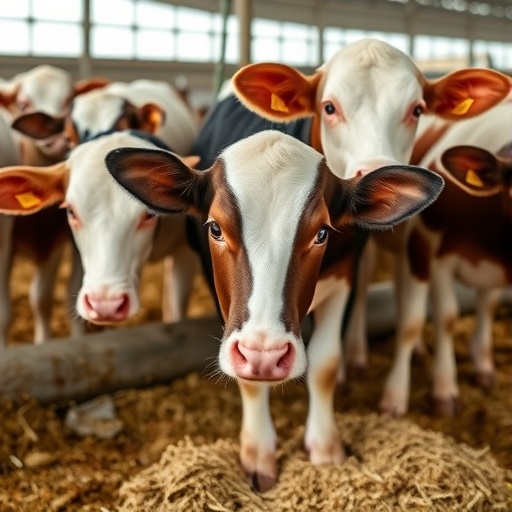
In the field of food safety, the presence of aflatoxins in dairy products raises significant health concerns globally. Aflatoxins are naturally occurring mycotoxins produced by molds of the Aspergillus species, with aflatoxin M1 being one of the most relevant forms that contaminate milk and dairy. A recent comprehensive review authored by Heidari and Nematollahi has shed light on the critical factors that influence the concentration of aflatoxin M1 in dairy products, highlighting the need for improved management practices in dairy production.
The dairy processing chain, from feed production to milk processing and storage, represents numerous potential points for aflatoxin contamination. The authors discuss how environmental conditions such as humidity and temperature during grass and feed growth significantly impact the likelihood of mold proliferation. High temperatures and moisture content can exacerbate the growth of Aspergillus molds, demonstrating the importance of controlling agricultural conditions to mitigate the risks associated with aflatoxin contamination.
Moreover, the review emphasizes the role of animal feed as a critical factor. Contaminated feed can directly lead to the presence of aflatoxin M1 in the milk of lactating animals. It is vital for farms to actively monitor and test feed ingredients not only at the point of purchase but throughout the storage phase, as inadequate storage can lead to secondary contamination. Ensuring that feed is stored in dry conditions and at optimal temperatures can hinder the growth of contamination-causing molds.
The study not only emphasizes how external factors contribute to aflatoxin levels but also examines innovative approaches to detoxification. There is a burgeoning interest in the development of chemical, biological, and physical methods to reduce aflatoxin M1 levels in dairy products. Methods like adsorption using specific bacteria, chemical treatments with agents like ammonium hydroxide, and heat treatments have shown promise in effectively reducing aflatoxin concentrations.
Another critical aspect discussed is the importance of monitoring and regulations. Different countries adopt varying thresholds for permissible aflatoxin levels, highlighting the need for uniform standards in dairy trade. Compliance with these standards is not just a regulatory prerequisite; it directly correlates with consumer safety and public health. The review calls upon regulatory bodies, dairy industries, and researchers to collaborate to establish and enforce comprehensive risk management strategies that can standardize permissible aflatoxin levels across borders.
Consumer awareness also plays a significant role in combating aflatoxin contamination. The authors suggest that educating consumers about the importance of verifying the source of dairy products, alongside understanding the risks associated with aflatoxins, can drive demand for higher quality, safer products. In today’s era, where consumers are increasingly health-conscious, being informed can influence purchasing behavior and encourage producers to adhere to best practices.
The review extends to the biological mechanisms by which aflatoxin M1 can impact human health. Exposure to this toxin has been linked to severe health issues, including liver damage and cancer. These insights underscore the urgency of addressing aflatoxin presence in dairy products not just as a food safety challenge but as a significant public health issue. The critical nature of this topic calls for a multi-faceted approach to minimize risks.
The consumption of dairy products with elevated aflatoxin levels poses a risk not just in direct health impacts but also in undermining consumer trust. The dairy industry must prioritize transparency, with thorough testing and certification processes to reassure consumers of product safety. As consumer scrutiny sharpens, industries that fail to meet safety expectations may face backlash, product recalls, and consequent financial repercussions.
The discussion extends to the role of scientific research and innovation. Continuous research into aflatoxin M1 remains crucial in understanding its behaviors in various environments and developing more effective intervention strategies. Advancements in biotechnology and preventive measures are necessary to create solutions that not only address contamination post-facto but also curb its occurrence proactively.
Understanding the interplay of various factors that influence aflatoxin M1 concentrations presents new pathways for interventions and preventive measures. Heidari and Nematollahi’s review offers an invaluable resource for different stakeholders within the dairy sector, emphasizing that tackling aflatoxin issues requires collective action and commitment to food safety throughout the supply chain.
Additionally, the implications of climate change cannot be overlooked. As global temperatures rise and weather patterns fluctuate, the conditions conducive to aflatoxin production are likely to become more frequent. This highlights the urgent need for adaptive strategies within the agricultural and dairy sectors that are resilient to environmental changes while reducing aflatoxin risks.
The economic impact of aflatoxin contamination is also noteworthy. Dairy products constitute significant components of agricultural economies worldwide. Contamination leads to tangible economic losses through decreased milk yields, livestock health issues, and the subsequent costs of treatment and testing. This economic lens further emphasizes the need for preventive measures and sound management practices to ensure profitability while safeguarding public health.
In conclusion, aflatoxins are a formidable challenge in the realm of dairy safety, with broad implications for public health and consumer trust. The comprehensive insights provided by Heidari and Nematollahi are more than just academic; they are a clarion call for concerted action within the dairy industry to adopt rigorous monitoring, effective feed management, and consumer education to mitigate the risks posed by aflatoxin M1 contamination. Only through collaborative efforts can the industry hope to maintain safety, assurance, and consumer confidence amidst a globally interconnected market.
Cite Scienmag News
Violet Maxwell. (October 28, 2025). Key Factors Affecting Aflatoxin M1 in Dairy. Scienmag. https://scienmag.com/key-factors-affecting-aflatoxin-m1-in-dairy/
Violet Maxwell. "Key Factors Affecting Aflatoxin M1 in Dairy." Scienmag, 28 October 2025, https://scienmag.com/key-factors-affecting-aflatoxin-m1-in-dairy/. Accessed 6 September 2026.
Violet Maxwell. "Key Factors Affecting Aflatoxin M1 in Dairy." Scienmag. October 28, 2025. https://scienmag.com/key-factors-affecting-aflatoxin-m1-in-dairy/


