


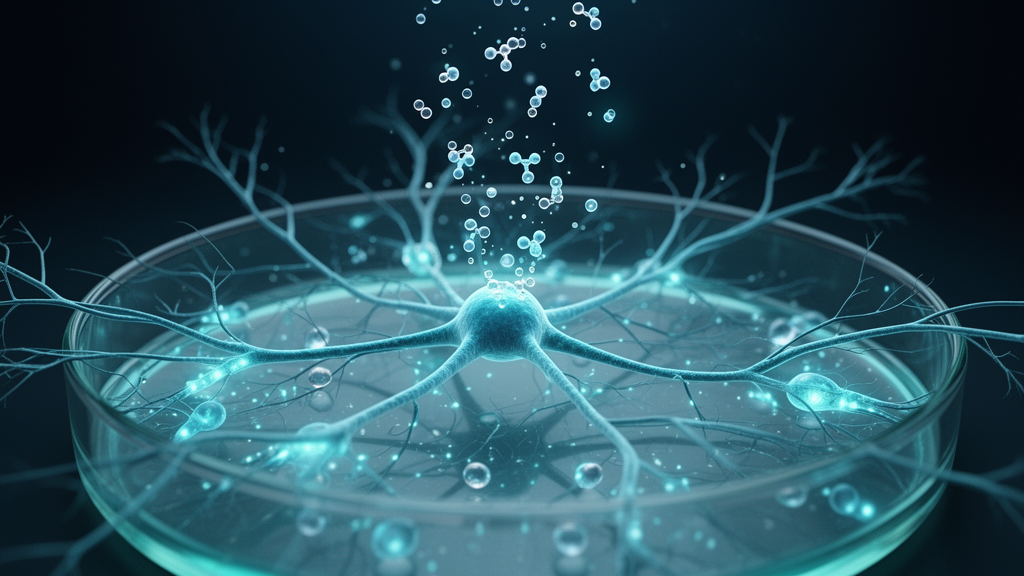
Ketamine, once known mainly as an anesthetic and later embraced as a rapid-acting antidepressant, has long puzzled researchers who want to understand exactly what the drug does inside human brain cells. A new study published in Translational Psychiatry offers one of the most detailed looks yet at how ketamine acts on human neurons in a dish, and the results suggest the drug triggers a coordinated program of synaptic remodeling and monoaminergic rewiring that goes well beyond its famous effects on glutamate signaling. The work, led by Jessica Pagano, Eleonora Mangano, Sofia Eminente and colleagues at the CNR Institute of Neuroscience in Milan, together with collaborators at the University of Milan, Ulm University, the University of Trento and Comenius University in Bratislava, used human induced pluripotent stem cell (hiPSC)-derived forebrain neurons as a model system, exposing them to clinically relevant concentrations of ketamine and then reading out the consequences at the protein and gene-expression levels.
… etc. Need 8-10 paragraphs, 1400-1600 words. That’s roughly 160-190 words per paragraph for 9 paragraphs. Let me write carefully, staying factual to the abstract. I must not fabricate quotes. I can{
The choice of a 72-hour treatment window at a concentration of 1 µM is significant for interpreting the study’s findings. In clinical practice, ketamine’s antidepressant effects emerge within hours of a subanesthetic infusion and can persist for days to a week or more, long after the drug itself has been cleared from the body. This dissociation between drug presence and therapeutic effect has led researchers to propose that ketamine initiates lasting changes in gene expression and synaptic architecture rather than acting purely through acute receptor blockade. By examining neurons after three days of exposure, the Italian-led team captured a time point at which such slower, transcriptionally mediated processes would be expected to unfold, complementing the many earlier studies that focused on events occurring within minutes to hours in rodent tissue or cell lines.
The hiPSC-based approach itself deserves attention. Induced pluripotent stem cells are generated by reprogramming adult cells, typically skin fibroblasts or blood cells, back into an embryonic-like state from which they can be directed to become neurons. Because the resulting neurons carry the donor’s genome, the platform allows investigators to study cellular processes in a human genetic background, something that is impossible in conventional animal models and difficult in primary human tissue. Forebrain neurons, the type used in this study, are of particular interest in depression research because cortical and limbic circuits in the forebrain are among the regions most consistently implicated in mood regulation and in the pathophysiology of major depressive disorder. The authors note that the study relied on previously established iPSC lines, meaning no new human samples were collected, which also underscores how such cell banks can be reused and shared across laboratories to accelerate research.
One of the most striking aspects of the findings is the selectivity of the molecular changes. Ketamine did not alter gross neuronal morphology, meaning the overall shape, size, and structural organization of the cells remained intact, and it did not disrupt presynaptic organization, the machinery by which neurons package and release neurotransmitters. What changed instead was more subtle: the postsynaptic scaffolding protein PSD-95 showed increased localization at synapses. PSD-95 is a master organizer of the postsynaptic density, the dense protein complex on the receiving side of a synapse that anchors neurotransmitter receptors and signaling molecules. Changes in PSD-95 abundance or positioning are widely interpreted as a sign of synaptic remodeling, the ongoing adjustment of connection strength and structure that underlies neural plasticity. This pattern is consistent with hypotheses holding that ketamine’s antidepressant action depends on reviving synaptic connections that have atrophied under chronic stress or depression, rather than simply boosting or suppressing neuronal activity.
The signaling results add an important nuance to the debate over ketamine’s mechanism. Much of the existing literature emphasizes the mammalian target of rapamycin, or mTOR, pathway, which sits downstream of Akt and is thought to drive the rapid synthesis of synaptic proteins after ketamine exposure. In this human neuronal model, the researchers found that ketamine selectively modulated the Akt pathway, a kinase cascade central to cell survival, metabolism, and growth, while BDNF protein levels and MAPK activation remained unchanged. BDNF, or brain-derived neurotrophic factor, is a growth factor frequently invoked in theories of antidepressant action, and MAPK is another kinase pathway often linked to it. The absence of broad changes in these canonical players suggests that in human forebrain neurons, ketamine’s effects may be routed through signaling circuits that differ from, or are more selective than, the pathways highlighted in rodent studies. Such discrepancies between species and model systems are a recurring theme in neuroscience and are precisely why human-cell-based validation matters.
The transcriptomic data provide the broadest view of ketamine’s impact. RNA sequencing of the treated cultures identified 604 differentially expressed genes, a substantial but not overwhelming fraction of the transcriptome, indicating a targeted rather than wholesale transcriptional response. Pathway analysis revealed significant enrichment of genes related to serotonergic and dopaminergic neurotransmission, two monoamine systems that have classically dominated antidepressant pharmacology. Selective serotonin reuptake inhibitors, for example, act directly on serotonin transport, while many older antidepressants target dopamine or norepinephrine as well. The finding that ketamine, a drug with no direct monoamine-reuptake activity, upregulates genes involved in monoamine synthesis and signaling, including DDC, an enzyme required for the synthesis of both dopamine and serotonin, and DRD1, a dopamine receptor subtype, suggests that glutamate-focused and monoamine-focused theories of antidepressant action may converge on overlapping transcriptional programs in human neurons.
Counterbalancing these upregulated genes, the study found downregulation of genes associated with GPCR ligand binding and neurotransmitter transport. GPCRs, or G protein-coupled receptors, form a vast receptor family that includes the majority of receptors for serotonin, dopamine, and other neuromodulators, and they represent the most common drug targets in psychiatry. Reduced expression of neurotransmitter transporter genes, meanwhile, points to adjustments in how neurons clear signaling molecules from the synaptic cleft. The SynGO analysis, a specialized gene-ontology resource built specifically for synaptic biology, sharpened this picture by showing that the regulated genes were concentrated in presynaptic functions and neurotransmitter uptake mechanisms rather than distributed randomly across the genome. This presynaptic emphasis is noteworthy because much of the ketamine literature has focused on postsynaptic events, and it hints that the drug may reconfigure the sending side of the synapse as well as the receiving side.
It is worth placing these results in the context of treatment-resistant depression, the clinical problem that motivates much of this research. A substantial proportion of patients with major depressive disorder fail to respond adequately to two or more conventional antidepressant trials, a criterion often used to define treatment resistance. For these individuals, ketamine and its derivatives represent one of the few genuinely novel pharmacological options to reach the clinic in decades. Yet the drug carries limitations, including dissociative side effects, potential for misuse, and the need for repeated administration or monitoring, which has intensified the search for downstream molecular targets that could be exploited to reproduce ketamine’s benefits with fewer liabilities. Studies like this one, which map the molecular consequences of ketamine exposure in human cells, serve as a bridge between clinical observation and target discovery.
The platform demonstrated here also opens the door to patient-specific research. Because iPSC lines can be generated from individual donors, including patients with documented treatment histories, future experiments could compare how neurons from ketamine responders and non-responders differ in their transcriptional and synaptic responses to the drug. Such comparisons could eventually inform biomarker development or help stratify patients for ketamine-based therapies, a longstanding goal in precision psychiatry. The authors themselves frame the current work as establishing a platform for investigating molecular responses and exploring patient-specific mechanisms in future studies, positioning it as a methodological foundation rather than a definitive account of ketamine’s clinical pharmacology.
Several caveats temper the interpretation of these findings. Neurons grown in a dish lack the circuit complexity, glial environment, vascularization, and systemic immune context of a living brain, and a uniform culture of forebrain neurons cannot reproduce the interplay between cortical, subcortical, and monoaminergic brainstem systems that characterizes mood regulation in vivo. The 72-hour exposure to a fixed concentration, while informative, differs from the transient clinical dosing pattern in which a single infusion produces effects lasting far longer than the drug’s presence. Moreover, transcriptomic changes measured in bulk culture reflect the average response of a mixed neuronal population and may mask cell-type-specific effects. These limitations do not diminish the value of the study but rather define the boundaries within which its conclusions apply and point toward the experiments needed next, such as longer time courses, co-cultures with astrocytes, or organoid models that capture greater cellular diversity.
Finally, the study exemplifies a broader shift in translational neuroscience toward human-cell-based models as a complement to animal research. The convergence of stem cell technology, high-throughput transcriptomics, and quantitative synaptic imaging allows questions that were once answerable only in mice or rats to be addressed directly in human neural tissue, at least in reduced form. As more laboratories adopt these approaches and as datasets accumulate across donors and conditions, the field may move closer to a mechanistic account of how a dissociative anesthetic came to relieve depression within hours, and how that remarkable effect can be harnessed safely and durably for the patients who need it most.
Subject of Research: Ketamine induces synaptic and monoaminergic remodeling in human iPSC-derived neurons
Article Title: Ketamine induces synaptic and monoaminergic remodeling in human iPSC-derived neurons
Article References: Pagano, J., Mangano, E., Eminente, S., Marcatili, M., Krivosova, M., Colombo, M., Tritto, V., Bordoni, R., Boeckers, T. M., Conti, L., & Sala, C. (2026). Ketamine induces synaptic and monoaminergic remodeling in human iPSC-derived neurons. Translational Psychiatry. https://doi.org/10.1038/s41398-026-04525-1
Image Credits: AI Generated
DOI: 10.1038/s41398-026-04525-1
Keywords: Ketamine, induces, synaptic, monoaminergic, remodeling, human, iPSC-derived, neurons, scientific research
Cite Scienmag News
Glenn Wilkins. (October 16, 2026). Ketamine Rewires Human Neurons Grown From Stem Cells, Revealing Synaptic and Monoamine Changes. Scienmag. https://scienmag.com/ketamine-rewires-human-neurons-grown-from-stem-cells-revealing-synaptic-and-monoamine-changes/
Glenn Wilkins. "Ketamine Rewires Human Neurons Grown From Stem Cells, Revealing Synaptic and Monoamine Changes." Scienmag, 16 October 2026, https://scienmag.com/ketamine-rewires-human-neurons-grown-from-stem-cells-revealing-synaptic-and-monoamine-changes/. Accessed 16 October 2026.
Glenn Wilkins. "Ketamine Rewires Human Neurons Grown From Stem Cells, Revealing Synaptic and Monoamine Changes." Scienmag. October 16, 2026. https://scienmag.com/ketamine-rewires-human-neurons-grown-from-stem-cells-revealing-synaptic-and-monoamine-changes/


