A team of researchers in Egypt has engineered tiny lipid carriers loaded with extract from the Phoenician juniper, Juniperus phoenicea, and reported that the particles outperformed both the raw plant extract and the chemotherapy drug fluorouracil in laboratory tests against lung cancer cells, while also showing enhanced antibacterial activity against multidrug-resistant bacteria. The work, published in AMB Express, describes a nanostructured lipid carrier formulation built from the plant’s ethanolic leaf extract and evaluated in a series of in vitro assays. The findings are early-stage laboratory results, not clinical evidence, but they add to a growing body of research exploring plant-derived nanomaterials as potential complements to existing antibiotics and anticancer agents.
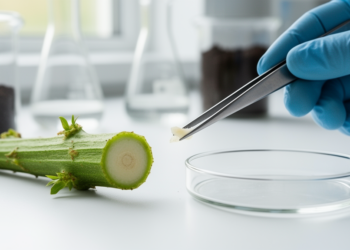
The researchers began by preparing two crude extracts from juvenile leaves of J. phoenicea, a juniper species whose berries were famously found in ancient Egyptian tombs and which still grows naturally in Egypt’s Sinai region and the wider Mediterranean area. Leaves harvested in March 2023 from Antoniades Garden in Alexandria were dried and macerated separately with 95% ethanol and with an ethyl acetate mixture. When the two extracts were screened against a panel of multidrug-resistant bacteria, the ethanolic extract produced wider inhibition zones, ranging from 6.0 to 21.0 millimeters compared with 6.0 to 16.0 millimeters for the ethyl acetate extract, and was therefore selected for all subsequent analysis. The largest inhibition zone was recorded against Acinetobacter baumannii, an opportunistic pathogen notorious for its resistance to multiple drug classes.
Quantitative susceptibility testing reinforced that picture. Minimum inhibitory concentrations of the ethanolic extract ranged from 12.5 to 200 micrograms per milliliter across the tested bacteria, with A. baumannii the most susceptible organism at 12.5 micrograms per milliliter. The bacterial panel included clinical isolates of A. baumannii, Enterobacter aerogenes, methicillin-resistant Staphylococcus aureus, Escherichia coli, and Proteus mirabilis, supplied and authenticated by a hospital microbiology department using the VITEK system. Chemical profiling of the ethanolic extract by gas chromatography–mass spectrometry identified three predominant constituents: apigenin 7-glucoside at 11.21 percent of the chromatogram area, alpha-pinene at 23.49 percent, and cedrol at 10.93 percent. The team also quantified total tannins, polyphenols, and flavonoids using colorimetric assays calibrated against gallic acid and quercetin standards.
To explore how these constituents might behave pharmacologically, the researchers turned to network pharmacology, a computational approach that maps predicted compound–target interactions using the STITCH and SEA databases with visualizations built in Cytoscape. Only interactions with a combined score of at least 0.9 were retained. The authors are explicit that these computational findings are intended for hypothesis generation only: they offer a theoretical framework for how cedrol, alpha-pinene, and apigenin 7-glucoside might interact with cellular pathways, but they do not constitute proven pharmacological effects. The team also notes a technical caveat, namely that because gas chromatography–mass spectrometry excludes non-derivatizable high-molecular-weight compounds, the network represents only the volatile and semi-volatile fraction of the extract, and further LC-MS/MS studies would be needed to capture the full polar metabolome.
The centerpiece of the study is the nanoparticle formulation itself. The researchers loaded the ethanolic leaf extract into nanostructured lipid carriers, or NLCs, which combine solid and liquid lipids in a heterogeneous matrix that generally offers higher loading efficiency and better physical stability than purely solid lipid nanoparticles. Their system used an optimized blend of the solid lipid Precirol ATO 5 and oleic acid in a 7:3 ratio, with extract loaded at 10 milligrams per gram of total lipid, and an aqueous phase containing 1 percent Tween 80. A combined hot-melt dispersion and homogenization process, involving high-shear emulsification at 10,000 rpm followed by ultrasonication, produced the final carriers. Blank carriers without extract were prepared under identical conditions as negative controls, so that observed effects could be attributed to the extract rather than the carrier components.
Characterization results were favorable. Dynamic light scattering gave a vesicle size of 98.6 nanometers with a polydispersity index of 0.23, indicating a homogeneous population, and a strongly positive zeta potential of +48.5 millivolts, a value generally associated with colloidal stability because like-charged particles repel one another and resist aggregation. Encapsulation efficiency reached 92.4 percent, and transmission electron microscopy showed particles of roughly 76 nanometers, within a range of about 60 to 100 nanometers. Fourier transform infrared spectroscopy showed characteristic peaks consistent with the extract’s phenolic components remaining associated with the nanoparticle surface. In a DPPH free radical scavenging assay, the nanoformulation showed a modestly increased antioxidant capacity, with an IC50 of 1491.41 micrograms per milliliter compared with 1542.77 micrograms per milliliter for the crude extract.
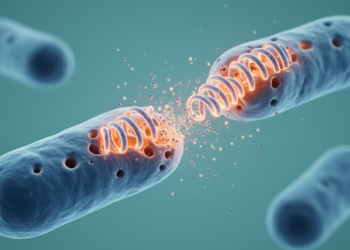
The antibacterial results against A. baumannii were striking. The JP-NLCs produced a 22-millimeter inhibition zone, achieved a minimum inhibitory concentration of 6.25 micrograms per milliliter, and a minimum bactericidal concentration of 100 micrograms per milliliter. Time-kill curves showed a consistent reduction in bacterial growth, with complete eradication of A. baumannii after 16 hours of exposure to the nanoparticles, compared with 20 hours for the crude extract. A live/dead fluorescence assay confirmed a shift toward dead cells after nanoparticle exposure. The authors suggest that the carriers’ small size, low polydispersity, and strong positive surface charge position them to bind and disrupt the negatively charged outer membranes of Gram-negative bacteria, though they caution that direct mechanistic studies on this specific formulation and species are still needed.
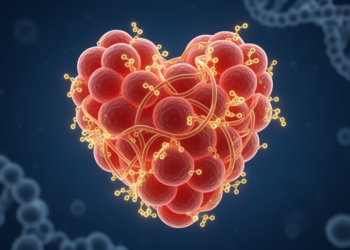
Combination testing added another layer. When the nanoparticles were paired with a panel of commonly used antibiotics on discs, synergistic effects emerged with amoxicillin and cefoxitin, while the other combinations were antagonistic. A broth microdilution checkerboard method, quantified with the fractional inhibitory concentration index, confirmed the synergy, with synergy defined as an index of 0.5 or below. The researchers suggest that synergism with a natural substance could in principle allow lower antibiotic doses and potentially reduce the development of resistance, an idea they connect to prior work showing that plant-derived compounds can block bacterial efflux pumps, target penicillin-binding proteins, or increase outer membrane permeability. On the cancer side, the nanoparticles were tested against the A-549 human lung carcinoma cell line using the MTT assay over 48 hours. The crude extract showed an IC50 of 78.77 micrograms per milliliter, while the nanoparticles achieved 9.05 micrograms per milliliter, an approximately 8.7-fold increase in potency, and surpassed fluorouracil itself, which registered an IC50 of 58.11 micrograms per milliliter. Combining fluorouracil with the nanoparticles lowered the IC50 further to 6.12 micrograms per milliliter.
Combination index analysis using the Chou-Talalay method revealed a biphasic dose-response relationship. At low fractional inhibition levels below 0.25, the fluorouracil–nanoparticle combination showed moderate antagonism, but a clear synergistic trend emerged at effect levels between 0.42 and 0.76, peaking at a combination index of 0.59 at the 76 percent effect level. Dose reduction indices at that effect level indicated that nanoparticle and fluorouracil doses could theoretically be reduced 10.34-fold and 2.02-fold, respectively, while maintaining efficacy, though at the extreme effect level of 0.96 the interaction reverted to antagonism, suggesting a saturation point for the synergistic mechanism. The authors also report that caspase activity measurements pointed to modulation of apoptotic pathways in the treated lung cancer cells.
The study’s authors and its impact statement are careful to frame the scope of what was achieved. All results derive from in vitro assays; in vivo efficacy, detailed mechanistic insights, and selectivity and toxicity profiles remain to be established before any clinical translation can be considered. The anticancer findings rest on a single cell line, and the network pharmacology analysis is explicitly hypothesis-generating. Nevertheless, the researchers argue that the work delineates the biological profile of J. phoenicea and presents what they describe as the first published formulation of this plant’s extract in a nanostructured lipid carrier, filling a gap they identified in the literature. If subsequent animal and mechanistic studies bear out the in vitro signals, plant-based nanomedicines of this kind could offer platforms for multi-target therapeutic approaches that augment existing antibiotics and chemotherapeutics. For now, the juniper nanoparticles remain a promising laboratory finding awaiting the rigorous validation that separates an intriguing formulation from a medicine.
Subject of Research: Plant extract-loaded nanostructured lipid carriers tested for antimicrobial and anticancer activity in vitro
Article Title: Juniperus phoenicea extract-loaded nanostructured lipid carriers for potent antimicrobial and anticancer combination therapy
Article References: Ismail, P. A., Elwakil, B. H., Hagar, M., & Olama, Z. A. (2026). Juniperus phoenicea extract-loaded nanostructured lipid carriers for potent antimicrobial and anticancer combination therapy. AMB Express, 16(1), Article 88. https://doi.org/10.1186/s13568-026-02054-0
Image Credits: AI Generated
DOI: 10.1186/s13568-026-02054-0
Keywords: Juniperus phoenicea, nanostructured lipid carriers, nanoparticles, antimicrobial resistance, Acinetobacter baumannii, lung cancer, fluorouracil, drug synergy, phytochemistry, network pharmacology, in vitro study, green nanomedicine
Cite Scienmag News
Louis Brooks. (October 30, 2026). Juniper extract nanoparticles show antimicrobial and anticancer activity in lab tests. Scienmag. https://scienmag.com/juniper-extract-nanoparticles-show-antimicrobial-and-anticancer-activity-in-lab-tests/
Louis Brooks. "Juniper extract nanoparticles show antimicrobial and anticancer activity in lab tests." Scienmag, 30 October 2026, https://scienmag.com/juniper-extract-nanoparticles-show-antimicrobial-and-anticancer-activity-in-lab-tests/. Accessed 31 October 2026.
Louis Brooks. "Juniper extract nanoparticles show antimicrobial and anticancer activity in lab tests." Scienmag. October 30, 2026. https://scienmag.com/juniper-extract-nanoparticles-show-antimicrobial-and-anticancer-activity-in-lab-tests/