


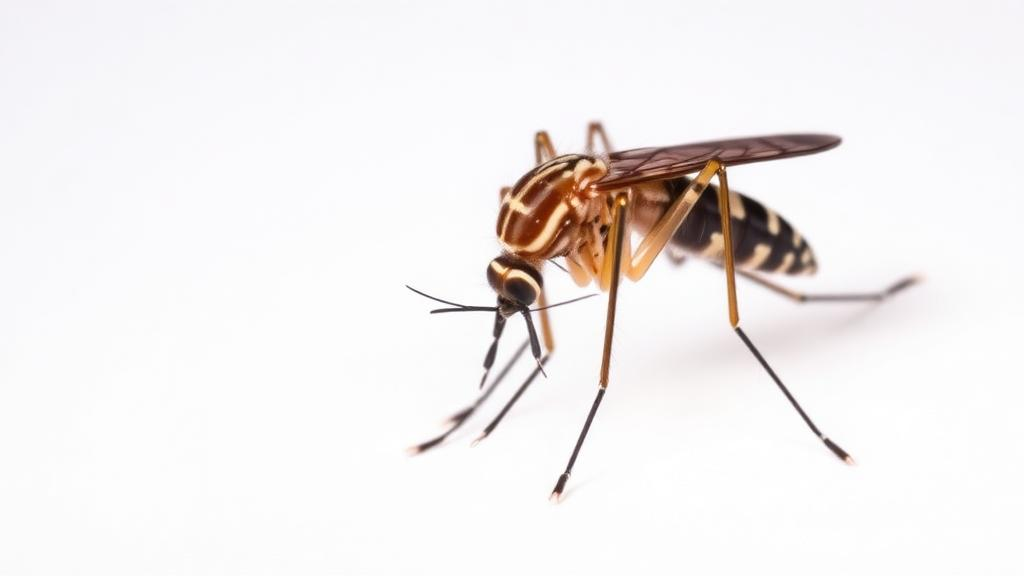
Mosquito populations across Jamaica have developed extensive resistance to the insecticides most commonly used to control them, according to a new study published in the journal Parasites & Vectors. Researchers from the University of the West Indies, the Jamaican Ministry of Health and Wellness, and the United States Centers for Disease Control and Prevention found that both urban and rural populations of Aedes aegypti, the primary vector of dengue, chikungunya, and Zika viruses, survived exposure to permethrin, deltamethrin, and malathion at rates that would render standard control operations ineffective. The findings, which combine classical susceptibility testing with modern transcriptomic analysis, paint a picture of resistance that is not only widespread but also heterogeneous, varying markedly between locations and between insecticide classes.
The research team collected Aedes aegypti mosquitoes from two contrasting environments: the densely urbanized metropolitan area of Kingston and the parish of St Andrew, referred to in the study as KSA, and the rural community of Lances Bay in the parish of Hanover. They also collected Aedes albopictus, the Asian tiger mosquito, from the urban KSA area to assess whether a second potential vector species shared the same vulnerability profile. Field-derived mosquitoes were then subjected to Centers for Disease Control and Prevention bottle bioassays, a standardized technique in which mosquitoes are exposed to a diagnostic dose of insecticide inside coated glass bottles and mortality is recorded over time. The CDC threshold for declaring a population susceptible requires mortality at or above 98 percent at the diagnostic time point, and by that measure every population tested failed, often spectacularly.
The numbers reveal the depth of the problem. At the 30-minute diagnostic time point, urban Aedes aegypti from KSA showed zero percent mortality to permethrin, meaning not a single mosquito was killed by the pyrethroid. Mortality to deltamethrin, another pyrethroid, stood at just 22.0 percent with a standard deviation of 2.7 percent, while malathion, an organophosphate, fared somewhat better at 70.5 percent with a standard deviation of 9.8 percent, still far below the susceptibility threshold. The rural Hanover population was, if anything, in worse condition: zero percent mortality to both permethrin and malathion, and only 8.1 percent mortality to deltamethrin. Aedes albopictus from KSA also demonstrated resistance to deltamethrin, with mortality below the CDC threshold, confirming that resistance is not confined to a single species.
What makes these results particularly concerning for public health officials is the multi-class nature of the resistance. Pyrethroids and organophosphates act through fundamentally different mechanisms: pyrethroids target voltage-gated sodium channels in insect neurons, while malathion inhibits acetylcholinesterase, an enzyme essential for nerve impulse termination. When a mosquito population simultaneously withstands compounds from both classes, control programs lose their two most important chemical tools at once. In Jamaica, where dengue outbreaks recur and ultra-low-volume spraying with pyrethroids is a mainstay of emergency response, the practical implications are immediate. Spraying campaigns that would have knocked down susceptible populations may now leave the majority of vector mosquitoes unharmed, while giving communities a false sense of protection.
To understand the molecular machinery behind this resistance, the researchers turned to transcriptomics, the study of gene expression patterns across the entire genome. They exposed Aedes aegypti collected from KSA to two compounds: malathion, the organophosphate already in use, and pyriproxyfen, an insect growth regulator belonging to a class of chemicals used to disrupt mosquito development. Using RNA sequencing, the team compared gene expression in exposed mosquitoes against untreated field mosquitoes and against the Rockefeller strain, a long-established insecticide-susceptible laboratory reference line. Principal component analysis and hierarchical clustering of the sequencing samples confirmed that the biological replicates grouped consistently by treatment, lending statistical confidence to the downstream comparisons.
The malathion results were striking. Exposure to the organophosphate triggered strong overexpression of genes associated with detoxification and with cuticle structure. Detoxification genes in mosquitoes typically include the three great enzyme families of insecticide metabolism: cytochrome P450 monooxygenases, glutathione S-transferases, and carboxylesterases, all of which can chemically modify or sequester toxic compounds before they reach their molecular targets. Cuticle-associated genes matter because the insect exoskeleton is the first barrier an insecticide must cross; a thicker or chemically altered cuticle can slow penetration and give internal detoxification systems time to neutralize the incoming dose. The coordinated upregulation of both gene categories suggests that Jamaican mosquitoes are mounting a layered defense, combining reduced uptake with enhanced metabolic breakdown.
Pyriproxyfen produced a different and more nuanced transcriptional signature. Rather than a concentrated detoxification response, the insect growth regulator elicited a moderate but broad response spanning metabolic and endocrine pathways. This pattern is biologically coherent: pyriproxyfen mimics juvenile hormone, a master regulator of insect metamorphosis, so exposure would be expected to perturb the expression of genes involved in hormone signaling and development alongside general metabolic machinery. The authors interpret these findings as evidence that transcriptional responses to insecticide exposure occur across multiple gene families rather than within a single pathway, a realization with important consequences for how resistance is monitored and predicted.
The transcriptomic dataset also included a comparison between the Rockefeller susceptible strain and untreated field-derived mosquitoes, capturing the baseline genetic differences that distinguish resistant Jamaican populations from their susceptible counterparts even before any laboratory exposure. Supplementary tables accompanying the paper document the significantly differentially expressed genes in each comparison, complete with log2 fold-change values, adjusted P-values, and normalized expression levels, providing a public resource for other researchers studying Caribbean vector populations. The study was supported by a Research and Publication Grant from the University of the West Indies, and the team included entomologists from the CDC’s Entomology Branch within the Division of Parasitic Diseases and Malaria, underscoring the international collaboration behind the work.
For the Caribbean region, the study arrives at a critical moment. Aedes aegypti is the principal urban vector of dengue virus, which causes periodic explosive outbreaks across the islands, as well as chikungunya and Zika, both of which swept through the Americas in the last decade. Resistance in Aedes aegypti has previously been documented in Jamaican urban and rural settings, but the susceptibility of other potential vector species and the transcriptional responses to insecticide exposure had remained poorly characterized. By showing that Aedes albopictus shares deltamethrin resistance with its more famous cousin, and by mapping the gene families involved, the study fills two significant gaps in regional surveillance knowledge. It also demonstrates that resistance profiles can differ dramatically between locations separated by only a few hundred kilometers, with the rural Hanover population showing even lower mortality than the urban KSA population for two of the three insecticides tested.
The authors conclude that insecticide resistance in Jamaican Aedes populations is widespread, heterogeneous, and dynamic, and they argue that these findings support locally informed resistance surveillance and integrated vector management strategies that go beyond reliance on pyrethroids. Integrated vector management, endorsed by the World Health Organization, combines chemical, biological, and environmental approaches, including source reduction through the elimination of standing water, larval control with agents less prone to resistance, and community engagement, reserving insecticides for targeted use where susceptibility still exists. The alternative, continuing to spray compounds to which local mosquitoes no longer respond, wastes scarce public health resources and accelerates the selection of even hardier mosquito populations. As dengue risk grows across a warming Caribbean, the Jamaican data serve as a warning that the chemical arsenal against Aedes mosquitoes is eroding, and that molecular surveillance of the kind performed in this study will be essential to staying ahead of the next outbreak.
Subject of Research: Insecticide resistance and resistance-associated gene expression in Jamaican Aedes mosquito populations
Article Title: Phenotypic insecticide resistance in Jamaican Aedes spp. and resistance-associated transcripts in Aedes aegypti
Article References: Tai, D., Irvine, W., Francis, F., Mackenzie-Impoinvil, L., Buchanan, L., Reimer, L., Lenhart, A., Roye, M., & Francis, S. (2026). Phenotypic insecticide resistance in Jamaican Aedes spp. and resistance-associated transcripts in Aedes aegypti. Parasites & Vectors. https://doi.org/10.1186/s13071-026-07666-w
Image Credits: AI Generated
DOI: 10.1186/s13071-026-07666-w
Keywords: Aedes aegypti, Aedes albopictus, insecticide resistance, Jamaica, pyrethroids, malathion, pyriproxyfen, transcriptomics, CDC bottle bioassay, dengue, vector control, Caribbean
Cite Scienmag News
Drew Townsend. (October 1, 2026). Jamaican Mosquitoes Show Widespread Resistance to Common Insecticides, Study Finds. Scienmag. https://scienmag.com/jamaican-mosquitoes-show-widespread-resistance-to-common-insecticides-study-finds/
Drew Townsend. "Jamaican Mosquitoes Show Widespread Resistance to Common Insecticides, Study Finds." Scienmag, 1 October 2026, https://scienmag.com/jamaican-mosquitoes-show-widespread-resistance-to-common-insecticides-study-finds/. Accessed 4 October 2026.
Drew Townsend. "Jamaican Mosquitoes Show Widespread Resistance to Common Insecticides, Study Finds." Scienmag. October 1, 2026. https://scienmag.com/jamaican-mosquitoes-show-widespread-resistance-to-common-insecticides-study-finds/


